Larry Ellison steps into the spotlight again as Oracle’s “private data” AI bet collides with TikTok’s new US structure

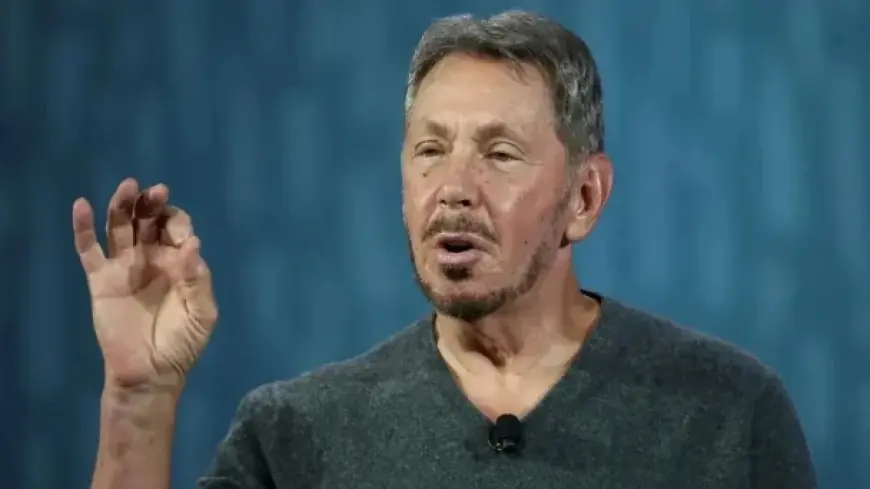
Larry Ellison is back at the center of two storylines moving fast at the same time: how enterprise AI will make money, and who controls the data pipes behind one of the world’s most influential consumer apps. In recent days, Ellison’s comments about AI models “all being basically the same” have circulated widely, just as Oracle’s newly formalized role in the TikTok USDS Joint Venture has drawn fresh attention following a high-profile service disruption.
Taken together, the headlines point to a single through-line: Ellison’s long-running conviction that power in tech flows to whoever owns the data, secures it, and can compute on it at scale.
What happened: Larry Ellison’s AI critique resurfaces as TikTok’s US venture hits early turbulence
Ellison’s key AI argument is blunt: today’s leading generative AI systems are trained on similar public internet data, so differentiation erodes quickly and products become commoditized. His proposed escape hatch is private, proprietary enterprise data—data that companies can’t simply scrape from the web, and that must be governed, secured, and queried safely.
At nearly the same moment, TikTok’s new majority American-owned structure has faced early reputational stress after users reported widespread issues beginning early Sunday, Jan 25, 2026 ET. The joint venture behind TikTok’s US operations attributed the disruption to a power outage at a US data center and said it was working to stabilize service.
Why now: the incentives behind Ellison’s “private data” push
Ellison’s timing is not accidental. The AI market is shifting from “who has the biggest model” to “who can deliver usable AI inside regulated, messy, high-stakes business environments.”
That shift rewards three things Oracle sells:
-
Enterprise databases where sensitive corporate and institutional data already lives
-
Cloud infrastructure capable of running large workloads reliably
-
Security and governance frameworks that reassure boards, regulators, and risk teams
Oracle has also signaled a willingness to spend aggressively to win this phase, including sharply higher capital expenditure expectations tied to AI infrastructure. The bet is straightforward: if enterprises decide the next AI boom is about securely using private data, Oracle can position itself as the default place where that work happens.
Behind the headline: the real prize is control of data plumbing, not just “AI”
The TikTok angle matters because it pulls Oracle’s “private data” narrative into consumer-scale reality. The new TikTok USDS Joint Venture structure gives Oracle a formal seat at the table in how US user data is routed, stored, and how a US-trained version of the recommendation system is handled.
That creates a powerful alignment with Ellison’s thesis:
-
AI systems gain value when they can reason over “unique” data
-
Unique data becomes more valuable when it is controlled, centralized, and computable
-
The company that hosts and secures the data becomes strategically hard to replace
This is the part that tends to be missing from splashy AI coverage. The business model isn’t only model quality. It’s leverage over the stack: storage, identity, access controls, auditability, compute, and the policy interface with governments.
Stakeholders: who wins, who loses, who’s exposed
-
Oracle and Ellison win if “private enterprise AI” becomes the dominant spend category and if Oracle’s cloud credibility keeps improving.
-
Enterprise customers win if they can deploy AI without leaking sensitive data and without rebuilding their entire data estate.
-
Rival cloud and database vendors lose share if Oracle becomes the default trusted layer for private-data AI and regulated workloads.
-
TikTok creators and advertisers lose in the short term if outages or perceived algorithm instability disrupt reach and revenue.
-
Users and civil society take on the privacy and governance risk if data centralization increases without transparent safeguards.
What we still don’t know
Several questions remain unsettled and will shape whether this becomes a durable narrative shift or a temporary news spike:
-
How durable TikTok’s US operational stability will be under the new structure after the initial outage
-
The exact technical boundaries of Oracle’s responsibilities in day-to-day algorithm training, data hosting, and incident response
-
Whether regulatory scrutiny intensifies around governance, censorship concerns, and precise data collection practices
-
Whether Oracle’s infrastructure spending translates into sustained performance and margin improvements, or triggers investor pushback
What happens next: 5 realistic scenarios to watch
-
Oracle doubles down on “private data AI” packaging with more turnkey offerings aimed at regulated industries, making the pitch simpler for CIOs and boards.
-
TikTok US operations stabilize quickly and the outage fades, or recurring disruptions turn into a credibility problem for the new structure.
-
Privacy and governance debates escalate as critics question how data is handled, who has oversight, and how algorithm changes are reviewed.
-
A competitive response intensifies as rival platforms and cloud vendors market “trust” and “sovereignty” as differentiators.
-
Policy becomes the multiplier: clearer rules could boost confidence and spending, while uncertainty could slow deployments and raise compliance costs.
Why it matters
Larry Ellison’s latest moment is not just about provocative quotes on AI sameness. It’s about a strategy that treats data control as the main source of long-term advantage—across both enterprise AI and consumer platforms operating under national-security pressure. The next few weeks will show whether Oracle can turn that theory into operational proof, especially as it becomes associated with the stability and governance of some of the most sensitive data systems in the market.