Tom Homan Sent to Minnesota as Kristi Noem Faces Backlash Over Federal Immigration Surge and Deadly Shootings

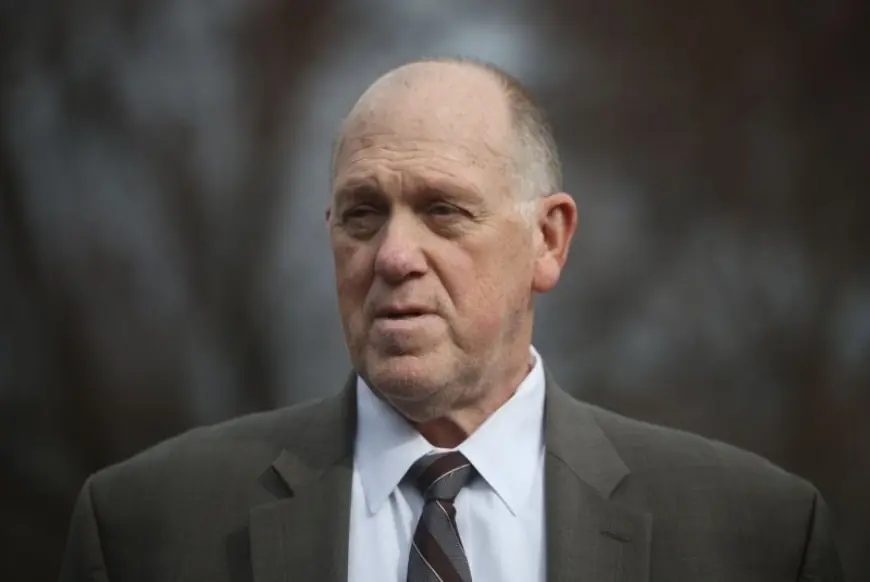
President Donald Trump said Monday, Jan. 26, 2026 (ET) that he is dispatching White House “border czar” Tom Homan to Minnesota to take direct charge of federal immigration operations that have triggered mass protests, court fights, and intense scrutiny after two U.S. citizens were killed by federal agents this month.
The move immediately reframes the political chain of command: Homan is set to oversee the on-the-ground effort and report directly to the president, while Homeland Security Secretary Kristi Noem remains the public face of the department but is now operating under a brighter spotlight following controversial statements about the latest fatal shooting.
What happened in Minnesota
Minnesota has become the focal point of a major federal immigration push often described as a metro “surge,” with thousands of federal personnel reportedly deployed. The operation has been met by coordinated community “observers,” rapid street demonstrations, and pushback from state and local leaders who say the scale and tactics are destabilizing public safety.
Two shootings are driving the national reaction:
-
Jan. 7, 2026 (ET): Renée Good, an American citizen, was fatally shot during an encounter involving federal immigration enforcement in Minneapolis.
-
Jan. 24, 2026 (ET): Alex Pretti, a 37-year-old ICU nurse and licensed gun owner, was fatally shot during a confrontation involving federal agents in Minneapolis. Federal officials initially characterized the event as self-defense, while publicly circulating video and witness accounts have raised sharp disputes over what Pretti was holding and when force became lethal.
State leaders have sought court intervention to pause or limit the operation, and judges are now weighing arguments about federal authority, constitutional protections, and how (and by whom) officer-involved shootings should be investigated.
Who is Tom Homan, and why he’s being sent now
Tom Homan is a longtime immigration enforcement official who previously led Immigration and Customs Enforcement in an acting capacity during Trump’s first term. He is widely seen inside Republican politics as an operator who can turn presidential directives into arrests, transfers, and removals quickly—and who is comfortable defending aggressive tactics in public.
Sending Homan to Minnesota signals two priorities at once:
-
Operational control: The White House wants a single hardline manager to tighten discipline, speed results, and reduce “mixed messaging” across agencies on the ground.
-
Political insulation: By putting Homan front-and-center, Trump can project toughness while creating distance between the Oval Office and the most controversial day-to-day decisions—especially as video, affidavits, and court filings fuel competing narratives about what happened in the shootings.
Where Kristi Noem fits in—and why this has become personal
Kristi Noem, as the cabinet secretary responsible for the department overseeing immigration enforcement, is a key stakeholder in the credibility battle now unfolding. Her public comments describing the Pretti incident in terrorism-style terms have intensified anger among critics and sharpened questions about whether the department is shaping a legal defense in real time, rather than waiting for investigations to conclude.
Even if Noem retains her title and formal authority, Homan’s deployment effectively creates a parallel command channel—one that can be read as either crisis management or a quiet vote of no-confidence in how the situation has been communicated.
Behind the headline: incentives, stakeholders, and what’s missing
This isn’t only an immigration story—it’s a legitimacy story.
Incentives
-
The White House needs visible enforcement wins to satisfy its base, but it also needs to avoid a perception that federal agents are operating with impunity in a major U.S. city.
-
DHS leadership needs to defend agents enough to maintain morale and deter resistance, while limiting legal exposure for the department and individuals.
Stakeholders
-
Minnesota’s governor, attorney general, city leaders, and police leadership, who are balancing public order against federal jurisdiction.
-
Immigrant communities and advocacy networks, for whom “surge” tactics can suppress reporting of crimes and deepen mistrust.
-
Businesses and civic institutions, worried about disruptions, reputational fallout, and prolonged street conflict.
-
Congress, where DHS funding and oversight fights can quickly turn a state crisis into a national budget showdown.
What’s missing
-
A full, independently verified timeline for each shooting, including clear rules-of-engagement, who gave what orders, and whether standard joint-investigation procedures were followed.
-
Transparent accounting of how many federal personnel are deployed, what agencies are involved, and what metrics define “success.”
-
Clear guidance on recording agents, crowd control, and the threshold for force in densely populated neighborhoods.
What happens next: 5 realistic scenarios to watch
-
Court-ordered pause or narrowed operation if judges find overreach, inadequate safeguards, or interference with investigations.
-
Internal DHS reshuffle if leadership concludes the communications response created avoidable legal and political risk.
-
Criminal or civil litigation escalation as families and local authorities pursue discovery, subpoenas, and evidence preservation.
-
Operational hardening under Homan—more arrests, tighter perimeter control, and a push to demonstrate “control of the streets,” which could also enlarge protests.
-
A Washington budget shock if DHS funding becomes the pressure point in a broader confrontation, raising the risk of a partial shutdown as early as Sunday, Feb. 1, 2026 (ET).
Why it matters beyond Minnesota
Minnesota is now a test case for the boundaries of federal immigration enforcement in a politically hostile jurisdiction—and for how quickly a single officer-involved shooting can become a national referendum on executive power, public transparency, and civil liberties.
If Homan can stabilize the operation without additional violence, the administration will point to Minnesota as a model. If the courts curb the surge or more damaging video emerges, it could become the moment that forces new limits on tactics, oversight, and accountability—far beyond Minneapolis.