

























New York Weather: NYC Snow Totals Hit 11.4 Inches as MTA Runs Modified Service and Schools Go Remote Monday

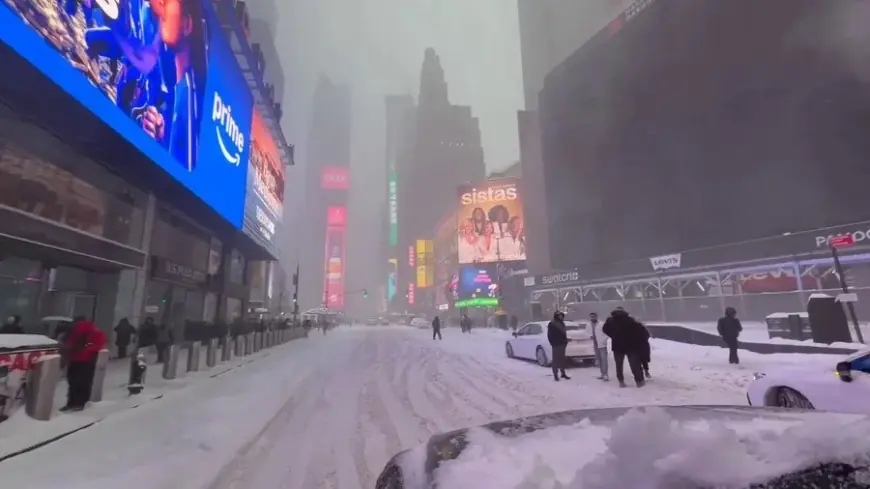
A major snowstorm has already delivered a headline number for New York City: 11.4 inches in Central Park on Sunday, January 25, 2026 (ET)—a daily record for that date. By early Monday, January 26 (ET), the story shifted from “how hard will it hit?” to “how fast can the region dig out—and what’s still at risk?”: refreezing, blowing/drifting snow, and another bout of dangerously cold air.
For anyone searching “how much snow did NYC get,” “NYC snow totals,” “is school closed Monday,” or “MTA subway,” here’s what’s confirmed and what to watch next.
How Many Inches of Snow in NYC? Latest NYC Snow Totals
NYC (Central Park): 11.4 inches (storm-day total for Sunday, Jan. 25, ET). That number is the cleanest “official” shorthand people use when they ask “how much snow NYC.”
Across the broader metro, double-digit totals were widespread, and one of the higher reported totals in the region reached 17.6 inches (Lower Hudson Valley).
Snow totals Long Island: what communities reported
Long Island totals varied by location, but many communities landed in the 8 to 13-inch range, with examples including:
-
Smithtown: 13.0 inches
-
Islip Airport: 12.9 inches
-
Commack: 12.8 inches
-
Hauppauge / North Babylon / Orient: 12.5 inches
-
Upton: 10.0 inches
-
Stony Brook: 9.8 inches
-
West Islip: 7.3 inches
Those numbers answer the practical question behind “snow totals Long Island” and “long island snow totals”: it was a plowable, shovel-heavy snow for most neighborhoods—followed immediately by cold that makes cleanup harder.
New York City Weather Today: Is It Snowing, and What Time Does Snow Start?
NYC weather Monday, Jan. 26 (ET): cloudy and very cold, with flurries possible late morning and temperatures hovering well below comfortable. The main storm’s heavy snow is largely done; what remains is spotty light snow/flurries, plus wind that can re-cover freshly cleared spots.
If you’re asking “what time is the snow supposed to start” because you haven’t seen much yet: the primary burst began earlier in the weekend (as early as Saturday evening ET in parts of the region) and peaked on Sunday. Monday’s concern is less “fresh accumulation” and more icy roads, reduced visibility in bursts, and refreeze after plows pass.
Upstate snapshot for “Rochester NY snow accumulation,” “Syracuse weather,” and “Buffalo weather”:
-
Rochester area: additional accumulating snow is still possible, with warnings posted for parts of the region into Tuesday morning (ET).
-
Syracuse: light snow and blowing/drifting are possible at times.
-
Buffalo: snow showers and bitter cold; localized accumulation possible.
MTA: Subway, Metro-North, and LIRR Schedule Changes After the Storm
Transit is running, but not “normal.”
NYC subway: operating on a weekday schedule Monday, but riders should expect service adjustments, including some trains running local where express normally operates.
Buses: expect longer waits, in part because some large articulated buses were removed from service during the storm.
LIRR schedule: operating on a weekend schedule Monday.
Metro-North: operating on a Saturday schedule with added rush-hour trains. At least one branch line was suspended with buses substituting where possible, depending on conditions.
Behind the headline: this is the transit agency making a tradeoff—frequency and reliability over maximum speed. Running fewer complex patterns (and leaning more local) reduces the chance that one frozen switch or one blocked segment cascades into systemwide chaos.
Are NYC Schools Closed Monday? NYC DOE Snow Day Rules, Explained
NYC public school buildings are closed Monday, Jan. 26 (ET)—but it’s not a traditional snow day.
Instead, remote learning is in effect for students who were scheduled to have school, particularly K–8. Many high school students already had Monday off on the calendar, and some middle school grades may also have been scheduled off due to professional development. City leaders have been explicit about the “why”: the calendar has limited flexibility, and the system is trying to avoid adding days later in the year.
Long Island school closures: Many Nassau and Suffolk districts announced closures Monday (ET), alongside closures for childcare centers, colleges, and other programs. Examples of districts listed as closed include Baldwin, Bay Shore, Brentwood, Amityville, Center Moriches, and Central Islip, among many others.
State of Emergency NY, Jim Cantore, and the Bigger Stakes
New York State issued a statewide emergency declaration ahead of the storm, reflecting how officials viewed the combined risk: heavy snow, extreme cold, and transportation disruption.
Meanwhile, the storm drew high-profile weather coverage on the ground in NYC—including meteorologist Jim Cantore reporting from the city—a signal that impacts were expected to be disruptive enough to matter nationally, not just locally.
What We Still Don’t Know, and What Happens Next
A storm like this doesn’t end when flakes stop. The next 24–48 hours (ET) hinge on:
-
Refreeze timing: cleared slush turns to ice quickly at these temperatures.
-
Secondary bands: even light snow can snarl traffic if it hits during commuting windows.
-
Transit normalization: the return from modified schedules is usually gradual, not instant.
-
School operations Tuesday: decisions may depend on untreated side streets, bus routes, and overnight temperatures.
Realistic next steps:
-
Monday afternoon ET improvement as plows catch up, with hazards persisting on side streets.
-
Monday night ET refreeze becomes the biggest risk to pedestrians and drivers.
-
Tuesday ET staggered return for transit schedules if infrastructure checks out.
-
Localized outages or disruptions where wind and cold stress equipment.
The behind-the-headline point: the snow total is only chapter one. Cold is the multiplier—it turns cleanup into a race against ice, strains transit hardware, and forces schools and employers to choose between continuity (remote) and safety (closures).