Ruth Davidson and Andy Street launch Prosper UK, urging a centrist reset as Reform pressure spikes

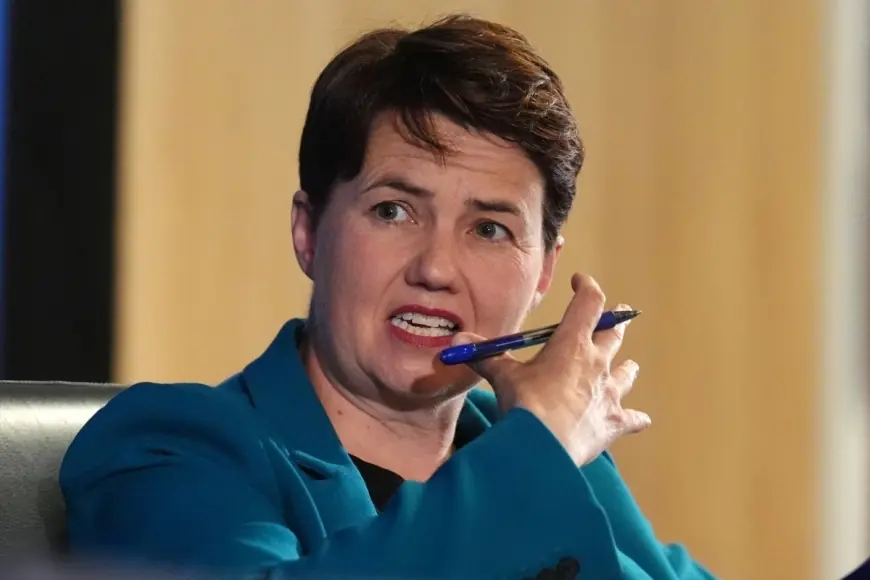
Ruth Davidson and Andy Street have stepped back onto the frontline of Conservative politics with a new campaign-style movement, Prosper UK, launched on Monday, January 26, 2026 (ET). Their pitch is blunt: the party cannot outflank a populist challenger by chasing it further right, and it risks losing a large bloc of centre-right voters who feel unrepresented.
The launch landed in a febrile moment for the Conservatives, with Reform tightening its grip on the anti-establishment right and high-profile defections intensifying the sense of a party under siege. Davidson and Street are positioning Prosper UK as a rallying point for voters and donors who want a pro-business, pragmatic centre-right offer rather than a purity contest.
What happened with Ruth Davidson and Andy Street, and what’s new now
Prosper UK is being framed as a “movement” rather than a party: no candidate slates, no immediate plan to stand in elections, and no attempt (at least for now) to replace the Conservatives. Instead, it aims to pressure the leadership into broadening the party’s appeal, especially on the economy, public services delivery, and a more functional tone on contentious issues like immigration.
The group is also making a big strategic claim: that roughly seven million voters sit in a politically “homeless” space across the centre and centre-right. Whether that number stands up is debatable, but the intent is clear—define a reachable, measurable target audience and dare the party to build a coalition big enough to win again.
Why Ruth Davidson and Andy Street are betting on the centre
Davidson and Street come from parts of modern Conservatism that were built on persuasion, not provocation: winning over sceptical urban and suburban voters, projecting competence, and stressing economic credibility. Their argument is essentially electoral maths:
-
If Reform keeps siphoning votes on the right, the Conservatives can’t afford to shed moderates at the same time.
-
A sharper right turn may energise a base, but it can also repel swing voters in marginal seats.
-
Business confidence and perceived competence—especially on growth and living costs—matter more to many floating voters than ideological signalling.
This is also about brand repair. After years of churn, controversy, and policy whiplash, a “serious and realistic” label is a deliberate contrast to both populist promises and what Prosper UK supporters describe as an overly reactive Conservative posture.
Behind the headline: incentives, stakeholders, and the quiet donor question
The incentives line up neatly for multiple players:
-
Davidson and Street get a platform that is influential without requiring them to run for office again.
-
Conservative modernisers get an organised vehicle to push back against a drift toward culture-war politics.
-
Business-aligned figures and professional-class voters get a banner that signals “stability and growth” as a priority.
-
The party leadership gets a warning light: centrists aren’t leaving quietly; they’re trying to reassert leverage.
But there’s an unspoken test here: money and infrastructure. Movements that aim to “influence” parties typically rise or fall on whether they can fund research, events, data, and sustained media operations—without looking like a donor club trying to set policy from the outside. Prosper UK will be judged quickly on transparency, governance, and whether it can show genuine grassroots energy rather than just prominent names.
There’s also a practical risk: if the movement’s messaging is seen as a rebuke to core activists, it could harden internal factionalism—turning “broadening the tent” into another internal civil war.
What we still don’t know
Key missing pieces will determine whether this is a meaningful force or a short-lived splash:
-
How the movement is funded and who sits behind the scenes
-
What specific policy asks it will push (beyond a general “move to the centre”)
-
Whether any sitting MPs quietly back it, and when that becomes public
-
How it will measure success—polling shifts, membership growth, policy adoption, or candidate selection outcomes
-
Whether the leadership treats it as constructive input or an organised nuisance
What happens next: realistic scenarios to watch
-
Soft embrace by the leadership (ET: late January to spring 2026): meetings, warm words, selective policy nods—without major ideological change. Trigger: polling shows a recoverable bloc in the centre.
-
Factional backlash inside the party: activists and right-leaning voices frame Prosper UK as undermining the fight with Reform. Trigger: movement gains traction in media and donor circles.
-
Policy “proof points” emerge: Prosper UK releases concrete proposals on growth, skills, housing, and public service reform. Trigger: leadership demands specifics before engagement deepens.
-
A wider “anti-populist” alignment takes shape: informal cooperation among moderates across politics, focused on economic competence. Trigger: more defections and tighter three-way races.
-
Movement-to-party escalation (longer shot): if influence fails, pressure mounts to stand candidates. Trigger: leadership shuts them out and the Reform threat worsens.
Why it matters
Ruth Davidson and Andy Street are trying to change the Conservative argument from “how far right is far enough” to “how big can our coalition be.” If Prosper UK succeeds, it could pull the party toward a more electorally expansive, business-friendly message—potentially reshaping the next general election battlefield. If it fails, it may confirm a harsher reality: that the centre-right vote is fragmenting into camps that can’t easily be stitched back together.