Bruce Springsteen’s newest flashpoint isn’t a song — it’s the risk of being the loudest voice in a fragile moment

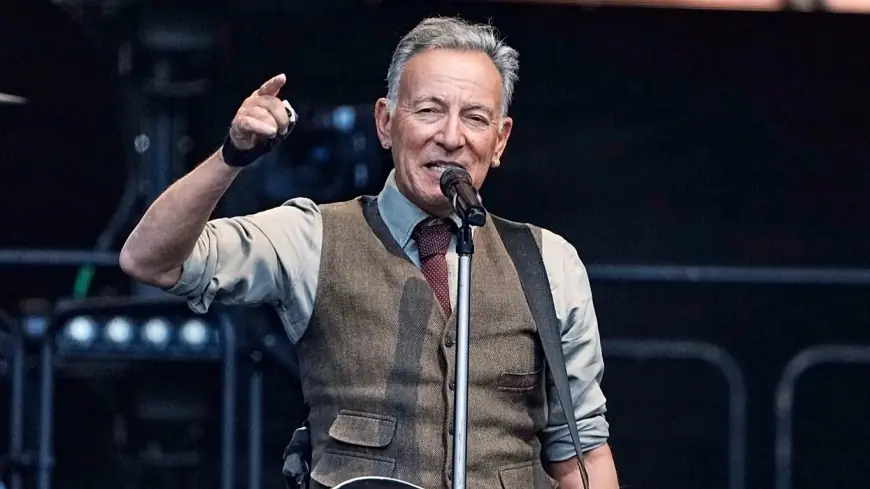
In recent days, Bruce Springsteen has stepped into a political storm that’s bigger than the usual celebrity commentary cycle, turning a surprise onstage appearance into a national flashpoint with real-world consequences. The uncertainty isn’t whether he meant what he said — it’s how far the backlash travels, and what it pulls into the blast radius: a charity event, a community grieving a death linked to federal enforcement, and an artist whose cultural authority has long rested on speaking for “ordinary” lives without becoming the story himself.
Springsteen’s move matters because it lands at a time when public trust is already brittle. When a figure with his stature frames federal tactics as authoritarian, it doesn’t just register as opinion; it hardens divisions, energizes supporters, and invites retaliation from political leaders who treat cultural influence as a threat to be neutralized.
The volatility: art as protest, protest as target
Springsteen has been politically outspoken for decades, but this moment carries a sharper edge because it’s attached to an incident that people aren’t treating as abstract. His remarks followed heightened tension in Minneapolis after a fatal shooting involving a federal immigration operation — the kind of event that triggers simultaneous demands for accountability, calls for removal of federal agents, and a race to define the narrative before the facts settle for the broader public.
By dedicating “The Promised Land” to Renee Good, a 37-year-old mother of three who died in the Minneapolis incident, Springsteen put a name and a family into a conversation that often gets reduced to slogans. That choice changes the temperature. It invites empathy — and it also invites blowback from those who view any criticism of federal enforcement as undermining public safety.
The risk for Springsteen isn’t only reputational. It’s that his presence becomes a lever for others: a symbol that can be used to rally, to punish, or to distract from the underlying questions about what happened and what rules govern federal operations in cities that don’t want them there.
What happened at the New Jersey appearance
Springsteen made an unannounced appearance at a New Jersey charity concert and delivered a forceful denunciation of federal immigration enforcement actions tied to Minneapolis, urging agents to leave the city and warning that American democratic norms are being tested. He performed with a longtime collaborator and used his set to make the message inseparable from the music — the classic Springsteen method of turning performance into a civic speech without pausing the show’s momentum.
The political reaction followed quickly. A pointed response from Donald Trump escalated the exchange into a direct culture-war clash, with the former president dismissing Springsteen’s talent and standing rather than engaging the substance of the criticism. That move is familiar in modern politics: attack the messenger’s legitimacy, not the message.
The parallel track: a Springsteen biopic extends the spotlight
At the same time, the Springsteen universe is already in a high-visibility stretch because a new authorized biopic about the making of Nebraska has begun rolling into home viewing. That amplifies everything. When a legacy artist is simultaneously being reintroduced to casual audiences through a dramatized origin story, any present-day controversy hits harder — because the public is consuming a “myth-building” narrative at the same moment the real person becomes a headline.
This overlap creates a strange feedback loop: renewed interest in the Nebraska era can deepen admiration for the craft and vulnerability in his songwriting, while the political confrontation pushes critics to reduce him to a caricature. The two stories aren’t separate; they’re now reinforcing each other in the attention economy.
Mini timeline of how this intensified (and what it signals)
-
Jan. 17, 2026: Surprise charity appearance in New Jersey; Springsteen delivers a sharp political message and dedicates a song to Renee Good.
-
Jan. 19: National political response escalates the moment into a direct public feud.
-
Jan. 23: The new Springsteen biopic begins its home-viewing rollout, expanding the audience engaging with his legacy.
-
Late January: The combined effect widens the lens: Springsteen is discussed not only as a musician, but as a political actor with cultural leverage.
Why this story is sticking
Springsteen’s core power has always been credibility: he performs working-class narratives with enough specificity that listeners feel seen, and enough scale that the stories become national myths. When he applies that credibility to a live political crisis, it’s harder to dismiss as “celebrity noise,” which is exactly why the pushback arrives so fast.
For supporters, the episode reads like moral clarity — using a platform to name a harm and insist it matters. For opponents, it reads like overreach — an entertainer stepping into a domain they believe belongs to officials and institutions. For everyone else, it’s a reminder that the boundary between performance and politics has collapsed: the stage is no longer separate from the state.
Springsteen has always sung about promises and consequences. In 2026, he’s living that theme in public, where the consequences don’t wait for the encore.