
























Zach Charbonnet Injury Update: Seahawks lose a playoff engine, forcing a backfield rewrite on the sport’s biggest stage

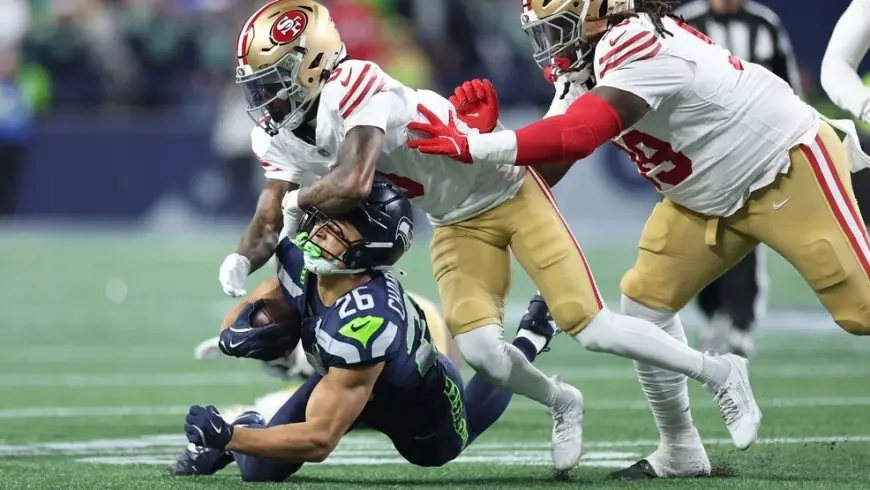
Seattle’s postseason run just got harder in the most practical way possible: the Seahawks have lost the running back who kept their offense balanced when games tightened. Zach Charbonnet is out for the remainder of the season with a torn ACL and will require knee surgery, removing a dependable red-zone finisher and pass-protection option at the exact point in the calendar when small edges decide everything. The immediate consequence isn’t only fewer rushing attempts—it’s fewer “safe” plays, fewer clean looks for the quarterback, and less flexibility when the game script turns chaotic.
Why this injury changes Seattle’s offense more than the box score suggests
Charbonnet’s value wasn’t built purely on highlight runs. He offered something coaches lean on in January: predictability. He hit the right landmarks, he could close out clock-draining drives, and he functioned as a stabilizer when defenses sold out to stop the primary plan. Losing him forces Seattle to consolidate the running workload and reassign the “dirty work” snaps—short-yardage, blitz pickup, and late-game carries—without the comfort of a true two-headed rotation.
In a playoff environment where defenses get faster and more aggressive, that matters. A thinner backfield can ripple into play-calling, tempo, and how much the offense trusts its protection calls. It also changes how opponents substitute: when the personnel is less varied, it becomes easier to anticipate tendencies.
What happened to Charbonnet and what Seattle has confirmed
Charbonnet suffered the knee injury in Seattle’s divisional-round win over San Francisco, a lopsided game that turned costly late in the first half. He did not return after the injury, and Seattle’s coaching staff later confirmed the diagnosis: a torn ACL that will require surgery and end his season.
The club has not put a precise recovery timetable on the calendar, but an ACL repair typically comes with a long rehabilitation arc that extends well into the offseason program and can influence readiness for the start of the following season. For Seattle, the operative reality is simple: Charbonnet is unavailable for the remainder of the playoff run, including any potential Super Bowl appearance.
The performance gap Seattle now has to patch
Charbonnet wasn’t a supplementary piece. He finished the regular season as the team’s leading rushing touchdown scorer and remained central to the offense’s physical identity. His postseason absence doesn’t just remove a runner—it removes the option to keep both backs fresh and punish defenses with repeated contact.
Seattle now leans more heavily on Kenneth Walker III as the primary back, with depth options asked to absorb a share of the carries and specialized roles. The staff can still manufacture a functional ground game, but the margin for error shrinks: fewer bodies to rotate means fatigue becomes a factor faster, and any additional nicked-up player becomes a bigger problem.
What it means for the NFC Championship matchup
Seattle’s next game arrives with a clear strategic question: can the Seahawks sustain their preferred run-pass balance without the back who helped them stay unpredictable? In a conference title game, defenses are built to force quarterbacks into discomfort—long third downs, tight windows, and pressure looks that punish hesitation.
Charbonnet’s absence makes it more likely Seattle has to win with either:
-
A higher-volume Walker workload, risking diminished explosiveness late, or
-
A more pass-leaning plan that increases the number of high-variance snaps
Either approach can work, but both come with tradeoffs. The Seahawks’ best version has been the one that can toggle between styles without telegraphing intent—something that is simply harder without a trusted second runner.
Practical ripple effects Seattle has to solve this week
-
Short-yardage identity: Who becomes the go-to for “we need one yard” situations if Walker is being managed?
-
Pass protection assignments: Which back is most reliable in blitz pickup when the opponent starts sending extra rushers?
-
Tempo and substitution: Can Seattle maintain pace without losing efficiency when rotating depth backs?
-
Play-action credibility: Will opponents respect the run with the same intensity if the personnel rotation is thinner?
-
Late-game endurance: Can the Seahawks close a game with the run if Walker has already carried the load early?
Charbonnet’s injury doesn’t eliminate Seattle’s path, but it changes the shape of it. In January, teams don’t just lose players—they lose options. And in the NFL’s final rounds, fewer options means every remaining choice has to be sharper, faster, and closer to perfect.