






















Alex Honnold is climbing Taipei 101 live now — and the “safety system” is mostly weather, timing, and the right to stop

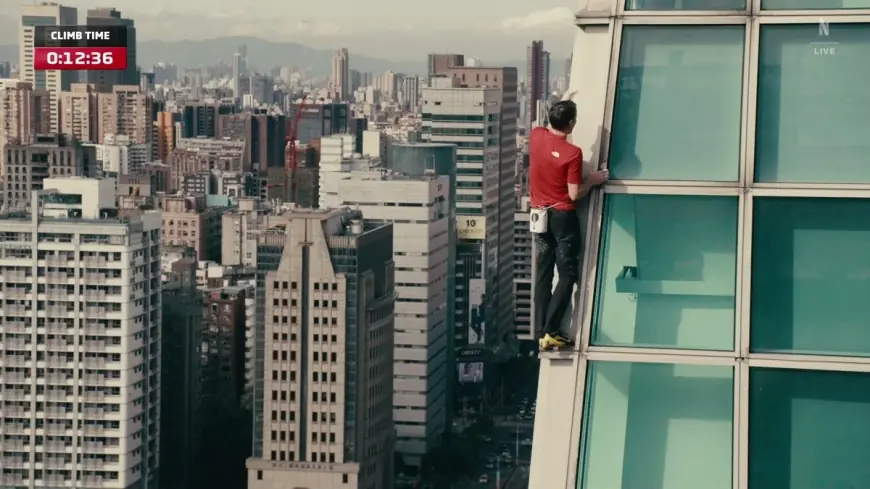
Alex Honnold’s Taipei 101 ascent is happening in real time, and it’s forcing a blunt redefinition of what “safe” can mean when there are no ropes, no harness, and no safety net. The headline isn’t just that a free-solo legend is on a 101-story skyscraper; it’s that the entire attempt is being governed by uncertainty: wind, moisture, and the psychological margin that can shrink without warning. After a one-day delay for rain, the live broadcast has become a high-profile test of whether a platform can prioritize restraint over spectacle.
The risk isn’t hidden — it’s managed with stop rules, not backup gear
In most climbing, safety is physical redundancy: ropes, anchors, belayers, a second chance. This event is built on the absence of those things. So the risk management has shifted to what can still be controlled:
-
Weather as the hard gate: The climb was postponed after rain made conditions unacceptable. On a skyscraper façade, even light moisture can change friction and turn “routine” movements into slips.
-
Permission to stop mid-story: The attempt is structured around the idea that it can be called off if conditions deteriorate or if Honnold shows hesitation that suggests the margin has narrowed too far.
-
A short broadcast delay: The livestream is not truly instantaneous; it’s running with a brief time buffer designed to prevent the audience from seeing the worst-case outcome.
None of these measures make the climb safe in the conventional sense. They simply limit how much avoidable risk gets added on top of an already extreme premise.
What’s happening in Taipei: the climb, the building, and why it’s different from rock
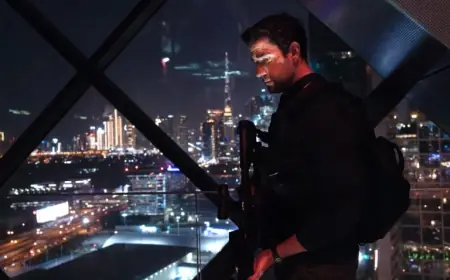
Honnold began climbing Taipei 101 on Sunday, January 25, 2026 local time, after the weather delay shifted the schedule. Taipei 101 stands roughly 508 meters (1,667 feet) and is famous for its stacked “segments,” which create repeating ledges and balcony-like breaks. Those architectural features matter because this is not a natural wall: it’s engineered geometry.
That difference changes the problem set:
-
No natural “texture” vocabulary: On rock, tiny irregularities and friction shifts are part of the craft. On a building, surfaces and edges can be cleaner—and more punishing if conditions are slightly off.
-
Repetition becomes fatigue: The climb can become a test of sustained precision rather than a single dramatic crux.
-
Exposure is psychological as much as physical: Regular ledges may offer momentary pauses, but they can also emphasize how high up you are, over and over.
It’s also worth noting that Taipei 101 has been climbed before, but this attempt stands out because it’s being done ropeless and live, adding an audience-sized layer of pressure to an already unforgiving task.
Mini timeline (how the weekend shifted)
-
Planned live window: A prime-time start in North America, morning in Taipei
-
Delay: Rain forces a 24-hour postponement
-
Go time: The climb begins on January 25 in Taipei
-
Live safeguard: A short broadcast delay remains in place throughout
-
Forward line: If wind or rain returns, the attempt can pause or stop—success here depends as much on restraint as on strength
When to watch: the time-zone confusion that fueled the last-minute search surge
The event’s scheduling has been a moving target because the broadcast time is fixed for one audience while the weather is fixed to another.
The key conversion that tripped people up:
-
8:00 p.m. Eastern (Saturday, Jan. 24) aligns with Sunday morning in Taipei (Jan. 25).
-
In Cairo, that lands in the early hours of Sunday.
If you’re opening the app and wondering whether you’ve missed it, the simplest rule is this: the climb is presented as a live event tile, and the broadcast began only once conditions cleared enough to proceed.
The part viewers don’t usually consider: “live” changes the ethics, not just the adrenaline
A filmed free-solo ascent is already intense. A live one adds a new question: what is the responsibility of the broadcaster and the audience when the outcome can’t be edited into a narrative?
That’s why the weather delay is arguably the most important moment so far. It signaled that the show’s top decision wasn’t “how to keep it on schedule,” but “whether it should happen at all.” In an event like this, that choice is the closest thing to a safety net anyone gets.
For now, what’s unfolding on Taipei 101 is not a typical sports broadcast and not a typical documentary. It’s a real-time climb where the most meaningful protection is the willingness to stop—because on a skyscraper, the margin for being wrong isn’t small. It’s final.