























Skyscraper Live safety: Alex Honnold’s Taipei 101 climb turns weather into the real “opponent” on Netflix’s high-risk broadcast

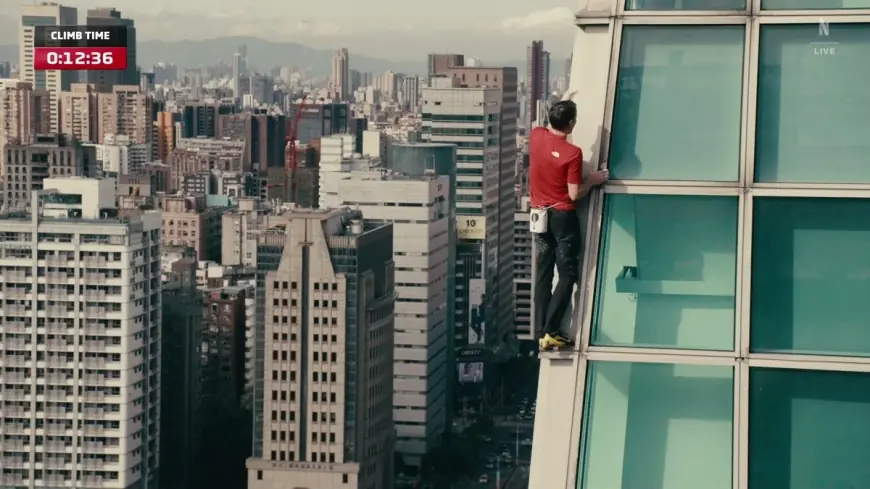
Alex Honnold’s live, ropeless ascent of Taipei 101 is marketed as a test of nerve and precision, but the last 24 hours have made the real storyline clearer: safety is being decided by the sky. After a rain-driven delay, Netflix’s Skyscraper Live is unfolding as a live experiment in how far “real time” television can go while still keeping a hard line on go/no-go conditions. For viewers, the stakes are unusual: it’s not just whether Honnold finishes—it’s whether the broadcast can stay live without tempting fate.
Safety by subtraction: what can be controlled when there are no ropes
In a normal climb, safety means backups: ropes, anchors, redundancy. Here, the central risk—an unprotected fall—remains the premise. So the production’s safety approach has shifted to controlling everything around the climb:
-
Weather gating became the headline decision after rain forced a postponement. On a skyscraper façade, moisture isn’t a minor inconvenience; it changes friction, visibility, and confidence on every move.
-
Stop authority is built into the attempt. The climb can be called off if conditions deteriorate or if Honnold shows hesitation that suggests the margin has narrowed too far.
-
Broadcast safeguards include a built-in delay intended to prevent the live feed from showing a worst-case moment. That doesn’t protect the climber physically, but it’s part of how a platform manages the ethical risk of airing an event like this.
The result is a rare kind of “live safety” story: the protections are mostly procedural and environmental. The climb’s danger isn’t being engineered away; it’s being boxed in with strict decision points.
Mini timeline (how the weekend shifted)
-
Scheduled live window: a prime-time start in North America, morning in Taipei
-
Delay decision: rain forces a 24-hour push, reinforcing that conditions are non-negotiable
-
Go time: the climb begins with crowds watching from below and a global stream active
-
Forward-looking signal: any return of steady rain or gusty wind can still pause or stop the attempt mid-broadcast
Start time, time zones, and how to watch the Taipei 101 climb live
Confusion around “when is Skyscraper Live” has mostly been time-zone math. The scheduled stream time has been 8:00 p.m. Eastern (North America), which lands on a different calendar day elsewhere:
-
Eastern (ET): 8:00 p.m. Saturday, Jan. 24
-
Cairo (EET): 3:00 a.m. Sunday, Jan. 25
-
Taipei (UTC+8): 9:00 a.m. Sunday, Jan. 25
Netflix is carrying the event globally within regular subscriptions, and the “best seat” is simply being on time—because this is built as a real-time broadcast rather than a stitched highlight reel. The live climb has also dropped into a crowded weekend for sports viewing habits (including fight fans scanning schedules), which helps explain the last-minute surge of searches for start times and “how to watch.”
Why Taipei 101 makes this different from Free Solo
Honnold’s fame is rooted in natural rock—especially El Capitan, the climb that defined the “Free Solo” era. Taipei 101 flips the problem set. This isn’t a cliff with variable cracks and textures; it’s a repeating, engineered structure where tiny environmental changes can matter more than audiences expect.
Taipei 101 stands 101 stories and roughly 1,667 feet tall, and the route relies on architectural features—horizontal beams, ledges, and built elements—rather than rock holds. That can create a strange paradox: parts of the building offer regular “rest-like” positions, while other stretches are exposed in a way that feels unnervingly clean and featureless. Add intermittent rain or shifting wind, and the climb becomes less about one heroic crux and more about sustaining perfect decisions for a long time.
Skyscraper Live’s biggest safety message, ultimately, has been the least cinematic one: postpone when it isn’t right. In an era where “live” usually means “the show must go on,” this event is betting its credibility on the opposite—proving it can stop, delay, or cut away the moment conditions stop being safe enough for a no-rope attempt.