

























New Report Reveals Murder Rate Hits 1900s’ Historic Low

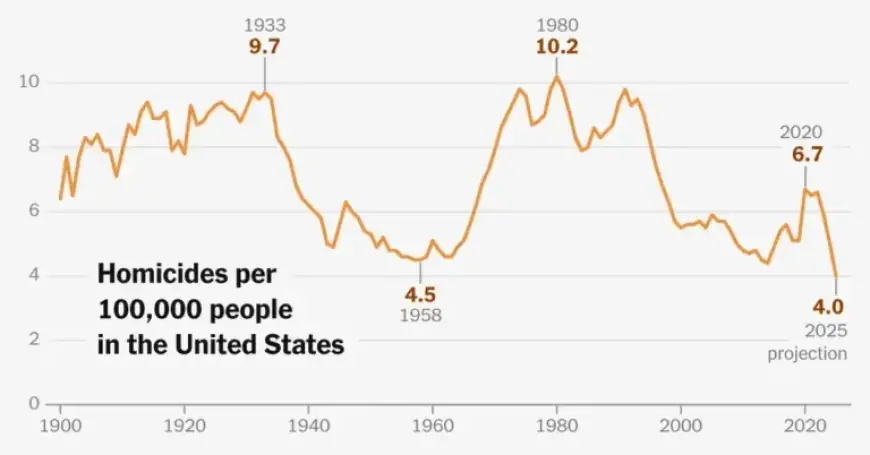
Recent analyses suggest that 2025 may record the lowest national homicide rate seen in 125 years. This decline represents the largest single-year reduction in homicide rates on record, marking a significant milestone in crime statistics across the United States. Over recent years, incidents of violence have steadily diminished.
Murder Rates Decline Across the Nation
The Council on Criminal Justice, a nonpartisan think tank, conducted an evaluation of crime data from 40 cities. This analysis revealed shocking statistics: homicides dropped by 25 percent, shootings decreased by 13 percent, and carjackings fell by 29 percent since 2019. These trends provide evidence that the spike in violence during the early 2020s was an anomaly rather than a new norm.
City-Specific Statistics
Among the cities analyzed, many exhibited remarkable decreases in crime:
- Baltimore achieved a 60 percent reduction in homicides, reaching a record low.
- Salt Lake City, Chattanooga, and El Paso each saw homicide rates cut by approximately 50 percent since 2019.
- Out of 35 analyzed cities, only eight reported higher murder rates in 2025 compared to pre-pandemic levels.
However, certain locations such as Milwaukee (42 percent increase), Austin (36 percent increase), and Minneapolis (30 percent increase) continue to struggle with elevated homicide rates, despite some indications of improvement.
Public Perception of Crime
Public sentiment regarding crime rates is also shifting. A Gallup survey from last October indicated only 49 percent of people believed crime had risen compared to 64 percent in 2024. Notably, fears about walking alone at night have also declined.
Factors Influencing Crime Rates
While some political figures attribute the reduction in crime to federal interventions, experts suggest that various societal changes are at play. Multiple factors contribute to the crime decline, including mental health treatment, enhancements in law enforcement strategies, and societal aging.
Experts point out, “Many cities without federal intervention saw comparable crime reductions,” highlighting that external factors may be more influential.
Research indicates a significant evolution in societal interactions, with more people engaging online rather than face-to-face, which minimizes opportunities for violent crimes. This trend raises questions about whether the nature of crime is shifting rather than diminishing.
Future Considerations for Crime Reduction
Many experts advocate for continued comprehensive approaches to violence prevention. Strategies like hot-spot policing and youth engagement programs have gained traction in recent years.
Jennifer Doleac from Arnold Ventures emphasized the need to maintain momentum, stating, “We do have control over our destiny here.”
As the nation reflects on these encouraging statistics, the focus now shifts to sustaining these improvements and addressing ongoing challenges in public safety.