






















Military Coddles F-35s, Concealing True Taxpayer Costs

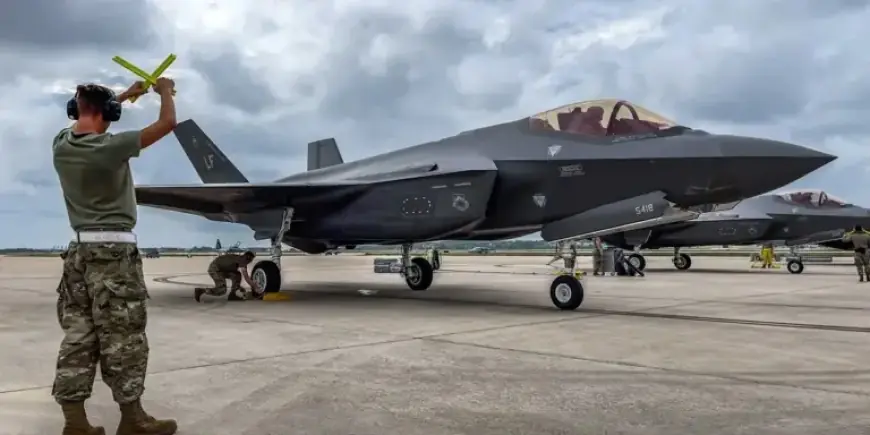
This article examines the United States military’s handling of the F-35 fighter jets and explores the implications for taxpayer funding and national defense. The F-35 program is under scrutiny for its cost overruns, performance issues, and operational inefficiencies.
Cost Overruns and Performance Failures
Initially launched as a modern marvel of aviation, the F-35 program is now a troubling example of mismanagement. It has faced over $2 trillion in costs, significantly exceeding the 2007 Government Accountability Office estimate by 400% when adjusted for inflation.
The aircraft encounters reliability issues, with full mission capable (FMC) rates alarmingly low at 36.4% for the F-35A, 14.9% for the F-35B, and 19.2% for the F-35C. Only the most recent F-35 variants show FMC availability rates above 10%.
Mission-Capable Rates: A Misleading Measure
Instead of focusing on FMC rates, the military emphasizes mission-capable (MC) rates, which hover around 50%. However, this figure is potentially misleading as it includes aircraft suitable for non-combat missions, such as training or ferrying.
The Issues with MC Rates
- MC rates do not equate to combat readiness.
- Taxpayer funding is directed toward ineffective or unreliable aircraft.
- This practice could mask the actual performance issues of the F-35.
Maintenance Challenges and Cost Drivers
The F-35’s maintenance expenses are largely driven by mission frequency, total flight hours, and operational conduct. Each sortie increases wear and tear. Thus, fewer longer excursions create less stress on the aircraft compared to multiple short flights.
For reference, legacy fighters like the F-16 averaged 250–350 flight hours annually; F-35s, however, come in at just 195 hours per year. Notably, older aircraft maintain better mission readiness despite higher flight hours.
The Impact of Concurrency on Costs
The F-35 program employs a concurrency model that leads to numerous retrofits, significantly prolonging aircraft downtime. A newly delivered F-35 may be bogged down in service upgrades, which not only delays operational capability but also defers maintenance costs, giving a false impression of efficiency.
Summary of Cost Shifting
| Factor | Impact on Costs |
|---|---|
| Shorter Sorties | Less wear, lower immediate maintenance costs |
| Aircraft Downtime | Deferred maintenance expenses |
| Lower Flight Hours | Reduced pilot training opportunities |
Operational Security and Future Readiness
Operational security concerns restrict the sharing of specific details regarding the restrictions imposed on F-35 flights. Recent reports indicate costs for the F-35 program are projected to rise from $1.1 trillion to $1.58 trillion, while expected flight hours will decrease by 21% due to ongoing reliability issues.
Potential adversaries, such as China and Russia, are likely aware of these limitations, raising concerns about the F-35’s effectiveness in real-world scenarios. This lack of operational robustness not only jeopardizes national security but also results in less skilled pilots.
Conclusion: The Future of the F-35 Program
The military’s treatment of the F-35 highlights the need for a reevaluation of resource allocation. Continuing down this path risks exacerbating the issues surrounding reliability and performance while diverting critical funds from potentially superior defense alternatives. It is crucial to confront these realities to avoid the pitfalls of sunk cost fallacies.