Nahid Rana vs Pakistan’s New Openers: Pace Exposes Transition Questions

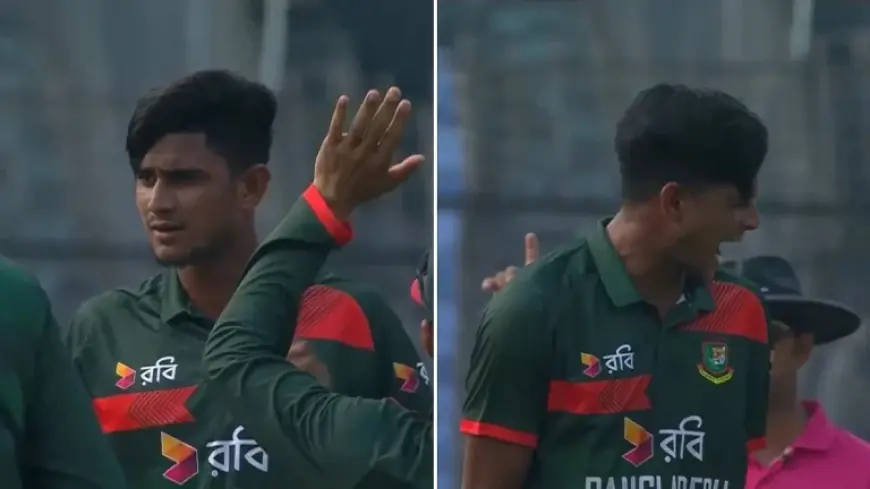
nahid rana ripped through Pakistan’s top order in the first ODI in Dhaka, while Pakistan opened with debutants Sahibzada Farhan and Maaz Sadaqat. The comparison asks whether Rana’s burst was primarily proof of Bangladesh’s renewed bowling potency under Mehidy Hasan Miraz or evidence that Pakistan’s transitional batting line-up remains vulnerable.
Nahid Rana: five-wicket haul and career snapshot
Nahid Rana produced a maiden five-wicket haul, claiming five wickets as Bangladesh bowled Pakistan out for 114 in 30. 4 overs in Dhaka. He was introduced as the second-change bowler after the Pakistan openers had added 41, and his spell reduced the visitors from 47/1 to 70/6 as he took five key wickets across the middle overs.
Rana’s outing was described in match coverage as a 5/24 from seven overs and featured deliveries in the 140kmph range, taken in his sixth ODI. His victims included Sahibzada Farhan and Mohammad Rizwan among others, making the performance simultaneously a match-defining burst and a personal milestone.
Sahibzada Farhan and Maaz Sadaqat: Pakistan’s opening experiment and early returns
Pakistan handed ODI debuts to Sahibzada Farhan and Maaz Sadaqat as openers, and the pair put on a 41-run opening stand before Farhan fell to Rana. That start represented the most notable contribution from Pakistan’s top order; the side ultimately folded for 114, with Faheem Ashraf top-scoring with 37 off 47 before Mustafizur Rahman removed him.
Match coverage frames Pakistan as an ODI side in transition after the decision to omit a senior figure from the squad and with Shaheen Shah Afridi leading a team that includes several new faces. Pakistan’s selection intent created the test this match supplied: whether debutants and a reworked unit could absorb pressure on a Dhaka surface where Bangladesh sought to reset under Mehidy Hasan Miraz.
Dhaka ODI comparison: where Nahid Rana and Pakistan’s transition align and diverge
Applying the same criteria—measurable match impact and role in shaping innings—reveals clear contrasts. On impact, Nahid Rana registered five wickets and halted the opening momentum within a seven-over spell; Mehidy Hasan Miraz also contributed, taking three wickets after Rana’s burst. Pakistan’s impact measures sit on the other side: an opening partnership of 41, a collapse from 47/1 to 70/6, and a total of 114 all out in 30. 4 overs.
On role clarity, Bangladesh presented a coordinated bowling plan: Rana as the pace strike option and Miraz supplying spin breakthroughs. Pakistan’s experiment put inexperienced players at the top while asking a reworked batting order to carry a touring-side burden. That divergence—Bangladesh executing a clear tactical plan while Pakistan tested personnel—made outcomes predictable in match terms and sharper when compared directly.
| Player/Unit | Impact | Key numbers from Dhaka |
|---|---|---|
| Nahid Rana | Strike pacer, match-defining burst | 5 wickets; cited 5/24 from 7 overs; bowled in 140kmph range |
| Mehidy Hasan Miraz | Spin partner, middle-overs control | 3 wickets; removed Abdul Samad, Hussain Talat, Shaheen Afridi |
| Pakistan openers (Farhan, Sadaqat) | Initial stability, then collapse | 41-run opening stand; team all out for 114 in 30. 4 overs |
That side-by-side shows Rana’s performance did not emerge in isolation: it was part of a wider Bangladesh plan that exploited Pakistan’s unsettled lineup. Yet the same facts also leave room for an alternative reading—Pakistan’s newcomers were exposed on a surface where Bangladesh sought to tighten matches rather than let them run away.
The finding is clear: Rana’s five-wicket haul exposed Pakistan’s immediate batting fragility more decisively than it confirmed a long-term superiority for Bangladesh. The remaining two matches of the three-match ODI series will test that finding. If Pakistan’s reworked unit produces a stronger top-order showing in the next ODI, the comparison suggests the Dhaka result reflected selection growing pains; if Bangladesh’s bowlers repeat this level of control, the comparison indicates a substantive tactical reset under Mehidy Hasan Miraz.