Tdsb Rejects Parent Patrols as Malvern Washroom Vandalism Escalates Prompting Response Debate

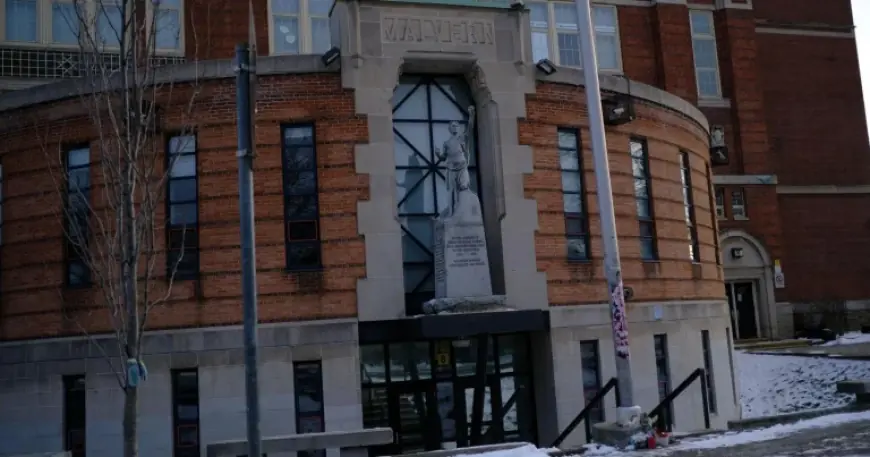
Malvern Collegiate Institute’s school council recently proposed parents stand guard outside the boys’ washrooms after students repeatedly clogged sinks, urinals and toilets, and left garbage scattered on floors. The tdsb rejected the parent-led patrol idea, a decision that signals the board prefers administrative and policy responses over volunteer supervision as the immediate path forward.
Malvern Collegiate Institute’s boys’ washrooms: the confirmed state on campus
Malvern’s school council alerted families that the boys’ washrooms have been deliberately clogged and damaged, rendering facilities unusable at times and forcing closures for repairs. Council members said the troubling behaviour has been going on for years, and administrators have at times had to close washrooms for short periods to complete repairs. Principal Aaron Gotfryd and the council directed queries to the Toronto District School Board as they explored mitigation options, including a proposal described as a “small army of parents” willing to stand outside washroom entrances in shifts.
Tdsb response and reporting: rejection of parent patrols and limits in tracking
The Toronto District School Board rejected the parent-led proposal to station volunteers outside the boys’ washrooms, stating staff and administration have been actively working to address the issue and stressing the importance of caring for shared spaces. The tdsb also does not keep a school-level tally of washroom incidents and categorizes such events under “other” in its annual report on student suspensions and expulsions, a classification that bundles washroom incidents with situations on school buses, in common areas and online spaces. The board declined to answer questions about the scope of the problem board-wide, leaving the scale of washroom disruption at individual schools unclear.
Scenarios for Malvern and the board: If vandalism continues… / Should tdsb change tracking…
If vandalism continues at Malvern, the immediate pattern visible in the context suggests more frequent short-term closures of affected facilities, repeated repair work and continued pressure on school administration to find local fixes. The council’s mention of longstanding issues and past attempts to mitigate transgressions indicates that, without a new operational change, washrooms may remain among the least supervised areas used for loitering, vaping and other misconduct, mirroring incidents previously reported across four Greater Toronto Area boards that included fires, robberies, cannabis use, sexual activity and students being secretly filmed and shamed online.
Should the tdsb begin to track washroom incidents at the school level, the context signals a second path: clearer data could change how the board prioritizes facility supervision and repair budgets. Some Ontario school boards have opted to remove entrance doors to increase visibility and deter bad behaviour, a concrete policy already in use elsewhere; more granular tdsb tracking could make such measures or other targeted interventions more likely to be considered and piloted within affected schools.
Still, the two scenarios rest on different levers: local school responses and physical deterrents in one case, and systemic reporting and board-level policy shifts in the other. The presence of a parent council prepared to volunteer and the board’s categorical handling of incidents as “other” provide distinct signals about what might change if either lever is pulled.
The next confirmed milestone in this story from the context is the Toronto District School Board’s annual report on student suspensions and expulsions, where washroom incidents remain categorized under “other. ” What the context does not resolve is the board-wide scope of washroom vandalism, because the tdsb does not keep school-level tallies and declined to answer questions about how widespread the problem is. Expect the annual report and any future board decisions on incident tracking to be the concrete indicators that will clarify whether local measures or board policy will shape the next phase of responses at Malvern and beyond.