Trinity Rodman’s New Washington Spirit Deal Changes the NWSL Talent Game—and Raises the Bar for USWNT Stars

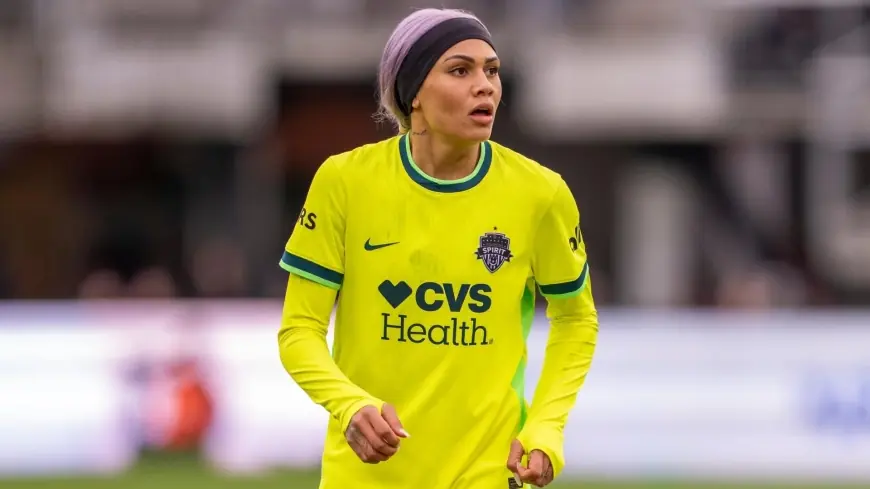
Trinity Rodman locking in a new multi-year commitment with the Washington Spirit isn’t just a contract headline—it’s a signal that the league’s best young American talent can be retained at home on terms that increasingly resemble a global market. For the Spirit, it stabilizes their attack around a franchise face. For the NWSL, it tests whether new salary and roster mechanisms can keep pace with European interest. For the USWNT, it resets expectations around availability, form, and leadership as Rodman steps back into national-team duty.
A Record Deal That Forces Teams to Rethink “Retention” as a Strategy
Rodman’s agreement—three years in length, running through 2028—lands as a pressure point for the entire league: keeping top players now requires planning, flexibility, and a willingness to build budgets around genuine “cornerstone” contracts. Recent coverage has framed the agreement as an NWSL-record level deal, with figures circulating around $3 million in total value; the complete financial structure hasn’t been fully itemized publicly.
What makes this significant is less the headline number and more the pathway it represents. The league has recently adjusted roster and salary tools intended to help clubs hold onto elite talent without flattening the rest of the squad. In practical terms, Rodman’s extension becomes a proof-of-concept: a team can pay a true star rate, keep depth, and still compete—if they manage the rules well.
For fans, it also changes the “where will she go?” conversation. Instead of viewing a prime-age star as a short-term asset destined for a transfer, the Spirit can treat Rodman as the long-term center of a system, a brand, and a competitive window.
The Deal Details, and Why Timing Matters Now
The basics are clean: Rodman is staying in Washington on a three-year contract. The timing is the story.
Two forces collided at once:
-
League-side change: Newer roster/salary mechanisms have opened space for top-end deals without forcing an immediate teardown elsewhere on the roster.
-
Player-side leverage: Rodman’s status—club production, national-team impact, age, marketability—creates a rare negotiating position in the women’s game.
This also arrives alongside a national-team return. Rodman is back with the USWNT for a January camp featuring matches scheduled for January 24 (vs Paraguay) and January 27 (vs Chile). The national-team angle matters because it shapes both workload and visibility: strong performances raise her global profile, while smart management protects a club investment that is now clearly built around her.
At the same time, Rodman’s recent health history has been a recurring subplot in recent seasons. Any long-term deal at this level naturally invites the same question from both club and country: how do you maximize output while minimizing wear? The Spirit’s incentive is obvious—this contract is designed to secure peak years. The USWNT’s incentive is just as clear—she’s part of the next core, not a short-term spark.
Quick Snapshot
-
Player: Trinity Rodman
-
Club: Washington Spirit
-
Term: 3 years (through 2028)
-
Why it’s notable: Positioned as a record-setting NWSL contract; enabled by evolving roster/salary mechanics; overlaps with USWNT return in January camp
What This Means Next
In the short term, the Spirit get clarity: Rodman is not a week-to-week storyline, she’s the plan. That should influence offseason decisions, tactical identity, and how the club recruits complementary pieces—especially creators and fullbacks who can feed her runs and isolate defenders.
Who benefits (near term):
-
Washington Spirit: Stability, marketing power, and a clearer competitive window built around a prime-age star.
-
NWSL as a league: A stronger case that elite U.S. players can be kept domestically on top-tier terms.
-
USWNT coaching staff: A key attacker re-entering the pool with a stable club situation and defined role.
Who faces pressure (near term):
-
Other NWSL contenders: Expect more star players to push for similar structures; front offices that can’t adapt may lose top talent.
-
The Spirit’s roster depth: Bigger star contracts raise the importance of smart cap management and value signings elsewhere.
-
Rodman herself: With a record-level deal comes a new layer of expectation—consistency, leadership, and availability become part of the evaluation, not just highlights.
What to watch next:
-
How Rodman is used in the upcoming USWNT matches—minutes, role, and responsibilities will hint at the plan for 2026.
-
Whether more top players sign comparable “cornerstone” deals as clubs test the league’s newer mechanisms.
-
Any public clarification on the contract’s structure (bonuses, mechanisms, roster designations), which could become a template for other negotiations.
Rodman staying put is a win for her club, but it’s also a stress test for the league’s new era: if the NWSL wants to be the first choice for the world’s best, deals like this can’t be exceptions—they have to become part of the standard playbook.