



















Giant Airship Over China: A Game-Changer for Global Wind Farms?

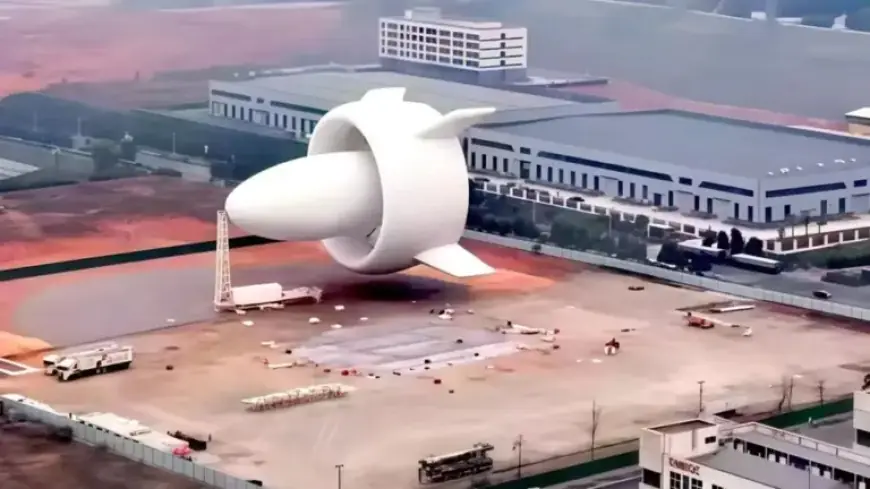
The recent launch of the S2000 Stratosphere Airborne Wind Energy System (SAWES) has sparked significant interest in the potential of giant airships for sustainable energy in China. Measuring 197 feet (60 meters) in length, 131 feet (40 meters) in width, and 131 feet in height, this helium-filled airship can generate substantial power when connected to the grid.
What is High-Altitude Wind Energy?
The S2000 exemplifies high-altitude wind energy (HAWE), a technology designed to harness stronger and more dependable winds found at higher altitudes. It operates between 1,641 feet (500 meters) and 9,843 feet (3,000 meters), where wind speeds are not only faster but more consistent. According to experts, even slight increases in wind speed can significantly boost energy output, highlighting why airship-mounted wind turbines are gaining renewed attention.
Successful Testing of the S2000
During its test earlier this month, the S2000 elevated to approximately 6,561 feet (2,000 meters) within 30 minutes. In just a few hours of operation, it produced around 385 kilowatt-hours (kWh) of electricity. This amount can power about six electric vehicle charges or supply an average household in China for nearly a month. Notably, this performance is not reflective of the technology’s maximum ability, which is claimed to be up to 3 megawatts—comparable to a mid-sized conventional wind turbine.
Design and Efficiency Innovations
The S2000 features a distinctive appearance, likened to a fantasy airship with an egg-shaped fuselage encased within a large, donut-shaped ring. This ring supports stabilizers and houses turbine blades arranged concentrically. According to Weng Hanke, chief technology officer at Linyi Yunchuan, this ducted design enhances efficiency by guiding and compressing the wind before it reaches the turbines.
Potential Impacts and Future Considerations
- Visual Appeal: The S2000’s unique design has drawn comparisons to alien spaceships, inciting considerable media attention.
- Government Interest: The Chinese government appears keen to explore such technologies, especially in urban areas where land is limited for traditional wind farms.
- Funding Opportunities: China is willing to invest in innovative, albeit high-risk, energy solutions like the S2000.
While the test generated excitement, challenges remain. The durability of tethered airships against storms and their compliance with airspace safety regulations are still under scrutiny. Additionally, concerns surrounding long-term maintenance, as well as economic comparisons to conventional continental wind turbines, warrant further investigation.
As the world looks toward renewable energy solutions, the S2000 airship could represent a significant advancement for global wind farms, particularly in high-demand regions. Whether this technology can be scaled successfully will determine its role in future energy strategies.