B-21 Raider Refueling Test Draws Attention, but Air Force Stops Short of Confirming Fuel Transfer

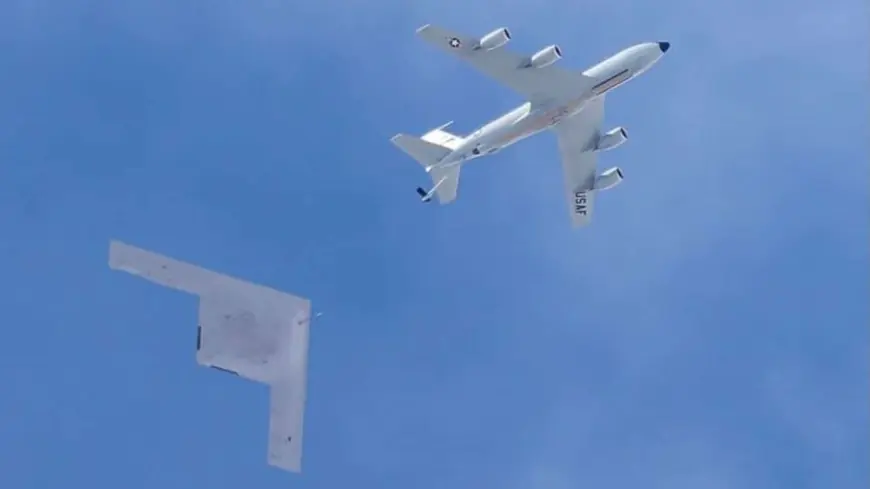
Fresh images of the B-21 Raider flying with a KC-135 tanker over California have pushed the Air Force’s next-generation stealth bomber back into the spotlight, but the clearest official update is more cautious than some of the online reaction suggested.
The Air Force confirmed this week that a B-21 flight-test aircraft completed a “close-proximity flight” with a KC-135 Stratotanker on Tuesday, March 10. That language matters. It points to a key aerial-refueling test step, but not a confirmed public declaration that fuel was actually passed from tanker to bomber.
For a program racing toward operational service in 2027, the distinction is important even if the broader takeaway is still positive: the Raider’s flight-test campaign is moving deeper into one of the most important capability areas for a long-range penetrating bomber.
What Happened Over California
Plane spotters and defense watchers circulated photos and video from the Mojave Desert showing the B-21 flying in position behind a KC-135, with an F-16 also visible nearby in a chase role. The sighting quickly drew attention because aerial refueling is one of the key capabilities the bomber will need for long-range conventional and nuclear missions.
The images led to immediate speculation that the Raider had completed its first publicly observed refueling event. But the official Air Force description was narrower. A spokesperson said the aircraft completed a test event involving close-proximity flight with the tanker and called it part of the ongoing campaign to validate the B-21’s capabilities and operational readiness.
That leaves two things true at once: the test was real and meaningful, but the public record still does not include an outright official confirmation of fuel transfer.
Why “Close-Proximity” Still Matters
Even without a confirmed boom connection, this is not a minor development. Proximity work is a critical step before routine aerial refueling can happen. New aircraft typically go through repeated approaches to the tanker, testing handling, stability, sightlines, safe separation and emergency breakaway procedures before moving into full contact events.
That is especially important for a stealth bomber with a flying-wing design and a mission profile built around very long distances. The B-21 is meant to penetrate heavily defended airspace, and aerial refueling will be central to how it extends range, endurance and operational flexibility.
So while the headline-grabbing question is whether the tanker boom actually connected, the larger story is that the Raider appears to be progressing through the right sequence of test milestones.
Why the B-21 Needs Aerial Refueling
The Raider is being developed as the Air Force’s future long-range stealth bomber and a core part of the U.S. nuclear triad. To perform that mission set credibly, it must be able to operate far from home base and remain airborne long enough to reach distant targets or loiter when required.
That makes tanker integration essential, not optional.
The current bomber force offers the clearest precedent. The B-2 Spirit, the Raider’s predecessor in the stealth-bomber role, relies on aerial refueling to support global missions. The B-21 is expected to do the same, but with a larger planned fleet and a broader role in future deterrence and strike operations.
The Test Comes as Production Pressure Builds
The timing also matters. The Air Force and Northrop Grumman announced in February that B-21 production would be accelerated by 25%, with the first operational delivery still targeted for 2027 at Ellsworth Air Force Base in South Dakota.
That means each new sign of progress in flight testing carries extra weight. A bomber that is moving into tanker-related test events is a bomber getting closer to the full operational envelope the service needs.
At the same time, the sight of a brand-new stealth bomber working alongside a KC-135 also underscores another issue hanging over the force: the tanker fleet is old. The KC-135 entered service in the 1950s and is still expected to support some of the Air Force’s most advanced aircraft for years to come.
What This Means Now
The most grounded reading of this week’s B-21 Raider refueling story is that the bomber has reached an important aerial-refueling test phase, but the Air Force has not publicly confirmed an actual fuel transfer.
That may sound like a narrow distinction, but it is the right one for a developing defense story. The images suggest the program is advancing. The official statement confirms meaningful test activity. What remains unclear is whether the public has already seen the Raider complete a true refueling contact or only a precursor event very close to it.
Either way, the direction of travel is clear. The B-21 is moving through another consequential stage of flight testing, and each such step brings the Raider closer to becoming the Air Force’s next operational stealth bomber in 2027.