Supreme Court Guns Case Puts “Private Property” Carry Rules on the Brink as Justices Signal Major Shift

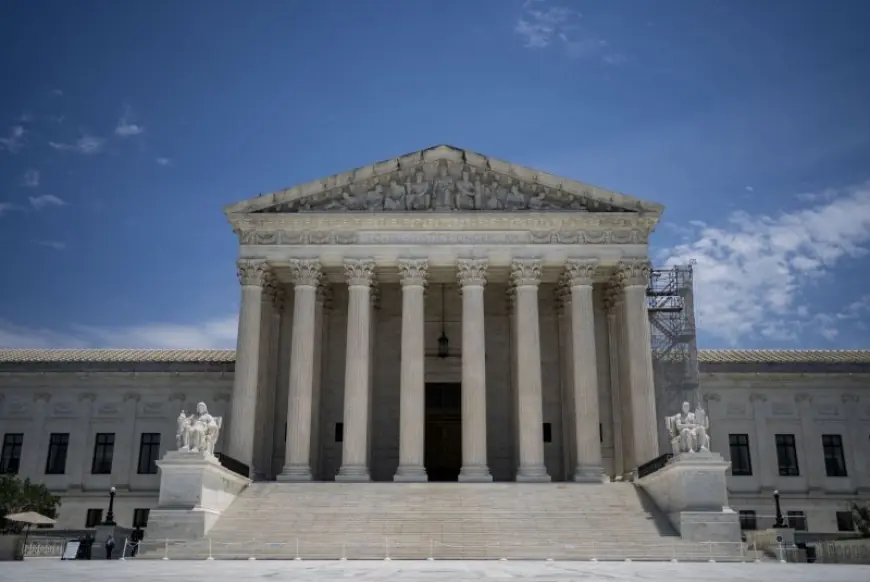
The Supreme Court’s latest guns showdown is zeroing in on a deceptively simple question with sweeping national consequences: when a business opens its doors to the public, can a state presume guns are banned unless the owner says “yes,” or must the default be the other way around?
On Tuesday, January 20, 2026, the justices heard arguments in Wolford v. Lopez, a challenge to a 2023 Hawaii law that flips the usual rule. Under Hawaii’s approach, licensed gun carriers cannot bring a handgun onto most private property that’s open to the public—such as stores, restaurants, hotels, and malls—unless the owner gives express permission (via signage or direct consent). The challengers say that structure effectively wipes out the practical ability to carry for self-defense in everyday life.
The court’s questions suggested serious trouble for Hawaii’s law, especially from the conservative majority that has steadily expanded Second Amendment protections in recent years.
The core fight: “default yes” vs “default no” for carrying on private property
Most states operate on a “default yes” model: a lawful carrier may enter a business unless the owner posts a sign or otherwise tells them firearms aren’t allowed. Hawaii’s law set a “default no” rule: carry is prohibited unless the owner affirmatively opts in.
That default matters because it governs nearly everywhere people actually go. If the presumption is “no guns,” then a carry permit can become mostly symbolic outside sidewalks and streets—especially in dense commercial areas where nearly every destination is private property that’s open to the public.
Supporters of Hawaii’s law frame it as a strong protection for property owners and public safety. The challengers say property owners already have full authority to exclude firearms, but the state cannot use property rights as a blanket tool to suppress a constitutional right for everyone unless each owner posts a sign.
How the Supreme Court’s gun doctrine shaped this case
This dispute sits squarely in the post-Bruen era. In 2022, the Supreme Court’s New York State Rifle & Pistol Association v. Bruen decision strengthened public-carry protections and adopted a “history and tradition” test: modern gun regulations must be consistent with the nation’s historical understanding of the Second Amendment.
Hawaii and other states passed new laws after Bruen aimed at limiting guns in certain locations and tightening carry rules through place-based restrictions. Hawaii’s “express permission” requirement is part of that wave.
During arguments, several justices pressed the idea that the Second Amendment should not be treated as a second-class right—raising comparisons to how other rights operate in public-facing settings. The tension is clear: property owners have the right to set rules, but the state’s decision to impose a blanket presumption against carry may be viewed as too aggressive under the court’s current framework.
Why this matters beyond Hawaii
The decision will resonate far outside the islands. Several states—particularly those that tightened carry rules after Bruen—have adopted versions of the same “default no” approach for private property open to the public.
If the Supreme Court strikes down Hawaii’s law, it could:
-
Force states with similar rules to rewrite or abandon them
-
Shift the battleground to narrower, location-specific limits (so-called “sensitive places”)
-
Increase the practical scope of public carry in major commercial areas
-
Clarify how far states can go in using presumptions and signage requirements to shape where guns can be carried
Importantly, even a ruling against Hawaii would still leave business owners free to ban guns themselves—through signs, policies, and direct notice. The key question is whether the state can impose a universal presumption that bans carry unless each owner opts in.
What the Court is not deciding in this case
The justices took up the private-property presumption issue but left other parts of Hawaii’s broader law on the sidelines for now—such as certain “sensitive place” restrictions. That narrowing suggests the court wants to resolve a clean constitutional question about default rules rather than litigate every category of location in a single opinion.
Another major gun case is coming: firearms and illegal drug use
The court’s gun docket does not end with Wolford. A separate case scheduled for argument this term, United States v. Hemani, targets a federal law (18 U.S.C. § 922(g)(3)) that bars gun possession by unlawful users of illegal drugs. That statute has become a national flashpoint as courts wrestle with how the Bruen “history and tradition” test applies to modern categories of prohibited persons.
That upcoming fight could shape:
-
How broadly the government can disarm groups based on status or conduct
-
Whether courts demand individualized findings of dangerousness
-
The stability of other federal firearm prohibitions now facing Bruen-based challenges
What happens next and when a ruling is expected
The Supreme Court typically issues major decisions by late June. Between now and then, the justices will weigh whether Hawaii’s “default no” rule is a permissible property-rights protection or an unconstitutional end-run around the right to carry.
One thing is already clear from the tone of questioning: the court is treating “where you can carry” as the next frontier in Second Amendment law. If Hawaii falls, the post-Bruen landscape could tilt again—away from broad presumptions and toward a world where bans must be narrower, more historically grounded, and easier to justify location by location.