Ben Stiller Urges White House to Remove Tropic Thunder Clip from Hollywood-Themed Iran Video

The White House’s release of a 42-second, Hollywood-styled video tied to U. S. action in Iran has prompted actor ben stiller to demand removal of a Tropic Thunder clip, saying “War is not a movie. ” The move matters as the clip appeared amid a broader, gamified presentation of military force that has drawn near-universal online mockery and prompted objections from entertainment figures.
White House and X Account Post a 42‑Second Remix
The video, posted on the White House’s official X account, condenses scenes from well-known films and television into a rapid sequence billed as promoting “justice the American way” for Iran. It runs for 42 seconds and strings together clips that include superheroes, period freedom fighters and television antiheroes. The White House edit ends with a Mortal Kombat line and the caption “The White House. ”
Alongside those film excerpts, the reel overlays real-world footage of cruise missiles and mortar strikes. A game-like visual treatment appears in the clip: a yellow +100 integer flashes on-screen when a mortar connects with its target, borrowing the visual grammar of first-person-shooter games. The soundtrack was noted as the instrumental to a well-known pop-rap track, intensifying the video’s arcade-like tone.
Ben Stiller Calls for Removal of Tropic Thunder Clip
Actor Ben Stiller publicly asked the White House to remove a clip from his film Tropic Thunder that was used in the montage, asserting that “War is not a movie. ” His demand followed the posting of the reel during the U. S. -led war in Iran, which was already being characterized online as juvenile and provocative. The video’s use of popular cinematic moments—ranging from Tony Stark to John Wick and lines from Breaking Bad—prompted several performers associated with those clips to react with disapproval.
The presence of entertainment footage alongside militarized imagery has produced an immediate reputational impact: the video was met with almost universal mockery online and accusations that the administration’s social media output was immature. That backlash included commentary that the piece functioned as a form of political propaganda, repackaging cultural icons to convey a message about the conflict.
Celebrity Clips, Military Imagery and Political Messaging
Fragments of films and shows used in the reel underscore the administration’s strategy of leaning on high-recognition cultural touchstones. Clips of Robert Downey Jr. ’s Iron Man, Russell Crowe’s Gladiator, Mel Gibson’s Braveheart, Tom Cruise’s Top Gun and Keanu Reeves’ John Wick were intercut with television moments featuring Jimmy McGill and Walter White. Bryan Cranston’s line “I AM the danger!” is among the snippets repurposed for the montage.
What makes this notable is the explicit fusion of entertainment spectacle with real-world military action: the Slate critique of the piece highlighted that, on Day 5 of the U. S. -led war in Iran, the White House uploaded a sizzle reel that remixed footage of missiles with Call of Duty-style game markers, suggesting an intent to speak in the visual language of certain online audiences. That aesthetic choice appears to have stimulated both derision and formal demands for the removal of specific copyrighted film material.
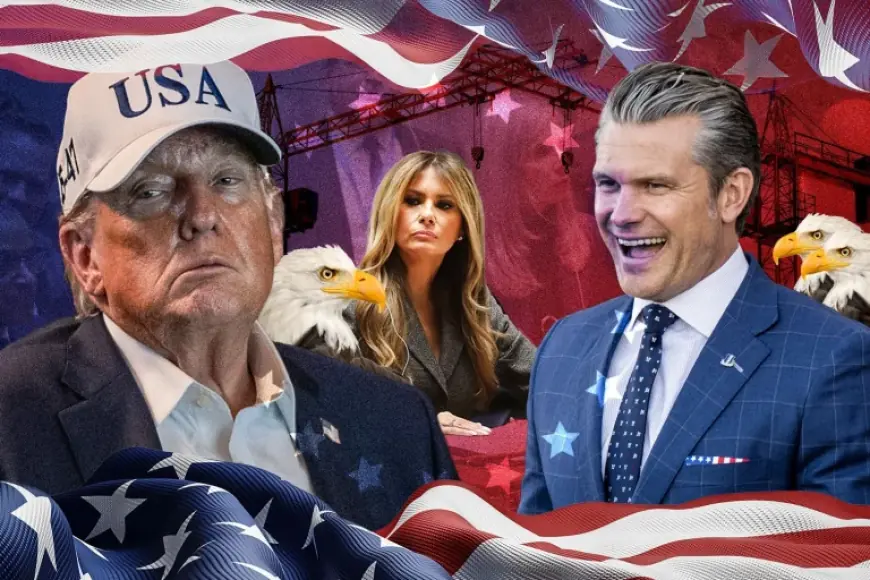
Officials and on-screen personalities featured as images in the video also drew attention. The reel briefly includes images of Pete Hegseth in uniform, and it concludes with the Mortal Kombat line “flawless victory” layered over the White House caption—a framing that critics describe as gamified triumphalism rather than sober public information.
The sequence has broader implications for how the executive branch communicates about armed conflict: a stylized, 42-second montage intended to convey a message about justice has, in practice, provoked cultural pushback, public mockery and direct requests from actors for removal of specific material. The immediate effect is a contested visual narrative over a moment of military escalation, and the episode underscores tensions between pop culture appropriation and official messaging in a time of war.