Davos 2026: Greenland Shockwaves, Tariff Anxiety, and Middle East Diplomacy Collide at the World Economic Forum

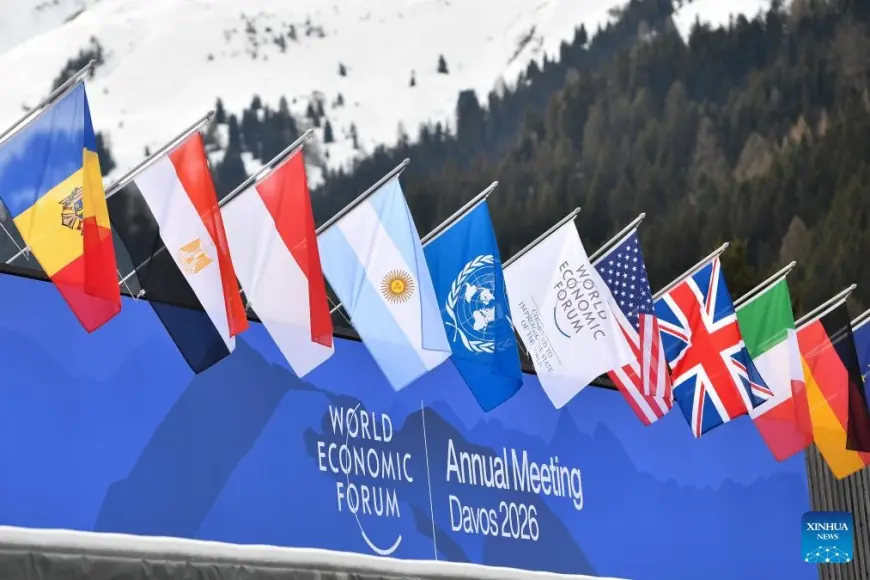
Davos has opened this week under an unusually sharp geopolitical spotlight, as leaders and executives arrive for the World Economic Forum’s Annual Meeting (January 19–23, 2026) amid fresh transatlantic strain, heightened trade uncertainty, and renewed pressure for progress on major conflicts. While the official theme emphasizes dialogue, the first days in the Swiss Alps are being shaped by hard-power questions: sovereignty, coercive tariffs, and the durability of alliances.
Davos and the new transatlantic rupture: Greenland moves from rhetoric to test case
The most jarring storyline at Davos is the escalation around Greenland. U.S. President Donald Trump has doubled down publicly on his goal of acquiring sovereignty over Greenland, using blunt language that has pushed the issue beyond past “trial balloon” territory and into an immediate credibility test for NATO partners and European unity.
For European officials, the worry is not only the Greenland claim itself, but what it signals: a willingness to use pressure tactics on matters historically treated as non-negotiable among allies. That framing is driving a tougher tone from senior European figures in Davos, with messaging that emphasizes commitments, sovereignty, and the idea that agreements must be honored.
Why Greenland is dominating Davos conversations:
-
It compresses multiple anxieties into one issue: alliance trust, territorial integrity, and great-power competition
-
It raises the prospect of retaliatory trade steps if political pressure spills into economic coercion
-
It forces European leaders to show whether they can act quickly and in lockstep when confronted publicly
Tariffs at Davos: markets hear “negotiation,” businesses hear “disruption”
Trade is the second major gravity well in Davos. Tariff threats are back at the center of corridor conversations, not as abstract policy debate but as immediate operational risk for supply chains, pricing, and cross-border investment plans.
Executives arriving in Davos are weighing two competing interpretations. One sees tariff language as leverage designed to force concessions. The other reads it as a durable policy direction that could reshape trade flows for years. That split matters: companies make different decisions depending on whether they expect short-term volatility or long-term fragmentation.
What business leaders are watching most closely in Davos:
-
Whether tariff threats expand beyond headline sectors into broad-based measures
-
How quickly Europe can coordinate a response if disputes intensify
-
The spillover into currency volatility, commodity pricing, and risk-off market behavior
Egypt at Davos: El-Sisi–Trump meeting set against Gaza and regional files
Davos is also serving as a venue for high-level diplomacy tied to the Middle East. Egypt’s presidency has said President Abdel Fattah el-Sisi is scheduled to meet President Trump on the sidelines of the forum. The planned talks are arriving at a sensitive moment for regional diplomacy, with Gaza-related initiatives and broader security concerns looming over many delegations’ agendas.
Even when Davos does not produce signed agreements, it can create momentum by aligning key principals on next steps and red lines. The El-Sisi–Trump meeting is being read as an attempt to keep channels active on several files at once, including ceasefire pathways, humanitarian access, and related regional stability concerns.
Davos and Ukraine: security guarantees, recovery, and the battle for attention
Ukraine remains a core track at Davos, with discussions spanning security guarantees, economic resilience, and reconstruction. Beyond official sessions, the Ukraine-focused programming around Davos is pushing a dual message: immediate security needs alongside the longer-term investment architecture required for recovery.
The challenge this year is attention competition. When a single geopolitical shock (like Greenland) spikes, it can crowd out other priorities. Ukraine’s presence in Davos is aimed at preventing that drift by keeping partners engaged on practical deliverables.
What happens next at Davos 2026
The most important signals over the coming days will be less about sweeping speeches and more about alignment: whether European leaders converge on a shared stance toward U.S. pressure tactics, whether trade rhetoric hardens into concrete measures, and whether diplomatic meetings on the sidelines translate into coordinated follow-through after delegations leave the mountains.
A simple way to track the Davos story from here is to watch three lines at once:
-
Alliance cohesion under stress (Greenland and beyond)
-
Trade policy clarity versus escalation risk
-
Whether conflict diplomacy produces specific next-step commitments rather than general statements