Christopher O’Connell vs Nishesh Basavareddy: Australian Open first-round clash puts qualifier’s momentum against home wildcard

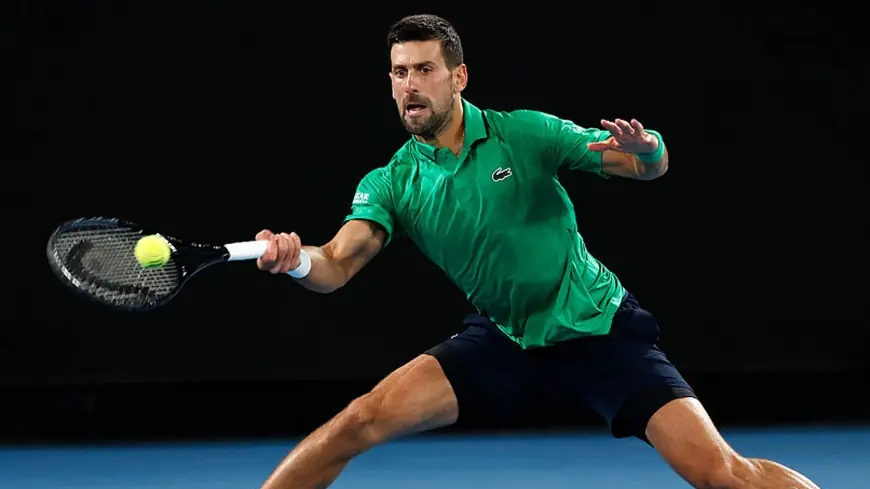
Christopher O’Connell and Nishesh Basavareddy stepped into the Australian Open spotlight on Tuesday in Melbourne with very different paths converging on the same first-round court. O’Connell, the 31-year-old Australian and a home wildcard, arrived looking to steady his season with a main-draw win in front of local support. Basavareddy, a 20-year-old American qualifier, came in carrying one of the tournament’s most talked-about qualifying runs and the belief that his level can travel from the outer courts to the biggest stages.
As the match got underway, it immediately read like a classic early-round test: the experienced tour regular trying to impose order and keep things physical, and the younger challenger aiming to shorten points, stay fearless on big moments, and prove his qualifying form wasn’t a one-week spike.
Australian Open context: why O’Connell vs Basavareddy is drawing attention
Grand Slams often produce “rankings mismatch” matchups that don’t feel like mismatches once the ball is live. On paper, O’Connell entered with the higher ranking and more main-draw miles. Basavareddy entered with fewer top-level reps but a fresher, sharper rhythm after qualifying, plus the kind of recent pressure experience that can erase a lot of nerves.
That mix makes this pairing compelling for two reasons:
-
O’Connell’s task is clarity. Against an aggressive qualifier, the Australian needs to keep patterns simple, protect serve, and avoid donating errors early when the opponent is swinging freely.
-
Basavareddy’s task is belief. Qualifying can build confidence, but the main draw demands discipline: handling longer matches, heavier balls, and the emotional swings that come with a larger stage and crowd.
Key matchup factors: what each player needs to do to win
The on-court storyline is largely about who controls the middle of the court and who gets to dictate first-strike tennis.
What favors Christopher O’Connell
-
Patience in extended rallies: O’Connell tends to benefit when points stretch and shot selection becomes a test of tolerance and positioning.
-
Backhand shape and depth: A heavier, higher-arching backhand that pushes Basavareddy back can turn the match into a physical grind rather than a sprint.
-
Resetting quickly after momentum swings: Wildcards can feel extra pressure at home. The fastest route to trouble is forcing a response after every lost game.
What favors Nishesh Basavareddy
-
Early returns and taking time away: If Basavareddy can step in on second serves and rush O’Connell’s rhythm, he can steal scoreboard control quickly.
-
Composure on big points: Qualifiers often arrive battle-tested. If he plays break points like regular points, the match tightens for the favorite.
-
Serving patterns that open the court: Against a steadier opponent, free points on serve can be the separator that prevents long, draining service games.
Who is Nishesh Basavareddy, and why his qualifying run matters
Basavareddy’s presence in this match is a direct result of a dramatic qualifying storyline earlier in the tournament. In one of the most unusual momentum shifts of the qualifying week, he survived a match that turned after his opponent mistakenly thought the contest was over during a deciding tiebreak. Basavareddy stayed locked in, took advantage of the opening, and finished the comeback to keep his Australian Open alive.
That kind of escape can do two things at once: it can inflate expectations, and it can harden a player mentally. For Basavareddy, the value is obvious. He has already lived through a high-stress scenario in Melbourne this month, and he knows he can recover from chaos.
Basavareddy’s profile also signals ambition: he has a documented career-high ranking inside the top 100 and works with coach Gilles Cervara, a name associated with elite-level development. The raw materials are there. The question is whether he can translate them against a home player who knows the environment and understands how to win ugly.
O’Connell’s home opportunity: why the wildcard matters
For Christopher O’Connell, the wildcard isn’t just a ticket into the draw. It’s leverage. Home majors are rare chances for players outside the seeds to pick up meaningful points and momentum without needing a perfect calendar.
O’Connell’s best Australian Open singles results have been second-round appearances, and his broader career includes a peak ranking inside the top 60. The mission now is to reconnect with that level by playing disciplined tennis: serving well enough to stay out of long pressure games, and returning with depth so the match doesn’t become a shootout.
Snapshot: O’Connell vs Basavareddy at a glance
| Player | Age | Entry | Notable marker |
|---|---|---|---|
| Christopher O’Connell | 31 | Wildcard | Career-high ranking inside the top 60; multiple AO main-draw appearances |
| Nishesh Basavareddy | 20 | Qualifier | Career-high ranking inside the top 100; arrives after a headline-grabbing qualifying comeback |
What comes next for the winner
The winner doesn’t just advance; they earn momentum in a tournament where early confidence can be everything. If O’Connell gets through, it validates the wildcard decision and gives the home crowd another Australian storyline to follow. If Basavareddy gets through, it cements the idea that his qualifying run wasn’t luck, but a sign he’s ready to take on main-draw opponents with real authority.
Either way, this is the kind of first-round match that can shape a season: a proving ground for a rising name and a critical checkpoint for an established pro trying to turn opportunity into results.