How Iran Conflict Fuels Rising Gas Prices

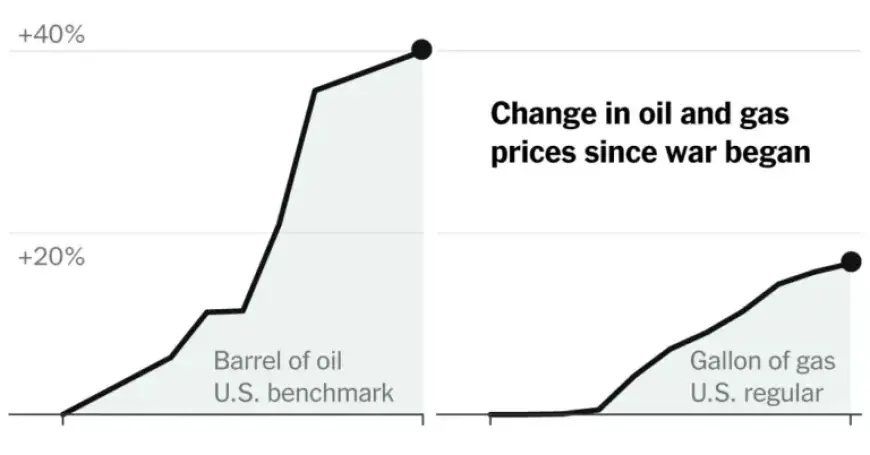
The ongoing conflict between the United States, Israel, and Iran has led to significant increases in gasoline prices in the U.S. As of Tuesday, the average price for a gallon of gasoline reached $3.54. This represents a 19 percent rise since the onset of military actions in the region.
How the Iran Conflict Fuels Rising Gas Prices
The conflict has severely affected oil production, storage, and shipping throughout the Persian Gulf. Concerns regarding delays in oil shipments have driven up the price of crude oil by approximately 24 percent during this timeframe. The Persian Gulf is critical for global energy supplies, emphasizing the interconnectedness of energy markets worldwide.
Factors Influencing Gas Prices
- The cost of crude oil accounts for about 50 percent of gasoline prices, according to the Energy Information Administration.
- Other contributing factors include refining, distribution by energy companies, and regional taxes.
- Station owners set prices with minimal flexibility, typically just a few cents per gallon.
The Impact of Middle Eastern Disruptions on U.S. Drivers
Oil pricing is largely influenced by global supply and demand dynamics. Price volatility can occur rapidly in response to disruptions caused by conflicts or changes in demand. American refiners base their pricing on commodities market benchmarks such as Brent and West Texas Intermediate.
West Texas Intermediate futures have surged by 30 percent since the attacks began, clearly demonstrating the ripple effect of Middle Eastern supply disruptions. Christopher Knittel from MIT stated, “When there’s a supply disruption in the Middle East, it raises prices for every barrel of oil in the world.” This spike directly impacts gasoline costs for consumers.
U.S. Oil Production and Imports
Despite being the largest oil producer globally, the U.S. still imports crude oil. In December alone, the U.S. imported approximately 200 million barrels of crude while exporting over 350 million barrels of petroleum products. High-quality oil produced domestically is often less compatible with American refineries, which are designed for heavier oil. This complicates the logistics of utilizing U.S.-produced oil.
- American refineries might import oil from other countries due to efficiency reasons.
- The Jones Act, requiring the use of American vessels for domestic shipments, adds to these complexities.
Government Intervention in Fuel Prices
Energy experts generally agree that presidential influence on oil prices is limited. The U.S. maintains a Strategic Petroleum Reserve, capable of holding up to 714 million barrels of crude. In 2022, the government released barrels to address price increases due to the Ukraine conflict. However, such measures typically provide only temporary relief.
Increased domestic drilling can also be a solution, but it requires time to yield results. For instance, any new oil extraction initiatives may take months to transition into available supply.
Current Political Climate and Market Reactions
Officials from the Group of 7 expressed that they are currently not concerned about fuel shortages. President Trump has made conflicting statements regarding the conflict, oscillating between downplaying the situation and issuing warnings against Iranian actions that could impact global energy supplies.
This geopolitical climate continues to influence oil prices, affecting consumers and industries alike. As tensions persist, the global energy market remains precarious, leaving many to grapple with rising costs at the pump.