Sloane Stephens Reenters the Australian Open Spotlight After a Long Injury Layoff and a Career-Reset Run Through Qualifying

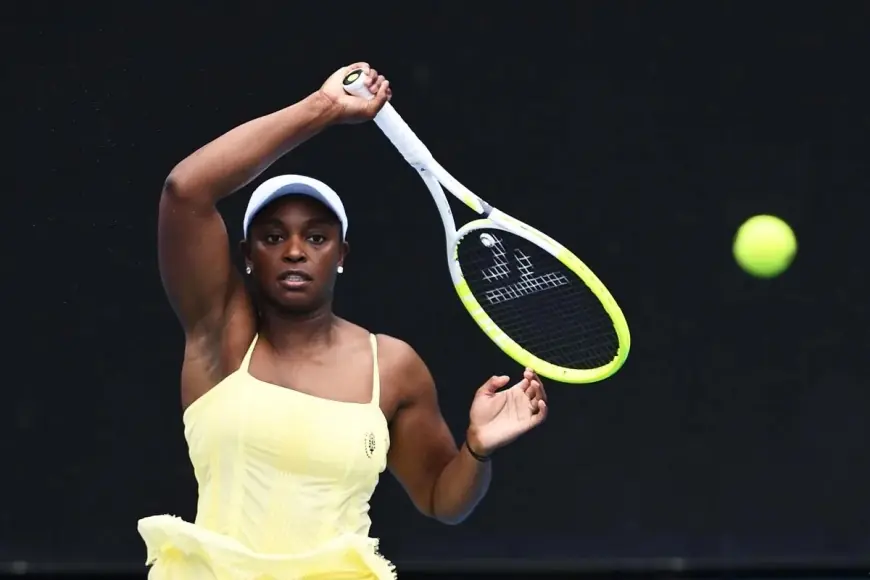
Sloane Stephens is back on the Australian Open stage, and the route she took to get there says as much about the current realities of tennis as it does about her own resilience. In recent days, the former US Open champion secured a place in the main draw in Melbourne by winning three straight qualifying matches, a return that follows a long stretch defined by a chronic foot problem, limited match play, and a ranking that had slipped far outside her typical territory.
For Stephens, the headline is simple: she’s in the tournament. The deeper story is what it took to make that happen and what it signals about the next chapter of her career, now that she has proved she can compete again without constantly managing pain.
Sloane Stephens and the “Long Way Back” Through Australian Open Qualifying
Qualifying at a Grand Slam is a different sport inside the sport. There is less margin, fewer freebies, and a sharper consequence for slow starts. Stephens entered that environment with two pressures at once: the physical question of whether her body could withstand multiple matches in a short window, and the competitive question of whether her timing would hold up against opponents who often treat qualifying like their own major.
She answered both. Across three rounds, Stephens combined stretches of clean first-strike tennis with the kind of problem-solving that used to define her best runs. One match required her to rebound from a set down. Another demanded she absorb a late push and still close. In the final step, she took out a seeded opponent in straight sets to clinch her spot in the main draw.
That sequence matters because it’s not a single “good day.” It’s proof of repeatability—three matches, three different patterns, and enough composure to finish the job.
Why the Ranking Drop Made This Comeback Feel So Jarring
Stephens entered qualifying with a ranking around the 1,000 mark, a number that looks shocking next to a career that includes major titles and deep runs across all surfaces. Rankings in tennis are brutally practical: miss time, lose points, start over. Injury doesn’t just remove you from the court; it removes your place in the draw, the seeding protection, and the weekly rhythm that keeps elite players sharp.
The result is the situation Stephens faced: a proven champion navigating the same qualifying grind as players trying to break through for the first time. That contrast is precisely why her successful run drew attention. It was a visible reminder that reputation does not win matches—legs, timing, and durability do.
Sloane Stephens, the Foot Injury, and What “Healthy Enough” Really Means
Stephens has been candid about the frustrating cycle of a foot issue that made even basic movement feel unreliable. For a player whose identity has always involved speed, defense-to-offense transitions, and elastic court coverage, a foot problem is more than an inconvenience. It changes everything: how you load on the forehand, how you slide and recover, how you trust your first step, and whether you can play aggressively without paying for it the next morning.
What stood out in her qualifying matches was not just the results, but the movement signs. She looked freer in the corners, more willing to commit to longer rallies, and less hesitant on change-of-direction sprints. That doesn’t guarantee smooth sailing—tennis bodies rarely offer guarantees—but it’s the first requirement for any meaningful rebound.
What Stephens Can Realistically Target in the Main Draw
A successful qualifying week is a strong start, not a final destination. The main draw brings bigger servers, heavier pace, and opponents who punish short balls immediately. Stephens’ best path forward will likely depend on three things:
-
Serve efficiency: not necessarily aces, but first-serve percentage and easy holds that protect her legs
-
Forehand depth: keeping the ball heavy through the middle to avoid getting rushed
-
Physical management: choosing smart patterns early in matches so she isn’t forced into constant sprint defense
If those pieces are there, Stephens can be dangerous, especially against players who dislike variety and who struggle when rallies shift from power exchanges into rhythm disruption.
Why This Moment Matters Beyond One Tournament
Stephens’ return lands at a time when tennis careers are increasingly nonlinear. Players step away, come back, reinvent schedules, and chase windows of health rather than 11 straight months of grinding. Qualifying into a major after an extended layoff is a clear marker that the door is still open.
It also reframes the narrative around her recent stretch. The story hasn’t been a simple decline; it has been a stop-start battle against a body that wouldn’t cooperate. Now, she has produced tangible evidence—wins, not just training clips—that she can compete again under pressure.
For Sloane Stephens, the Australian Open is more than a tournament this year. It’s a checkpoint. She has already done the hardest part of a comeback: proving that the work translates when the score matters. The next step is turning that momentum into main-draw wins and, perhaps most importantly, building enough continuity that this return becomes a season—rather than a moment.