Porsche Sales Slide in 2025 Despite Record 911 Revenue

Porsche sales faced a notable decline in 2025, marking a significant shift for the luxury car manufacturer. The company recorded 279,449 vehicle deliveries, which represents a 10% drop from 310,718 units sold in 2024. Despite this downturn, Porsche remains a prominent player in the automotive industry, continuing to generate substantial revenue.
Porsche’s Sales Challenges in 2025
The decline in sales can be attributed to several factors impacting the automotive market. Among these, the sluggish adoption of electric vehicles (EVs) was particularly detrimental. The Taycan model experienced a 22% reduction in deliveries, totaling 16,339 units.
Furthermore, economic challenges in China affected Porsche’s performance, with sales plummeting by 26% to 41,938 units. Issues in European markets also contributed to the decline. The discontinuation of the 718 and petrol Macan models due to cybersecurity regulations meant that replacements were urgently needed. In Europe, excluding Germany, deliveries fell by 13%, totaling 66,340 units. In Germany alone, the figure dropped by 16% to 29,968 vehicles.
Positive Trends Amid Decline
Despite these challenges, there are positive indications in Porsche’s sales structure. Of the overall deliveries, 57.9% were electrified, with one-third classified as pure EVs. The Panamera and Cayenne models notably saw a dominance of plug-in hybrid electric vehicles (PHEVs) within their sales mix.
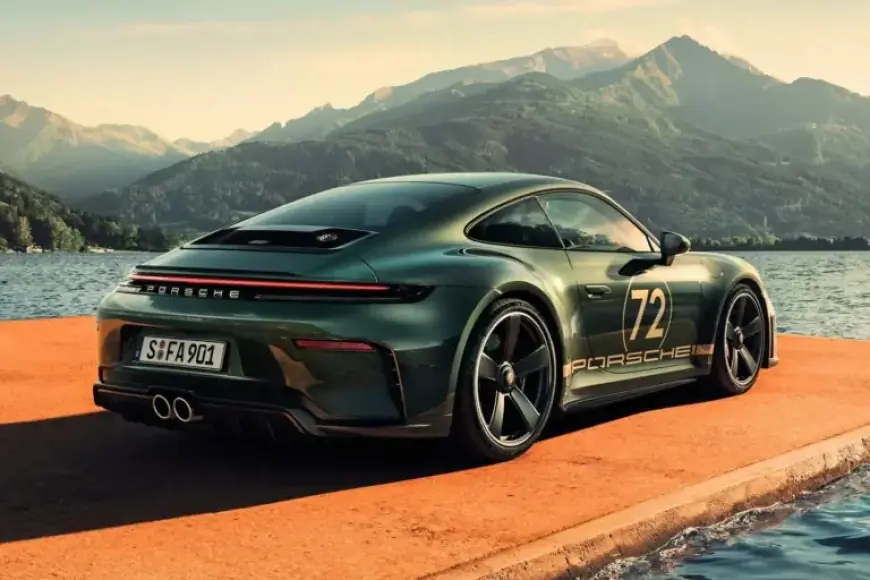
The iconic 911 model continued to perform exceptionally well, with over 50,000 units sold in 2025, starting at £100,000. In contrast, the 718 series saw a decline, with only 18,612 units registered—a 21% decrease as production phases out.
The U.S. Market and Future Outlook
The United States remains Porsche’s largest market, with 86,229 vehicles sold in 2025, closely mirroring the previous year’s 86,541 sales. This figure exceeds the combined sales from Germany and China. Although more than 34% of global deliveries are now electrified, traditional combustion engines continue to dominate in this market.
Porsche is adapting to market needs by planning a new SUV model that will shift from purely electric to PHEV. This move indicates that demand for traditional engines within Porsche SUVs is still robust, despite environmental considerations. In 2025, 38,961 of the 84,328 Macan vehicles sold were traditional models without hybrid options.
Strategic Focus for 2026
Looking ahead, Matthias Becker, Porsche’s board member for sales and marketing, outlined a strategy prioritizing value over volume. The focus for 2026 will involve managing supply and demand realistically, especially as the company phases out combustion engines for the 718 and Macan series. Future models, like the GT3 90 F.A. Porsche, will likely leverage existing platforms while the company finalizes upcoming SUVs and sports cars.
In summary, while Porsche faced a challenging 2025, the manufacturer is strategically positioning itself for future growth. A balance between electrification and traditional combustion engines remains pivotal in navigating the evolving automotive landscape.