
























Dow Jones Today Falls 521 Points on Iran War Shock Before Staging Dramatic Midday Recovery

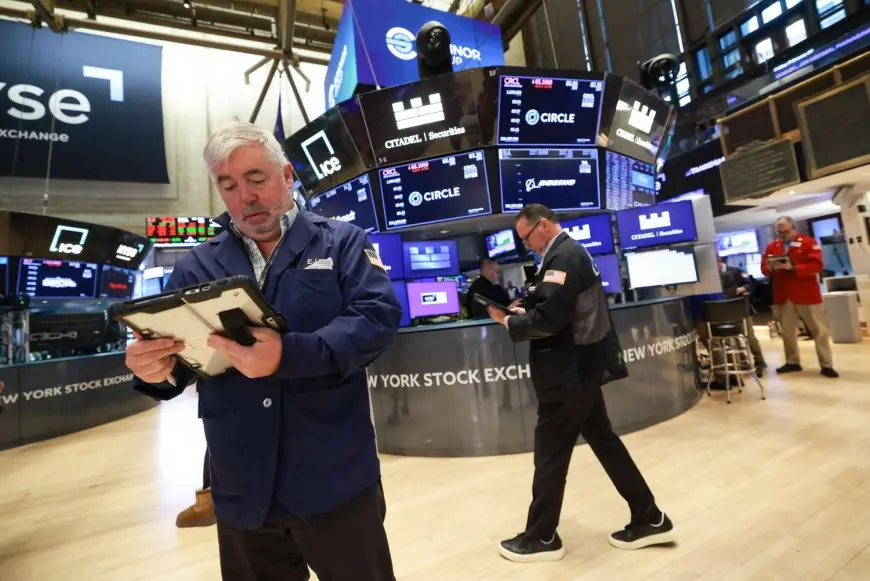
The Dow Jones is having its most volatile session in months. Monday, March 2, 2026 opened with a brutal 600-point plunge tied directly to the US-Israel attack on Iran and the outbreak of full-scale Middle East conflict — before Wall Street buyers stepped in hard, staging a remarkable recovery that left the Dow nearly flat by midday ET.
Dow Jones Today: Live Numbers as of 12:52 PM ET
The Dow Jones Industrial Average traded at 48,973.05, down just 4.87 points, or 0.01%, as of 12:52 PM ET Monday — an extraordinary comeback from an intraday low that had the index down nearly 600 points.
The S&P 500 and tech-heavy Nasdaq Composite both turned positive close to noon ET, in a comeback from an early retreat from risk assets amid the escalating Middle East conflict.
Dow futures were last showing 48,473, down 527 points. S&P 500 futures sat at 6,809.50, off 79.50 points. Nasdaq futures were at 24,635.50, lower by 369.25 points. The VIX fear gauge surged to 23.31, up 17.35% on the session.
Why the Dow Jones Opened Down 600 Points This Morning
The war between the US and Iran is threatening to widen and jolt global energy supplies. The Dow Jones Industrial Average dropped 543 points, or 1.1%, in early trading. The S&P 500 lost 1.1% and the Nasdaq Composite declined 1.6% at the session lows.
Futures tied to the Dow fell 353 points Sunday evening as investors reacted to the US-Israeli bombardment of Iran. Trump warned more casualties are likely from Operation Epic Fury while also saying the conflict could last a while as he makes regime change a primary goal.
Credit-sensitive sectors remained under pressure as the resulting increase in energy prices and an unexpected surge in the ISM manufacturing price index reignited concerns about delayed Federal Reserve rate cuts. Chip producers and other tech giants were mostly lower, with Broadcom, AMD, and Alphabet dropping more than 1%.
Dow Jones Winners and Losers on the Iran War Session
Defense stocks rose sharply after the joint US-Israeli attack on Iran. Lockheed Martin shares gained 6%, while Northrop Grumman was up 5%. Drone maker AeroVironment jumped more than 10%.
Palantir and its deep connections to the US government led the S&P 500, up 6%. Axon, RTX, and L3Harris also led, each gaining between 2% and 4%. In energy, Marathon Petroleum, ConocoPhillips, and Valero were all up 3% to 4%.
Travel stocks were crushed. United Airlines tumbled more than 6% as the most internationally exposed US carrier. American and Delta each fell more than 5%. Marriott International slid nearly 5%, while Hilton Worldwide lost close to 3%.
On the tech side, Nvidia advanced 3% and Palantir jumped 6.5%, trimming last week's declines. Banks were muted, with JPMorgan and Bank of America each down 2% following concerns about private credit exposure and client defaults.
What Triggered the Midday Dow Jones Recovery
The impact on oil prices, and in turn on inflation, remained front of mind for investors already uneasy about the backdrop for stocks. The S&P 500 had closed February in negative territory after renewed volatility in AI and software names rattled markets.
Most sectors recovered following aggressive losses on a global de-risking move, but credit-sensitive sectors remained under pressure as the resulting energy price surge reignited concerns of delayed rate cuts by the Federal Reserve.
Geopolitical shocks often fade fast in markets, but some linger. Watch the CBOE Volatility Index above 20 as a gauge of institutional hedging demand — the VIX has breached that threshold and remains elevated.
Dow Jones Context: February Was Already Rough Before Today
The Dow Jones Industrial Average plunged more than 500 points on March 2, 2026, extending recent losses as escalating military conflict in the Middle East drove a sharp risk-off move across global markets. The blue-chip index closed down 521.28 points, or 1.05%, at 48,977.92 in the most recent prior session.
The prior Monday session had seen the Dow drop 821.91 points, or 1.66%, to close at 48,804.06, while the Nasdaq Composite declined 1.13% and the S&P 500 shed 1.04% — putting the broad market index in the red for 2026 at that point.
That earlier sell-off was driven by AI disruption fears and Trump tariff uncertainty, with IBM shares cratering 13% after Anthropic published a post about its AI tool helping to modernize COBOL programming. Microsoft dropped 3% and CrowdStrike retreated nearly 10% in that session.
Despite the partial recovery, Wall Street remains on edge. The combination of Middle East war risk, oil price shock, and unresolved tariff uncertainty makes this one of the most complex macro backdrops the Dow Jones has navigated in years.