

























Texas Primaries: Runoff likely in packed Republican race to succeed Chip Roy in representing the Hill Country

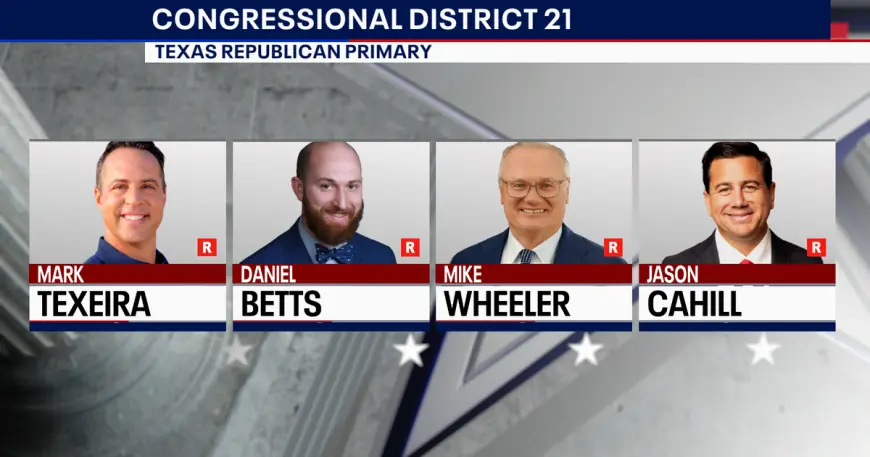
U. S. Rep. Chip Roy's decision to vacate the 21st Congressional District seat to run for Texas attorney general has turned the Central Texas contest into one of the state's most watched primaries. With a dozen Republicans on the ballot and multiple Democrats seeking the nomination, the margin for victory is narrow and a runoff is expected if no candidate reaches the 50% threshold.
Chip Roy's open seat: a crowded GOP primary and the path to a runoff
The Republican primary field lists 12 candidates, making it unlikely any single contender will top 50% on primary night. The top two vote-getters in each party will advance to a runoff if that threshold is not met, with the runoff date set for May 26. One high-profile entrant is former professional baseball player Mark Teixeira, who framed his campaign around defending a conservative agenda and Texas families. He enters the race with prominent endorsements and a fundraising advantage: only four of his opponents have raised at least $100, 000.
Other Republican names on the ballot include a former county GOP chair, a Small Business Administration appointee, and a Kendall County attorney, reflecting a crowded field with varied backgrounds. That mix increases the likelihood that the primary will narrow to a head-to-head runoff rather than produce a decisive nominee on the first ballot.
Democratic contenders and district profile
The Democratic primary is smaller but competitive, with three candidates listed for the nomination in a district that has long leaned Republican. The Democratic contenders are Kristin Hook, Regina Vanburg, and Gary Taylor. The 21st District has not voted for a Democratic congressional candidate since the mid-1970s, making the Democratic path to November an uphill climb unless the general election dynamic shifts substantially.
Geographically, the 21st District spans a stretch of Central Texas between Austin and San Antonio and includes much of the Texas Hill Country, with communities such as Kerrville and Fredericksburg noted as part of the district. The district population totals about 846, 000 people; roughly 57% identify as white and 32% as Hispanic. Median per-capita income is reported at $56, 000, offering context for the economic backdrop candidates are addressing.
Election Day mechanics, turnout and what to watch
Polls will be open statewide from 7 a. m. to 7 p. m. (ET). On Election Day, registered voters are limited to voting in their specific precinct; early voting and other voting options differ from same-day precinct voting. With such a large Republican field, turnout patterns and precinct-level performance will determine whether the race heads to a May 26 runoff.
Key variables to watch on primary night include vote splits among the highest-profile Republicans, the relative performance of well-funded campaigns versus grassroots challengers, and the degree of crossover or consolidated support in Republican-leaning precincts. Fundraising disparities—highlighted by a small number of opponents clearing the six-figure mark—could shape late advertising and ground operations if initial returns are close.
What comes next and why it matters
If no candidate narrowly clears 50% in either primary, the top two finishers will face off in the scheduled runoff, extending the intraparty fight and shifting the calendar toward the summer. The open-seat dynamic created by Chip Roy's run for attorney general makes the 21st District a focal point for both parties as they consider control and representation in the Hill Country moving into the general election season.
Recent developments indicate this contest will be decided over multiple rounds if candidates fail to build an outright majority. Voters and campaign watchers should be prepared for extended counting and potential runoff campaigning as parties refine their choices ahead of November.