























Dow Jones and U.S. Markets Face High Uncertainty as Oil Surges, Yields Climb and Stocks Swing

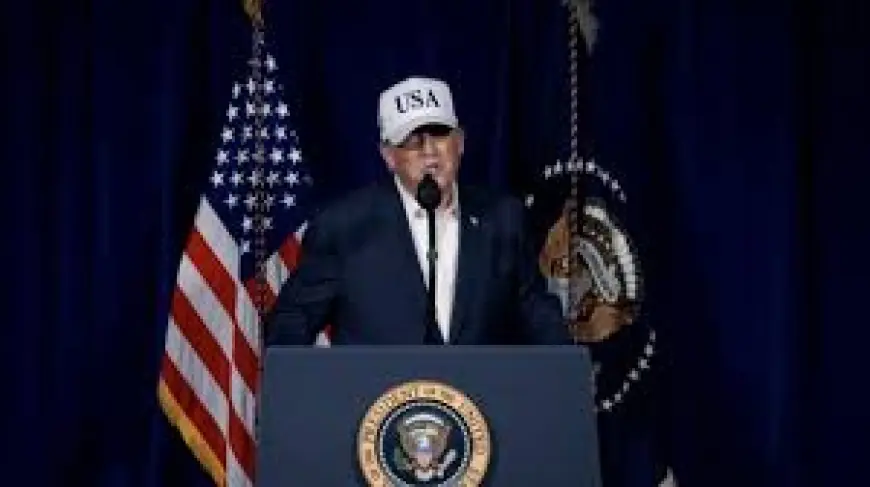
Risk and uncertainty are dominating trading as investors process U. S. and Israeli attacks on Iran and subsequent counterattacks — and what that means for oil, inflation and Federal Reserve timing. The dow jones and other benchmarks swung sharply: the S&P 500 and Nasdaq recovered into positive territory near noon ET while markets wrestled with higher oil, rising yields and the approach of Friday’s jobs report.
Risk and uncertainty: why traders are jittery about the Dow Jones and beyond
Here’s the part that matters: higher oil prices and the prospect of supply disruptions in the Strait of Hormuz are forcing investors to reprice inflation risks, and that has immediate consequences for rate expectations and asset allocation. Treasury yields moved higher as markets cut back bets on rate cuts; at the same time, gold and defense and energy names attracted buyers while travel-related stocks weakened. The balance between a near-term risk premium and longer-term historical patterns is unclear in the provided context.
Market moves in midday trading (embedded details)
U. S. stocks staged a comeback by late morning on Monday. The S&P 500 and the tech-heavy Nasdaq both turned positive close to noon ET after an early retreat. The Dow Jones Industrial Average fell but pared more substantial losses; one read of the market had the Dow down 75 points, or about 0. 2%, as of noon ET while the Nasdaq was 0. 3% higher. The S&P earlier slipped as much as 1. 2% at the start of trading before erasing its losses.
Commodities, oil and the shipping choke-point
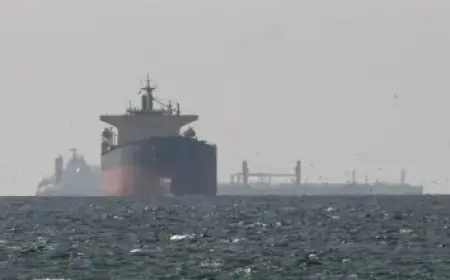
Oil moves were volatile and different intraday feeds show differing peaks and levels: one snapshot showed Brent crude futures surging as much as 13% to top $82 a barrel before moderating to below $79, with West Texas Intermediate trading just below $72. Another snapshot recorded U. S. benchmark crude around $70. 86 and Brent near $77. 36, after gains of roughly 5–6%. These discrepancies reflect fast-moving intraday pricing; the precise levels are unclear in the provided context. Iran is identified as OPEC’s fourth-largest producer, and markets are bracing for sustained disruption in the Strait of Hormuz where tanker traffic was described as at a standstill.
Higher crude also fed wider energy effects: natural gas prices remained elevated after a major supplier of liquefied natural gas to Europe said it would stop production because of the war, which could raise heating bills for the remainder of the winter.
What's easy to miss is how quickly local gasoline prices can follow global crude; logistics, pipelines, storage and seasonal blends mean regional pump prices can jump even when domestic production is strong.
Winners, losers and corporate shifts
Energy and defense names attracted buyers—shares in Exxon popped and defense stocks including Lockheed Martin found demand—while travel-linked and leisure stocks slid. Delta Air Lines moved lower; United Airlines and American Airlines were cited with declines of roughly 3. 9% and 4. 3% respectively in one account. Norwegian Cruise Line Holdings fell sharply, by about 10. 8% in another snapshot, reflecting consumer sensitivity to higher fuel and travel disruption.
Media and streaming moves also registered: Paramount Skydance said it plans to combine its Paramount+ platform with HBO Max once its acquisition of Warner Bros. Discovery closes, a move framed as a challenge to Netflix after Netflix bowed out of the bidding. Paramount’s shares traded down roughly 3% while Netflix inched higher. In a call with investors on Monday, Paramount CEO David Ellison said the company does not plan to cut production and described the purchase as “pro-competition, pro-consumer and pro-creative community. ”
Economic signals, inflation risk and the calendar
Treasury yields climbed in the same session as markets priced in hotter inflation risk, which could constrain the Federal Reserve’s ability to cut rates. The next key input for those rate calculations is the monthly jobs report due Friday: economists expect U. S. payrolls to have added 60, 000 jobs in February, down from January’s stronger-than-expected 130, 000 gain that had eased recession fears. Gold showed flight-to-safety moves—one snapshot had gold jumping to tap $5, 400 an ounce before trimming gains, while another recorded gold climbing about 1. 3%—and a major bank noted an expectation of a risk premium uplift for the precious metal as investors seek shelter (a projected gain of up to about 10% was cited for gold by a large financial firm in the available context).
Voices in the political and defense space amplified the urgency: “This is not Iraq, ” U. S. Defense Secretary Pete Hegseth said Monday. “This is not endless. ”
Quick Q&A
Q: How likely is a long-term market sell-off from this conflict?
Historical patterns were highlighted showing the S&P 500 has climbed on average 2%, 6% and 8% in the one-, six- and 12-month windows following geopolitical risk events, going back to the Korean War in 1950 and the 1956 Suez crisis, but for the current war to inflict a sustained market drop some strategists say oil would perhaps need to rise above $100 per barrel. Morgan Stanley strategists led by Michael Wilson are named in that assessment. The near-term outlook is therefore uncertain in the provided context.
Q: What could tighten the Federal Reserve's hands?
Higher oil and sustained upside pressure on inflation that pushes Treasury yields higher could reduce the chance of near-term rate cuts and prompt markets to reprioritize rate expectations.
Q: What should investors look for next?
Immediate market confirmation would include stabilization of oil flows through the Strait of Hormuz, clearer readings on crude price levels, and Friday’s jobs report aligning with or diverging from the expected 60, 000 payroll gain for February.
It’s easy to overlook, but the mix of energy logistics and sentiment can amplify moves that start as geopolitical headlines into broader inflation and policy shifts—so nominal price snapshots can matter more than they look.