Jennifer Lawrence Reveals Surprising Reason for Losing Sharon Tate Role to Margot Robbie

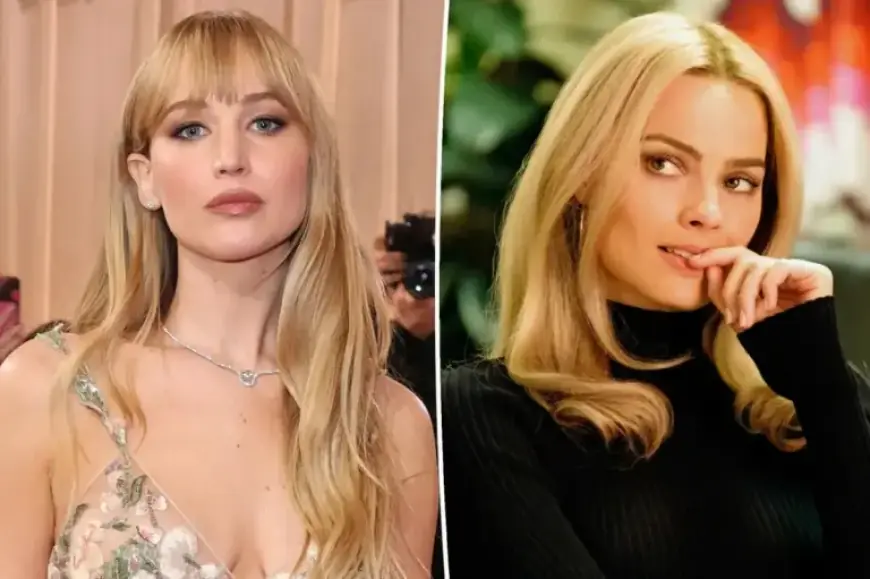
Jennifer Lawrence recently discussed her experience with losing a significant role to Margot Robbie in Quentin Tarantino’s 2019 film, “Once Upon a Time in Hollywood.” During an appearance on the “Happy Sad Confused” podcast, Lawrence expressed her belief that her perceived looks played a role in the casting decision.
Jennifer Lawrence’s Insight on Losing the Sharon Tate Role
Lawrence revealed that Tarantino had initially shown interest in her for the role of Sharon Tate. However, she claims external opinions influenced the final decision, particularly critiques regarding her appearance. Lawrence remarked, “And then everybody was like, ‘She’s not pretty enough to play Sharon Tate.’” Ultimately, the iconic role went to Margot Robbie.
The Impact of Public Perception
Lawrence mentioned that she might have internalized the narrative around her appearance, stating, “I’m pretty sure it is true. Or it’s that thing where I’ve been telling the story this way for so long that I believe it.” Additionally, she revealed that during this time, Debra Tate, Sharon’s sister, also publicly commented on the matter, stating, “She’s not pretty enough to play Sharon,” before casting her support for Robbie due to her physical resemblance to Sharon Tate.
Background on Sharon Tate and the Film
The film “Once Upon a Time in Hollywood” is a revisionist take on the Manson Family murders, where Sharon Tate, who was 26 and pregnant at the time of her tragic death in 1969, becomes a central figure. Alongside Robbie, the film featured notable actors such as Brad Pitt and Leonardo DiCaprio.
Previous Casting Considerations
Interestingly, Lawrence also turned down a different role in another Tarantino film, “The Hateful Eight” from 2015. She had been offered the character Daisy, which ultimately went to Jennifer Jason Leigh. Reflecting on her decision, she said, “I should not have done [that].”
Conflicting Accounts from Quentin Tarantino
Adding to the complexity of the casting story, Tarantino has provided a different account of his discussions with Lawrence. In an interview on the “WTF with Marc Maron” podcast, he claimed he initially considered Lawrence for the role of Lynette “Squeaky” Fromme, a member of the Manson Family, rather than for Sharon Tate.
Lawrence’s experience is not isolated; she has publicly discussed other roles she lost, including a part in “Easy A,” which went to her friend Emma Stone.
Conclusion
The discussions surrounding Jennifer Lawrence, Margot Robbie, and the Sharon Tate role highlight how public perception and casting dynamics can significantly influence an actress’s career trajectory. As Lawrence continues to reflect on these experiences, they serve as a reminder of the challenges faced by women in the film industry.