

























MacBook Neo Launches At $599, Giving Apple A New Entry Laptop Tier

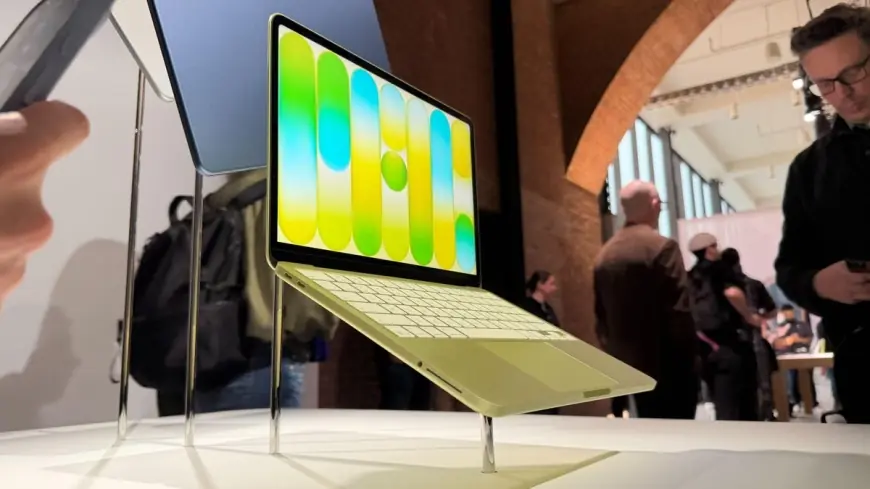
Apple has introduced MacBook Neo, a new lower-cost MacBook designed to sit beneath MacBook Air and pull first-time buyers into the Mac ecosystem. Announced Wednesday morning, March 4, 2026 (ET) through Apple Newsroom, MacBook Neo starts at $599 ($499 for education), with pre-orders already live and in-store availability set for Wednesday, March 11 at Apple Store locations and participating resellers. The headline spec is just as attention-grabbing as the price: MacBook Neo runs on A18 Pro, the same family of chip Apple uses in its iPhone lineup, a choice that signals a new “good enough, everywhere” strategy rather than a traditional M-series ladder.
For shoppers searching “macbook neo price” and “macbook neo specs,” the short version is: 13-inch Liquid Retina display, up to 16 hours battery life, fanless design, and Apple Intelligence support—with a tighter port selection and fewer premium extras than MacBook Air.
MacBook Neo Specs
Apple’s positioning for MacBook Neo is clear: make the everyday experience feel unmistakably “Mac,” then accept deliberate trade-offs that keep the bill of materials low. The machine comes with a 13-inch Liquid Retina display rated at 500 nits and supporting one billion colors, and Apple is leaning on screen quality as a differentiator in the sub-$700 category. In practical terms, it’s a spec you notice immediately—text clarity, color punch, and brightness that doesn’t collapse the moment you move away from a desk lamp.
Under the hood, the A18 Pro chip is doing double duty: it keeps power draw low enough for a fanless chassis and provides enough performance headroom for “real computer” tasks—documents, web apps, photo edits, video calls, and casual games. Apple’s pitch is that this MacBook can handle modern workflows without the weight and cost of pro-class silicon, while a 16-core Neural Engine keeps on-device AI features moving fast enough to feel native rather than bolted-on.
The core everyday hardware is tuned around communication: a 1080p FaceTime HD camera, dual microphones, and dual side-firing speakers with Spatial Audio support. It’s a subtle but important prioritization—if the entry Mac is going to live in classrooms and kitchens and shared apartments, it has to win the video-call test.
Connectivity is intentionally simple: two USB-C ports (either can charge the laptop), a headphone jack, Wi-Fi 6E, and Bluetooth 6. Apple also frames the machine as a “Mac + iPhone” companion device, leaning hard into continuity features that make a low-cost Mac feel premium simply by being part of a broader Apple setup. That’s the quiet genius of the product: the ecosystem supplies some of the “wow” that the hardware omits.
MacBook Neo Price
The starting price—$599—is the whole story, because it changes what “buy a Mac” means for a huge slice of shoppers who previously stopped at the sticker. Apple is also openly chasing education volume with the $499 education price, which puts MacBook Neo into the same conversation as Chromebooks and entry Windows laptops that dominate school procurement and student budgets.
But Apple’s real bet isn’t just that people will buy a cheaper Mac. It’s that a cheaper Mac becomes a gateway to higher-margin decisions later: storage upgrades, services, accessories, and eventually a move up the ladder to MacBook Air or MacBook Pro. This is the familiar Apple playbook—lower the barrier to entry, then let satisfaction and habit do the upsell.
The tension is that price expectations don’t stop at the checkout screen. A $599 MacBook invites comparison on ports, flexibility, and longevity. Apple is effectively wagering that most of its new MacBook Neo buyers won’t care about pro I/O, multi-display setups, or peak sustained performance—and that the people who do care were never the target audience anyway.
Apple Store Playbook
MacBook Neo’s launch also reveals something about Apple’s current rhythm. Rather than a single, sprawling Apple event, Apple is using a fast cadence of Newsroom announcements to create a weeklong spotlight across the Mac lineup. MacBook Neo, alongside fresh updates higher up the range, gives Apple a clean three-tier message in stores: Neo for value, Air for mainstream, Pro for power.
That clarity matters inside the Apple Store because it simplifies the sales conversation. A parent buying a first laptop for a student doesn’t need a lecture on cores and memory bandwidth; they need reassurance that the machine will be fast, light, and easy for years. Apple can now point to a MacBook that hits the emotional checkboxes—thin, colorful, premium-feeling—without forcing the buyer into the four-figure zone.
The second-order effects are just as important. A $599 Mac changes competitive pressure in the entry laptop market, where many buyers pick based on price first and experience later. If MacBook Neo feels meaningfully better day-to-day than the typical low-cost alternative—screen, speakers, trackpad, build, battery—then “Mac” stops being aspirational and starts being attainable. And once a buyer’s defaults become macOS defaults, the switching costs flip: leaving gets harder than staying.
The next few weeks will answer the real question: whether MacBook Neo becomes a high-volume staple or a niche “starter Mac.” The triggers are straightforward—how easy it is to buy (especially at the Apple Store), how supply holds after March 11, and whether the A18 Pro-powered Mac experience feels as smooth in real life as it does on paper.