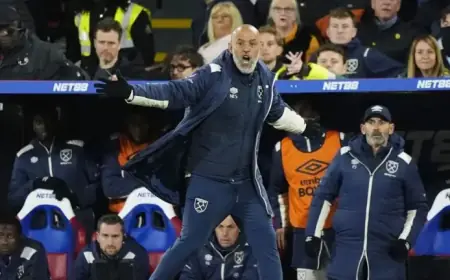

























Onyeka Okongwu made the leap nobody could have possibly expected


This shift matters because it alters how coaches and opponents must think about spacing and rotations. In plain terms, onyeka okongwu has moved from a near–non‑shooter into a high‑volume, efficient threat from deep — a change that can free drives, alter closeouts and convert him from a purely interior option into a multi‑tool floor spacer. That recalibration is already reshaping evaluations of his role.
Onyeka Okongwu’s breakout: consequences for minutes, matchups and strategy
Here’s the part that matters: when a player increases both the volume and accuracy of three-point attempts the way Onyeka Okongwu has, the ripple effects go beyond box score points. Lineups that previously needed a perimeter puller to stretch defenses may now gain spacing naturally, which can increase driving lanes for guards and reduce offensive predictability. Rotation decisions — who closes quarters, who defends mismatches, who gets late‑game minutes — now weigh Okongwu’s deep threat alongside his interior efficiency.
What’s easy to miss is that this is not merely a makeover of shot selection; it modifies what opposing defenses must respect. The real question now is how sustainable this role change will be and whether usage patterns will continue to nudge him toward more perimeter attempts without sacrificing interior production.
The leap, by the numbers
Below are the verified season-to-season markers that define the transformation:
- Early career: sank four three-pointers across his first three seasons.
- Most recent previous season: 32. 4% from three on 2. 0 attempts per game.
- Current (sixth) season: 38. 5% from three on 5. 4 attempts per game.
These shifts show both a meaningful increase in efficiency (a rise of over six percentage points from the prior season) and a clear jump in willingness to shoot from deep. He was previously known more for interior scoring, where he led the franchise in true shooting percentage; the new profile pairs that inside strength with reliable spacing.
- Increased three-point volume alongside a significant efficiency jump.
- Transition from a fringe perimeter threat to an above-average long-range option.
- Potential to change how defenses allocate help and who must guard him on the perimeter.
- Next confirmation signals: sustained attempts at similar efficiency and coach-driven changes in late‑game rotation.
Minor timeline: first three seasons (minimal threes), the prior season (low volume, subpar accuracy), current season (high volume, strong accuracy). This sequence underscores the unusual speed of the development.
Coaches and roster planners will have to decide whether to lean into this two-way profile or treat the shooting uptick as a complementary option. If handled carefully, the mix of interior finishing and dependable three-point shooting can lengthen a career arc and create new matchup problems for opponents. If volume increases without the same efficiency, the benefit could be muted — which is why monitoring both attempts and percentage matters most over the next stretch.
Final note: these are measurable changes, and they already shift how minutes and matchups look on paper. The bigger signal here is that a player previously pigeonholed by shooting limitations can materially alter his value through targeted development; the practical implications for rotations and offensive design are only starting to emerge.