Massachusetts’ Clean Energy Power Line Operational After Decade-Long Development

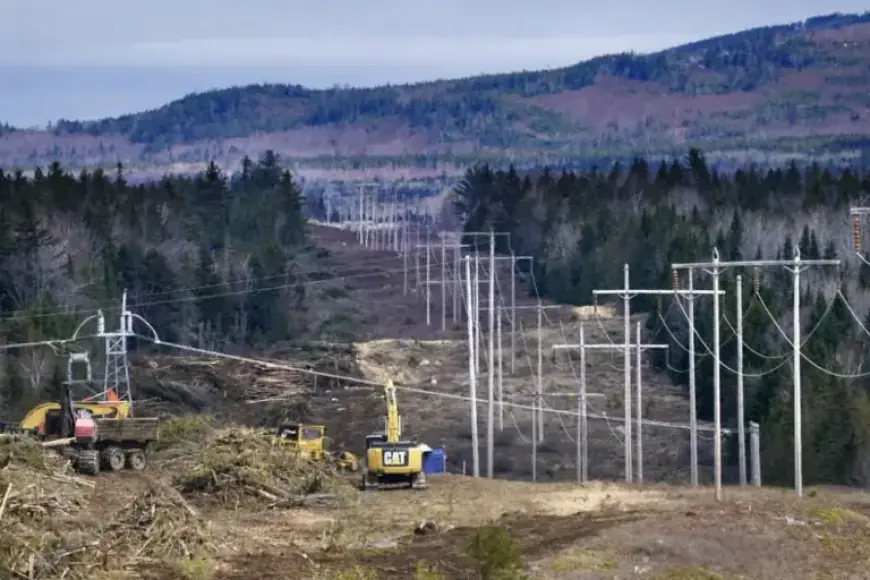
Massachusetts has officially commenced operations on a groundbreaking power line designed to deliver renewable energy to its residents. The New England Clean Energy Connect spans 145 miles, transmitting electricity from Quebec’s hydroelectric facilities. With a capacity of 1,200 megawatts, this initiative is set to provide approximately 20% of the state’s electricity needs.
Significant Economic and Environmental Benefits
Under a 20-year fixed price agreement with local utilities, the project is projected to save Massachusetts ratepayers an impressive $50 million annually. Rebecca Tepper, Secretary of the Massachusetts Executive Office of Energy and Environmental Affairs, highlighted the initiative as a pivotal change toward receiving cleaner and more affordable electricity.
Legislative History and Project Development
The journey of the New England Clean Energy Connect began in 2016 when then-Governor Charlie Baker enacted legislation to seek proposals for a clean energy transmission line to Quebec. Initially, a different project traversing New Hampshire was chosen but was derailed in 2018 due to regulatory obstacles and significant public opposition concerning environmental disruption.
The state’s focus then shifted to the New England Clean Energy Connect, which involved contracts with Central Maine Power, a subsidiary of Avangrid, and Hydro-Québec. The project mostly utilized existing transmission corridors but required clearing a 150-foot-wide route through 54 miles of Maine’s forests.
Challenges Faced During Development
Similar to its predecessor, the project encountered hefty resistance in Maine. Local environmentalists and fossil fuel companies, which stood to lose from the project, united against it. A pivotal moment occurred in 2021 when a ballot initiative aimed to revoke essential permits, which ultimately led to nearly 60% of voters opposing the project.
Following a series of lawsuits and delays, a Maine jury’s decision in April 2023 allowed construction to resume. However, this year-and-a-half setback resulted in a cost increase of over $500 million, a burden ultimately falling on Massachusetts ratepayers. Nevertheless, annual savings of approximately $18 to $20 per household are projected as electricity demand continues to rise.
Benefits for Maine Residents
- Governor Janet Mills negotiated a deal for discounted electricity from Hydro-Québec to Maine residents, ensuring at least $14 million in annual savings.
- Developers will invest in energy efficiency programs and low-income support initiatives, enhancing the state’s electrical infrastructure.
Residents from other states in New England are likely to benefit as well, as this conversion to more affordable hydroelectric power could reduce wholesale electricity costs across the region. Phelps Turner, director of the Conservation Law Foundation’s Clean Grid program, noted that the initiation of service represents a meaningful advancement for clean energy in New England.
Future of Renewable Energy Transmission
With the expected rise in electricity demand, further infrastructure development will be necessary to accommodate evolving renewable energy sources. Amy Boyd Rabin from the Environmental League of Massachusetts emphasized the need for collaborative regional discussions to streamline the permitting and construction processes for future projects.
The successful operation of the New England Clean Energy Connect sets a precedent for clean energy initiatives and showcases the importance of strategic planning in overcoming legislative and environmental hurdles.