

























Prada Women’s Fall 2026: A Lesson in Layers That Reframes Luxury and Decay

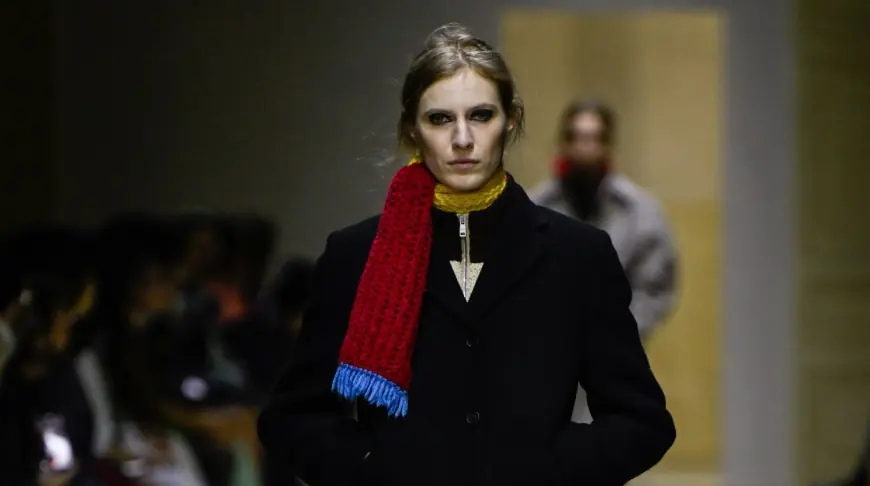
The most striking thing about Prada’s Fall 2026 presentation wasn’t a single look but the show’s insistence on change as form: garments purposefully frayed, soiled and peeled back to reveal earlier selves, while the set recycled centuries of decoration into one theatrical “mansion. ” That approach matters now because it treated imperfection as a narrative device, asking viewers to read clothes as history in motion rather than static status symbols.
Why Prada’s layering turned disorder into argument
Here’s the part that matters: the show leaned into contradiction — minimal and opulent, pristine and damaged — and used physical layering to make that tension legible. Fifteen models made four passes through the space, each circuit altering what spectators thought they’d seen. The layering and deliberate un-layering was framed as an expression of the “continuous necessity of change, ” a creative choice that repositioned garments as mutable identities rather than fixed statements.
- Multiple reveals: looks were structured so a flaring skirt might become visible as a ’50s-inflected dress only after a layer was removed.
- Made to look lived-in: fabrics were intentionally decayed — fraying, ravaged, and soiled — then stacked against refined accessories to heighten contrast.
- Set as shorthand: the reused show space evoked a hollowed-out mansion with period moldings, windows and marble fireplaces, and included paintings and furniture spanning five centuries.
- Accessory tension: hyper-luxurious small bags and ornate boots sat beside deliberately corroded wool and crinkled trench seams.
Runway particulars and the deliberate mess
The show rearranged familiar Prada and men’s-show silhouettes — tubular dress coats, wrinkled shirts with exaggerated French cuffs, crinkled trenches peeling away to reveal checkered wool — but the point was how those pieces were layered and revealed. Garments were augmented by utility capelets with bright cotton and vertical strips of animal-print fluff, and skirts where corroded black wool yielded to blurred floral prints. The staging amplified the effect: models moved at a furious pace through a vast, carpeted space and returned multiple times so viewers discovered new components beneath or atop initial looks.
What’s easy to miss is how accessories were deployed as a foil: petite bucket and top-handle bags in polished alligator, lace-up boots decorated with beads or feathers, and other luxury finishing touches undercut the disheveled clothes, creating an oscillation between ruin and refinement. One of the designers even sipped a small bottled soft drink in the aftermath, underscoring the show’s oddly casual intimacy amid the chaos.
If you’re wondering why this keeps coming up in conversation, it’s because the staging and costuming treated clothing as active biography: layers accumulate, are shed, and reveal prior moments — a literalized version of how women navigate change with dress. The creative team explicitly resisted hierarchies between minimal and opulent, or pristine and damaged, turning the runway into a laboratory for those contradictions.
Key indicators to watch for in future collections will be whether this layered, “messy” language becomes a recurring design strategy or a one-off theatrical gambit. Recent signals from the show — repeated reveals, intentional fabric degradation, and a set built from historical fragments — suggest a sustained interest in texture and temporal collision rather than a single-season stunt.
The bigger signal here is that fashion staging itself is being used to argue a position: not only what people wear, but how clothing functions as a record of change.
Micro timeline: the show reused the men’s set and added paintings and furniture from across five centuries; models completed four passes so layers could be revealed incrementally; designers emphasized no hierarchy between pristine and damaged treatments. The schedule and details are subject to change as the season progresses.