

























Apple Newsroom: M5 Pro and M5 Max Drive a Step-Change in MacBook Pro Performance Momentum

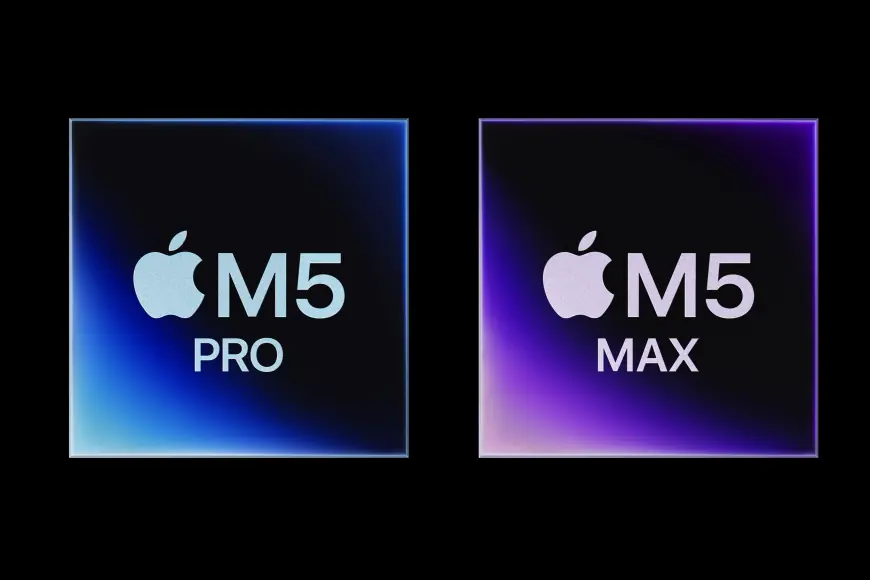
Why this matters now: The arrival of the M5 Pro and M5 Max signals a shift in laptop compute priorities — heavier multithreaded CPU workloads, larger GPU throughput and built-in AI acceleration are now central claims. Early technical details published alongside the MacBook Pro reveal place new emphasis on raw parallel performance and system-level features; the announcement is already recasting expectations for high-end mobile workstations and what professionals will expect from future laptop chips. apple newsroom appears as the focal point of these product and technical notes.
Apple Newsroom framing: what the new chips change for performance expectations
Here’s the part that matters for users and buyers: the M5 Pro and M5 Max are pitched around two kinds of momentum — CPU-thread scaling and GPU compute scale — rather than incremental clockspeed gains. The headline figures aim to reposition MacBook Pro hardware toward sustained multithreaded throughput and larger on-device AI capacity, driven by a combination of core reconfiguration, multi-die packaging and upgraded graphics subsystems. The changes point to laptops that prioritize parallel work (renders, compilations, simulations) and GPU-heavy tasks over the single-core uplift that shaped earlier generations.
What's easy to miss is that the announcement bundles several system-level features with raw compute claims: an on-device neural engine at 16 cores, support for the newer external I/O standard, and a memory-integrity feature that together change how performance will be used and delivered across workloads.
Event details and technical highlights
The new processors were introduced alongside a MacBook Pro revealed on Tuesday. Key details available from the technical summary:
- Architecture: an 18-core CPU arrangement combining six "super" cores with 12 new performance cores inside a new "Fusion Architecture" that integrates two 3nm dies into a single system-on-a-chip.
- Multithreaded claims: up to 2. 5× higher multithreaded performance versus the earlier M1 Pro and M1 Max generations.
- M5 Pro GPU: pairs the 18-core CPU with up to a 20-core graphics processor, including an enhanced shader core with second-generation dynamic caching and hardware-accelerated mesh shading; the M5 Pro is positioned to deliver up to 20% higher performance than the prior M4 Pro.
- M5 Max GPU: offers up to a 40-core GPU with more than four times the compute compared with the previous generation.
- AI and system features: both chips include a 16-core neural engine for on-device AI, support for Thunderbolt 5, and a Memory Integrity Enforcement capability.
The packaging choice — two 3nm dies on one SoC — is presented as the enabling element for the core and GPU expansions, allowing the simultaneous scaling of CPU threads, sizable GPU arrays and a dedicated neural engine without moving to a larger single die.
- Key takeaways:
- Expect stronger performance scaling on heavily threaded CPU tasks thanks to an 18-core layout with six high-performance cores and 12 performance cores.
- GPU-focused workloads will see larger headroom: up to 20-core GPUs in the Pro part and up to 40-core GPUs in the Max part, with stated multi-generation jumps in compute.
- On-device AI becomes a platform-level feature with a 16-core neural engine included across both chips.
- Thunderbolt 5 and Memory Integrity Enforcement broaden external connectivity and system reliability considerations.
The real question now is how software and professional workflows will adapt: developers and app vendors will need to tune for broader parallelism, larger GPU sets and integrated neural acceleration to realize the announced advantages.
Micro timeline (embedded):
- Announcement context: chips introduced alongside a MacBook Pro that was revealed on Tuesday.
- Packaging shift: new Fusion Architecture pairs two 3nm dies into one SoC to enable expanded cores and GPU arrays.
Overall, the launch reads less like an incremental refresh and more like a performance posture reset for high-end laptops — emphasizing multithreaded scale, GPU compute breadth and integrated neural processing as the pillars of the next generation.