BYD Canada–China reset: Chinese EVs, visa changes, and canola breakthrough reshape the “new world order” debate

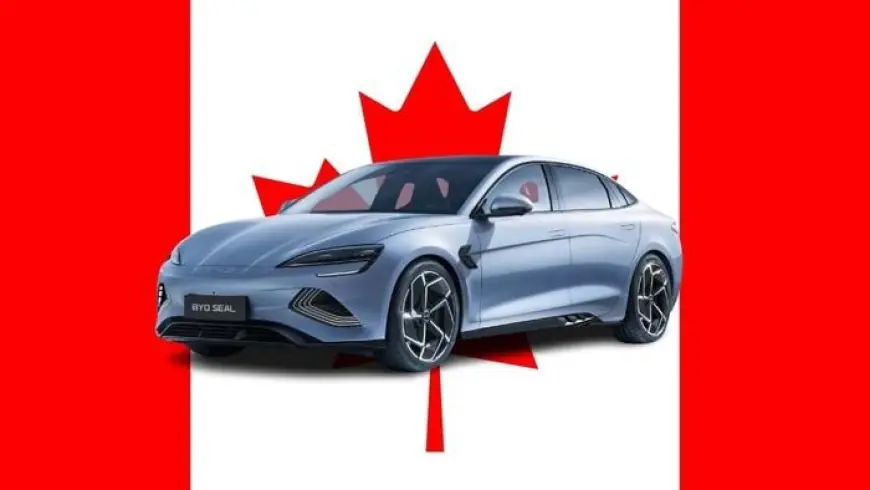
BYD Canada has unveiled a sweeping reset with China that immediately touches car buyers, farmers, and travelers. The headline shift: the 100% levy on Chinese electric vehicles falls to the standard 6.1% auto tariff under a capped-entry system, while China slashes steep duties on Canadian canola and eases entry rules for Canadians. The package, rolled out during Prime Minister Mark Carney’s visit to Beijing, signals a strategic pivot in how Ottawa balances affordability, climate goals, and great-power politics.
Chinese EV tariffs in Canada: what’s changing
Canada will admit up to 49,000 Chinese-made EVs per year under a 6.1% tariff, with room for the cap to grow over five years. A quota gives Ottawa a pressure valve: enough volume to lower prices and spur competition, but not an open floodgate that would shock domestic and North American producers. For consumers, it means models from brands such as BYD, Geely, and Xiaomi could land at price points far below today’s market, especially in the sub-$35,000 segment where choice has been thin.
This is a notable break from Washington’s hard line. While the move keeps Canada aligned with its own tariff schedule and consumer-price priorities, it creates friction with U.S. policymakers who fear North American supply chains could be undercut. The cap, however, is designed to mitigate those concerns while Canada courts investment in domestic battery, components, and assembly footprints.
Key numbers at a glance
-
Chinese EV tariff: cut to 6.1% (from 100%), under a quota of 49,000 units/year to start.
-
Ramp: quota set to increase over five years, subject to review.
-
Goal: expand consumer choice and accelerate EV adoption while safeguarding industrial strategy.
Canola and more: agriculture wins in the Canada–China deal
On the other side of the ledger, China is reducing tariffs on Canadian canola seed to roughly 15% from punitive levels near 85%, with additional relief flagged for canola meal and select seafood and pulse products. That unlocks long-constrained demand in one of Canada’s most critical export crops. Producers in the Prairies get immediate price and volume relief, crushing margins improve, and logistics players—from rail to ports—gain visibility into a steadier flow after years of uncertainty.
Expect provincial leaders and farm groups to push for rapid implementation before spring contracting, while trade officials iron out phytosanitary protocols and dispute-prevention channels to avoid a repeat of past suspensions.
Travel thaw: visa changes for Canadians heading to China
Diplomatic ice is melting on the people-to-people front as well. China is moving to allow visa-free entry for Canadian passport holders, a change poised to restore business travel pipelines, education exchanges, and tourism itineraries that dried up after 2018. Airlines, universities, and corporate travel desks will race to rebuild schedules and partnerships, though travelers should check the effective date and any stay-length limits once the formal notice posts.
Politics and pushback: Ottawa, provinces, and Washington
The package lands squarely in Canada’s political arena. Supporters call it pragmatic economics: cheaper EVs to speed up emissions goals plus immediate gains for farm exporters. Skeptics warn of risks to Ontario’s auto jobs and supply-chain exposure if Chinese brands scale quickly. In early reactions, Ontario’s leadership has flagged potential threats to local manufacturing, while Prairie voices are welcoming the relief on canola and urging Ottawa to lean into value-added processing at home.
From the United States, the initial readout is cool. U.S. officials argue the move weakens a unified front on industrial policy and national security concerns. Ottawa’s counterpoint is the cap-and-guardrail design: controlled EV inflows, paired with a push to attract investment and joint ventures in batteries, components, and clean energy that align with North American standards.
What it means for car buyers and the Canadian EV market
-
Prices & choice: Expect downward pressure on entry-level EV pricing as compact hatchbacks and sedans arrive with competitive range and features.
-
Dealer networks: New-to-Canada brands will need sales, service, and parts footprints; watch for partnerships with existing groups or direct-to-consumer pilots in major metros.
-
Charging & incentives: Provinces may revisit rebates and infrastructure timelines to capture the adoption surge while keeping grids resilient.
-
Rules of origin: For vehicles assembled or partially built in North America, expect Ottawa to nudge investment that can qualify for more favorable treatment in the medium term.
“New world order” in practice: diversification without delusion
The government’s language around “new global realities” reflects a wider shift: middle powers hedging between blocs, prioritizing affordability, climate tech, and resilient supply lines. For Canada, that means diversifying beyond a single export market while keeping the U.S. anchor intact. The EV-for-agriculture swap and the visa thaw are early markers of that calibration.
Still, uncertainties remain. Security screens on inbound investment will be strict. The EV quota’s growth path could be slowed—or accelerated—by market response, labor negotiations, and cross-border politics. Agricultural access hinges on smooth implementation and scientific dispute resolution. And travel rules can tighten if geopolitical winds change.
What to watch next
-
Implementation dates: Effective tariff and visa timelines, plus any quota-allocation mechanics for importers.
-
Model lists: Which EVs make the first wave—and their real-world pricing after freight, PDI, and provincial fees.
-
Investment signals: Announcements on Canadian assembly, battery plants, or component facilities tied to new entrants.
-
Provincial policy moves: Ontario on industry supports; Prairie provinces on canola logistics and value-added incentives.
-
U.S.–Canada coordination: Whether guardrails are added to smooth cross-border auto trade amid diverging tariff paths.
In sum, “Chinese EVs in Canada” is no longer hypothetical—it’s policy, bounded by a quota and balanced by farm-sector wins. Visa relief closes the loop, reconnecting people and commerce. How this plays out will define Canada’s place in a fast-shifting global order—and how quickly Canadians can buy an affordable EV built half a world away.