
























Dubai Stock Market Reopens After Two-Day Halt, Slides Sharply as Risk Appetite Vanishes

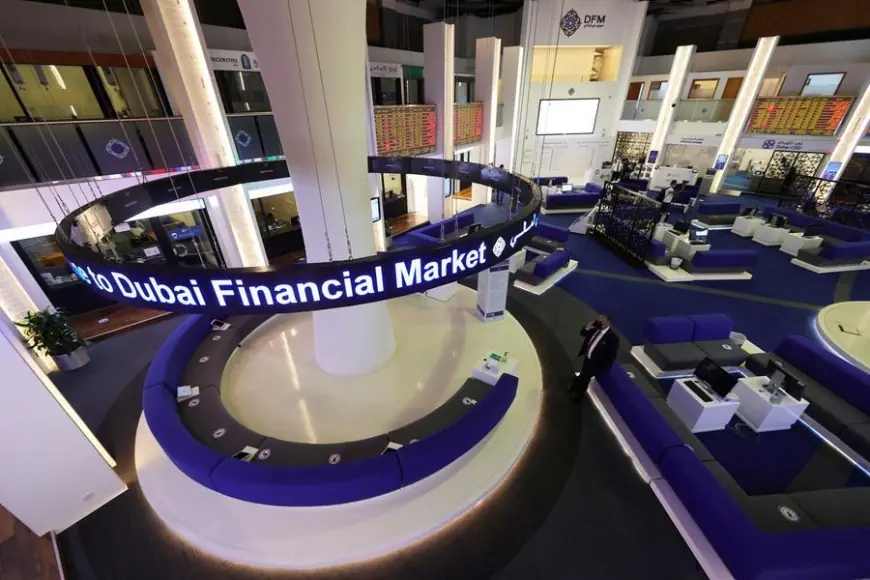
The dubai stock market reopened Wednesday after an extraordinary two-day suspension and immediately sold off, as investors repriced geopolitical risk and tested how much confidence was left in the region’s trading plumbing. The Dubai Financial Market’s main index fell about 4.7% on the session, its steepest one-day drop in years, after officials briefly halted trading earlier in the week to curb disorderly selling and assess operational disruption.
The speed of the move mattered as much as the size. When a market reopens after a forced pause, the first hour is less a normal price-discovery process and more a referendum on trust: trust that settlement systems will function, that companies can quantify exposure, that policymakers will respond predictably if conditions worsen. Wednesday’s decline suggested investors wanted liquidity and clarity first, valuation arguments later.
Two-Day Trading Halt
Trading on the UAE’s main exchanges was suspended on Monday and Tuesday, a rare step that underscored how quickly regional tensions had crossed from headline risk into market-structure risk. A closure is designed to prevent panic selling, but it also concentrates pressure. Orders don’t disappear; they queue up. When the bell finally rings, pent-up demand to cut exposure tends to hit at once.
Officials also tightened volatility controls on reopening, temporarily lowering the maximum daily price move allowed on individual securities. That kind of circuit-breaker posture does two things at the same time: it reassures investors that a free-fall is less likely, and it signals that authorities believe a free-fall is plausible enough to plan for. The psychological effect can be contradictory—calm on the surface, anxiety underneath.
Why Shares Sold Off
The first casualties were the usual bellwethers: property developers, banks, and transport-linked names that carry the market’s cyclical beta. In Dubai, real estate and travel-adjacent stocks often act as a proxy for global risk sentiment because they are sensitive to funding costs, tourism flows, and investor confidence in the emirate’s growth narrative. When geopolitics spikes, those sectors tend to take the hit early, even before any company-specific damage is confirmed.
Banks face a different channel of stress. In any risk-off episode, investors worry about the second-order effects: corporate cash-flow squeezes, higher credit provisions, slower loan growth, and a more cautious posture from depositors and international counterparties. Even if balance sheets remain strong, bank shares can fall on the fear that profitability will be capped by uncertainty.
There is also a mechanical explanation that doesn’t require any dramatic new fundamentals: after a halt, there is usually a mismatch between sellers who want out immediately and buyers who want to wait for better visibility. That creates air pockets. Prices gap down not because every investor believes the same story, but because the marginal buyer steps back. When that happens, the market clears at lower levels until a new cohort of buyers is willing to absorb supply.
Oil’s role is complicating rather than comforting. Higher crude prices can support parts of the Gulf’s macro picture, but they can also signal that a wider shock is brewing—shipping disruptions, insurance costs rising, or supply risk intensifying. For equity investors, that often translates into a simple decision rule: reduce exposure first, debate the macro mix later.
What Companies And Regulators Do Next
A selloff after reopening usually triggers a second, quieter phase: disclosure. Listed companies are typically urged to assess operational exposure—logistics constraints, insurance coverage, facility impacts, employee safety measures, counterparty risk—and then communicate clearly. The market’s next leg often depends less on the original shock and more on whether investors feel management teams are candid, specific, and fast.
Regulators, for their part, have a narrow but powerful toolkit: maintain orderly trading, monitor settlement, and adjust market safeguards without strangling liquidity. If limits are too tight for too long, price discovery can migrate elsewhere and confidence can erode. If limits are too loose during a fear spike, volatility can become self-fulfilling. The credibility test is whether interventions feel rules-based and temporary rather than improvised and open-ended.
A key unanswered question is how much of Wednesday’s move was “catch-up” to global risk pricing during the closure versus fresh selling sparked by new information. If most of the drop was catch-up, stabilization is plausible once investors finish repositioning. If it was information-driven, volatility can persist as analysts revise earnings expectations and risk premiums.
Triggers Investors Watch Next
Three forward paths now matter for the dubai stock market:
First, a stabilization scenario: if regional tensions cool and operational disruptions prove limited, buyers will likely return selectively—starting with liquid blue chips—because the selloff creates entry points for funds that measure risk in months, not days.
Second, a grinding-volatility scenario: if uncertainty lingers without a clear escalation or resolution, markets can chop lower in waves. In that environment, each bounce becomes an opportunity for de-risking, and the index can drift even without catastrophic headlines.
Third, an escalation scenario: if disruptions widen—through travel, shipping lanes, or critical infrastructure—equities can reprice again, and policymakers may be pushed toward more aggressive market-stability steps. The trigger would be less the day-to-day index level and more signs of stress in funding conditions, settlement confidence, or cross-border capital flows.
For now, the takeaway is straightforward: the reopening didn’t restore normality; it exposed the cost of uncertainty. The next move won’t be decided by chart patterns or bargain hunting alone, but by whether clarity arrives faster than fear.