
























Aston Martin limits laps in Melbourne as Cars’ engine vibration threatens drivers’ nerves

Aston Martin and engine partner Honda have imposed operational limits for the Australian Grand Prix after severe vibrations from the power unit damaged hybrid batteries and transmitted into the chassis and steering. The issue matters now because the team will restrict how many consecutive laps its cars can run to protect driver health and preserve critical components.
Adrian Newey and Honda countermeasures on Cars' vibration
Team principal Adrian Newey and Honda Racing president Koji Watanabe briefed media in Melbourne on the interim fixes being fitted to Aston Martin’s cars this week. Engineers have introduced countermeasures designed to reduce the vibration reaching the battery — a component that failed repeatedly during pre-season work in Bahrain — and Watanabe said those changes will be evaluated once the cars run on track.
Newey described the battery as the critical item that has required focused attention, explaining that dyno testing over a recent weekend produced a solution being used in Melbourne. He warned, however, that the countermeasure only prevents the worst of the vibration from reaching the battery; the underlying oscillations still travel through the power unit into the chassis and then into the steering column.
Because the fix does not remove the source of the vibration, the team has applied limits to power unit operation for the weekend while further measures are worked on. That official action is intended to extend battery life and reduce on-track failures while Honda continues root-cause investigations.
Battery damage, lap limits and driver risk
The vibrational problem first surfaced in Bahrain, where Aston Martin recorded the lowest mileage of the 11 teams during two three-day tests and curtailed its programme after a battery-related failure left the car stranded. On the final day of testing the team completed just six laps before ending its session early.
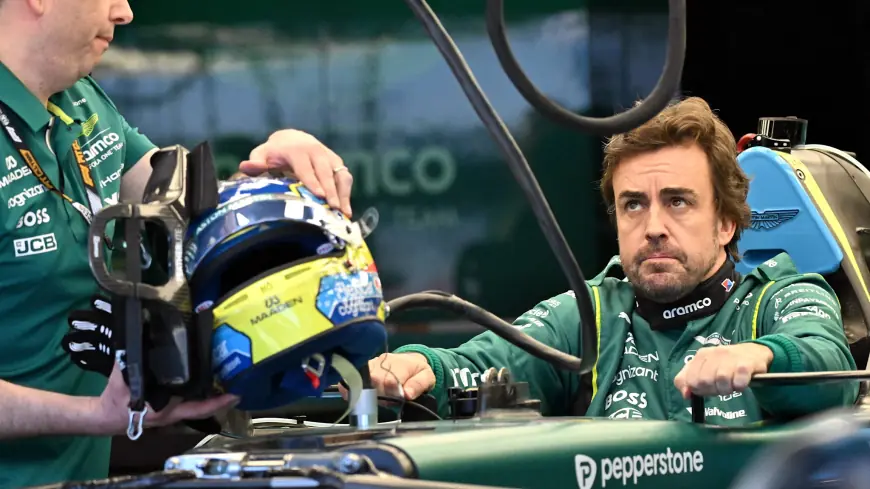
Beyond component failures — mirrors and tail lights also came loose under the stress — the more urgent consequence is the effect on drivers’ bodies. Newey said Fernando Alonso believes he cannot safely complete more than 25 consecutive laps without risking permanent nerve damage to his hands; Lance Stroll has set his own limit at about 15 laps. Those thresholds have led the team to plan strict lap caps during race stints until the vibration at source is mitigated.
Alonso has described feeling numb in his hands and feet after multiple laps on the test car and emphasized that a solution is necessary to avoid unknown long-term consequences. Newey warned that the team will be "very heavily restricted" in lap counts for the weekend until they can improve the vibration at its origin.
The timing matters because Aston Martin entered the season with a new works power-unit relationship with Honda while developing its own gearbox and rear suspension for the first time. That programme was delayed early on — the 2026 car did not go into the wind tunnel until mid-April last year, while other teams began aerodynamic testing earlier — and the compressed schedule contributed to lower running and less time to refine reliability before the championship opener.
What makes this notable is the convergence of a new engine partnership, fresh chassis systems and a vibration problem that affects both hardware longevity and human health; the countermeasures currently fitted stop the vibration reaching the battery but do not yet prevent transmission into the steering and drivers’ hands.
Team leaders say further measures remain under consideration but are not yet ready to disclose technical detail. The squad intends to assess the effectiveness of the changes after practice and qualifying, then decide on a race approach that balances component preservation with competitive ambition.
Until the root cause is resolved, Aston Martin will run with restricted power unit conditions and conservative stint plans in Melbourne to limit cumulative exposure for its drivers and reduce the risk of further battery failures on track.