EU Unveils New Guidelines to Aid Food Businesses with Commission Regulations

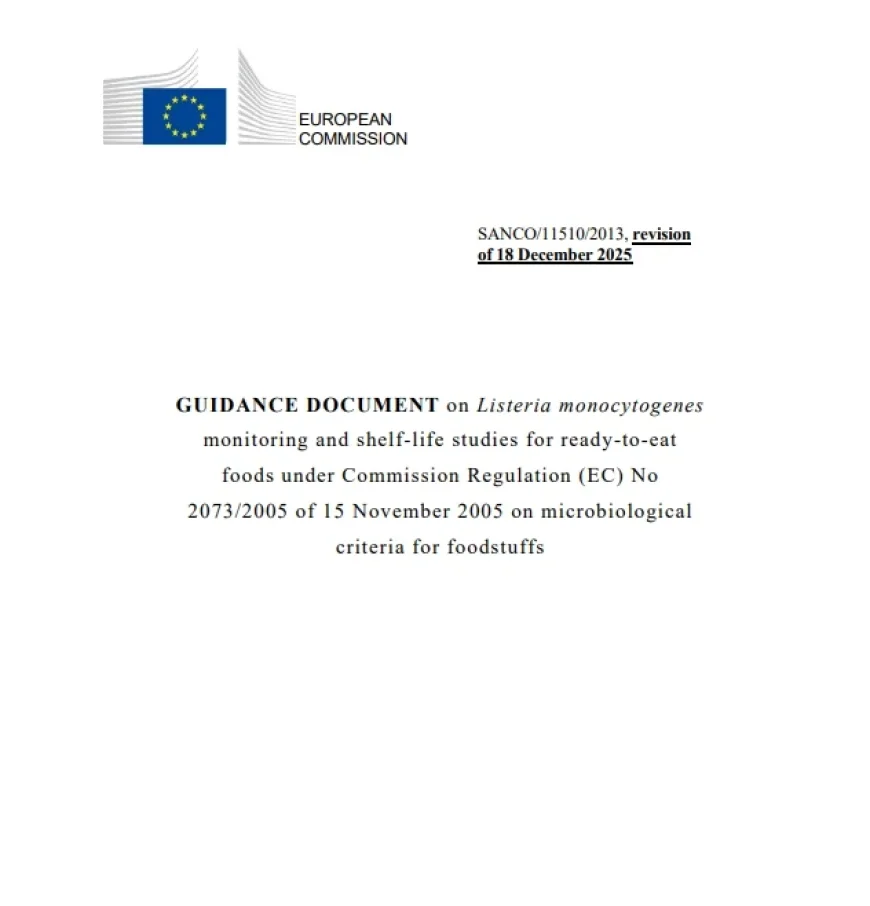
The European Commission has enacted Commission Regulation (EU) 2024/2895, amending previous regulations regarding Listeria monocytogenes. This regulation will take effect on July 1, 2026. It aims to support food businesses in achieving compliance with the updated guidelines, particularly for ready-to-eat foods.
New Guidelines for Listeria Monocytogenes Management
To assist food operators, the European Commission has issued an updated GUIDANCE DOCUMENT focusing on monitoring Listeria monocytogenes and conducting shelf-life studies in accordance with previous regulations, specifically Commission Regulation (EC) No 2073/2005.
Target Audience of the Guidance Document
This guidance is designed primarily for:
- Food business operators that produce ready-to-eat foods.
- Competent authorities conducting official controls.
- Third parties involved in developing Listeria monocytogenes shelf-life studies.
Regulatory Changes and Compliance Measures
One significant change introduced by Regulation (EU) 2024/2895 is the extension of the food safety criterion limit. The criterion of “L. monocytogenes not detected in 25 g” now applies to ready-to-eat foods that can support the growth of Listeria, specifically those falling under food category 1.2.
Food businesses producing ready-to-eat items that do not undergo effective heat treatment must demonstrate their compliance continuously throughout the product’s shelf-life. This addresses the lack of specific limits in the existing regulations when products leave the controls of the food business operator.
Key Recommendations from the Guidance Document
The new guidance document provides essential recommendations, including:
- Classification and labeling of food products as ready-to-eat or non-ready-to-eat.
- Identifying applicable L. monocytogenes food safety criteria.
- Choosing appropriate shelf-life studies based on L. monocytogenes presence.
- Ensuring compliance with L. monocytogenes criteria until the end of the shelf-life.
- Validating and documenting the adequacy of shelf-life studies.
Food operators should align with these new specifications to ensure safe practices and compliance with the updated regulations regarding Listeria monocytogenes in ready-to-eat foods.