

























St. David's Day: st. david's day weekend set to transform Britain's smallest city

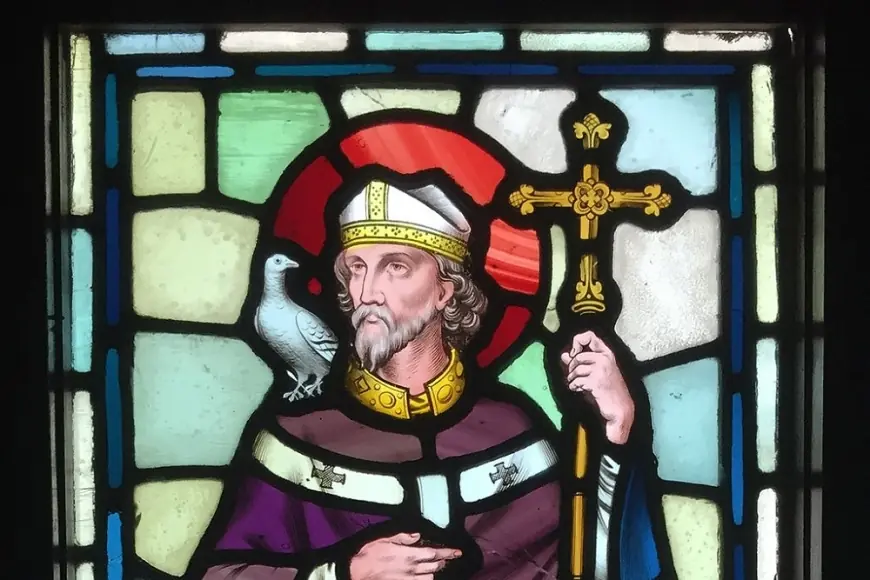
Wales’s smallest city is preparing to mark st. david's day 2026 with a packed weekend that blends pilgrimage, parading dragons, worship, food and local colour. The programme centres on events in the city centre and at St Davids Cathedral that organisers say will combine community arts, market stalls and guided pilgrimages.
St Davids Dragons Parade and market on Saturday 28 February
The weekend reaches a crescendo on Saturday 28 February when the annual St Davids Dragons Parade takes over the streets in the early afternoon. The parade will start gathering at 1. 30pm, with the procession stepping off at 2. 00pm, and the day also features a St David’s Day Market in Cross Square from 9am to 4pm on Saturday, February 28 showcasing local food, produce and Welsh-made gifts.
The short parade runs along the High Street between Oriel y Parc and Cross Square, circles the square before returning and will briefly turn Britain’s smallest city into a corridor of red, green and gold. The weekend schedule also includes the Ras Dewi Sant Marathon, Half Marathon and 10K, which start at 7. 45am on Saturday, and the illumination of the St David’s day Stone at Oriel y Parc at 12 noon on Sunday.
Pilgrimages from Porthclais Harbour to St Davids Cathedral on March 1
On March 1 a six-mile guided pilgrimage from Porthclais Harbour to St Davids Cathedral, organised by the Christian travel charity Journeying, will trace the coast past St Non’s and Oriel y Parc into the city and finish with prayers at the shrine of St David. Tŷ’r Pererin and the cathedral are also leading their own Gŵyl Dewi pilgrimage from David’s Holy Well at Porthclais, timed to arrive at the cathedral late morning.
Families can pick up a pilgrim pass from Oriel y Parc or the National Trust shop and follow an adventure trail through the city to the shrine across the weekend, turning the streets into a gentle treasure hunt.
Oriel y Parc workshops, Taith y Chwedlau storytelling and parade costumes
Oriel y Parc is hosting free, drop-in creative sessions where families can make dragon headdresses and other costumes to wear in the parade, alongside a paid Dragon Wings & Giant Daffodils workshop aimed at turning young participants into walking artworks for the day. Storytelling sessions titled Taith y Chwedlau / Journey of the Legends are scheduled in the Oriel y Parc courtyard before and after the parade from early afternoon, bringing to life characters from a city-wide legends trail.
Organised through Oriel y Parc and backed by community and Welsh Government support, the parade is billed as a vibrant celebration of Wales’s patron saint with schoolchildren, community groups and residents processing behind handmade dragons, giant daffodils and banners. The St David's Day Dragon Parade is always a popular event.
Music and concerts across the region, and West Midlands events
A St David’s Celebration Concert at the cathedral on February 27, in support of the Army Benevolent Fund, is expected to bring military musicians and local audiences together as a curtain-raiser to the weekend. Elsewhere, a series of concerts and talks in the West Midlands and neighbouring counties will mark the day.
The West Midlands Concert Band will play at St Margaret of Antioch in Hasbury, Halesowen in their Music for a SpringTime evening taking place at 19: 00 GMT, a free event described as having "a Welsh flavour" with free refreshments including Welsh cakes and a church full of daffodils. A concert at Theatre Severn in Shrewsbury starts at 19: 30 and features the Penybontfawr Male Voice Choir and Meibion Goronwy Male Voice Choir, presented by the North Wales Association of Male Voice Choirs in support of Alzheimer's Society Shropshire.
On Sunday at 14: 00 a special St David's Day talk will be held at The Brampton Museum in Newcastle Under Lyme by Stuart Haywood, author of the Welsh in North Staffordshire and current chairman of The Stoke-on-Trent & District Welsh Society; his presentation will concentrate on locations within north Staffordshire where migrants settled, their incentives to move there, and how the communities were set up. Also on Sunday a concert at Cradley Church in Cradley, Herefordshire, at 15: 00 features the Malvern Male Voice Choir and harpist Shelley Fairplay; tickets cost £18 including refreshments, with proceeds shared equally between Cradley Church and Cradley Village Hall. A further St David's Day concert is scheduled for Saturday 7 March from 19: 00 to 21: 30 at St Oswald's Church in Oswestry, Shropshire.
Historical roots: St David, Rhygyfarch, Buchedd Dewi and the cathedral
Scholars Helen Fulton, Professor and Chair of Medieval Literature at the University of Bristol, and Jonathan M. Wooding, Honorary Professor at the University of Sydney, highlight that the man known as St David, or Dewi Sant in Welsh, lived in the sixth century in the west of the island of Britain and founded a monastic community on the site of what is now St Davids Cathedral in Pembrokeshire. David was celebrated in both Wales and Ireland, but much of what is known comes from the Latin Vita S. David, written by Rhygyfarch in around 1080.
Rhygyfarch, a member of a clerical community at Llanbadarn Fawr in modern Ceredigion, west Wales, presents two Davids: an archbishop who becomes patron of a major local church and a nation, and an abbot of a hermit-like community who required his monks to live on little more than bread and water. Rhygyfarch warned that "being filled to excess, even with bread on its own, gives rise to dissipation [self-indulgence]. " Experts see authenticity in Rhygyfarch's account because the monastic programme corresponds closely to the rule of an anonymous abbot criticised by the sixth century churchman Gildas, author of De Excidio Britanniae, who blamed the Britons for their defeat by the Saxons.
David's austerity earned him the nickname aquaticus (waterman) and helps explain why the cathedral sits in a marshy valley at the extreme edge of south-west Wales. Rhygyfarch inspired later texts, including the Welsh Buchedd Dewi of the 14th century, which records David's last words as "gwnewch y pethau bychain, " meaning "do the little things. " Welsh court poets before the English conquest of Wales in 1282 invoked David as a saint who represented the national interest of Wales; later poets insisted on his superiority to other saints. The saint was also woven into a tradition of poetic prophecy, recorded from the tenth century onward and persisting until the Reformation in the 16th century when the Church of England broke away from the Catholic Church.
The cathedral itself, whose construction started in 1182, is described as a richly-decorated masterpiece built in challenging surrounding terrain; the building fell down twice, firstly in 1220 and then in 1248, before stability was eventually achieved. Bishops in 1538 and 1666, who were unsympathetic to pilgrimage and mindful of spiritual concerns, attempted to move the bishop’s thr — unclear in the provided context.