

























News Today: news today — Supreme Court directs Meta and WhatsApp to comply with CCI privacy guidelines

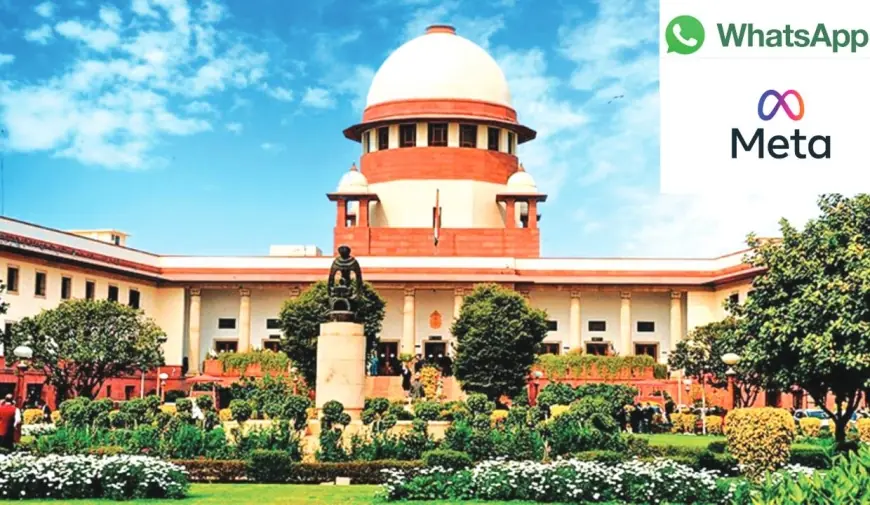
On Monday, February 23, 2026, Meta Platforms Inc and WhatsApp told the Supreme Court they will comply with the National Company Law Appellate Tribunal’s directions extending the Competition Commission of India’s privacy and consent guidelines to advertising-related data. news today the companies told a three-judge bench led by Chief Justice Surya Kant that they would implement the tribunal’s directions by March 16, 2026, and the court dismissed applications seeking a stay while asking for compliance reports.
News Today: Court orders and steps
A bench of Chief Justice Surya Kant and Justices Joymalya Bagchi and Vipul M Pancholi was hearing appeals filed by Meta Platforms Inc and WhatsApp against the NCLAT directions of December last year. The court is also seized of a cross-appeal filed by the Competition Commission of India assailing the NCLAT ruling to the extent it allowed WhatsApp and Meta to continue sharing users’ data for advertising purposes.
Privacy policy and penalties
The apex court is hearing the tech giants’ appeals against a CCI order that imposed a penalty of Rs 213. 14 crore on them over WhatsApp’s privacy policy. On November 4, 2025, the NCLAT set aside a section of the CCI order that had banned the instant-messaging app from sharing data with Meta Platforms for advertising purposes for five years, but the tribunal retained a Rs 213-crore penalty on the social-media platform.
User consent and advertising
The tribunal later clarified that its order in the WhatsApp matter on privacy and consent safeguards also applies to user-data collection and sharing for non-WhatsApp purposes, including non-advertising and advertising. The NCLAT had found that the “core principle is to remove exploitation by restoring user choice” and stated: “The users can be given choice if users retain the right to decide what data is collected from them, for which purposes, and for how long. We had also stated in our findings that any non-essential collection or cross-use (like advertising etc. ) can occur only with the concerned user’s express and revocable consent. ”
Bench and legal representatives
Senior counsel Kapil Sibal, appearing for WhatsApp and parent company Meta, said the companies’ technology was very clear and put a premium on privacy, submitting: “There is no question of violating the law. ” WhatsApp maintained in the Supreme Court on Monday that it is not “quite right” to say the online entity is sharing data with other Meta platforms. Mukul Rohatgi also represented WhatsApp.
NCLAT timeline and clarifications
The bench took note of submissions that the appellants had decided to implement the tribunal’s directions by March 16; the Chief Justice dismissed the applications seeking a stay but clarified the pleas were dismissed without prejudice to the issues in the main appeal. The CJI said: “These applications essentially seek a direction for a stay of the impugned judgment of the NCLAT to the extent it approves the direction issued by the CCI directing Meta to comply with the impugned directions contained in the NCLAT order dated December 15, 2025, containing certain directions issued to Meta. ” He sought a compliance report from the companies and added: “Meanwhile, the appellants’ affidavit regarding the privacy policy may be examined by the CCI and a response be placed on record. ”
On February 3, the court had issued a stinging rebuke to both firms, saying they cannot “play with the right to privacy of citizens in the name of data sharing”, accusing them of creating a monopoly in the market and committing theft of customers’ private information. The court referred to “silent customers”, who are unorganised, digitally dependent and unaware of the implications of data-sharing policies, and declared: “We will not allow the rights of any citizen of this country to be damaged. ” Following scathing oral remarks from the bench on February 3, WhatsApp filed a comprehensive affidavit explaining its technology of end-to-end encryption.
news today WhatsApp told the court it would fully comply with the NCLAT directions relating to user consent for sharing data with parent company Meta under its 2021 privacy policy by March 16, 2026. The CCI had earlier found that WhatsApp’s ‘take-it-or-leave-it’ approach in its 2021 privacy policy was an abuse of its market dominance, that the prior consent sought from users to share their data with Meta was “manufactured”, and that users were forced to share data for continued access to WhatsApp messaging services. The tribunal had, however, found the CCI’s five-year ban on sharing data for advertisement purposes “redundant”, considering that the user had already been given a choice to opt in or out.
Updated - February 24, 2026 02: 30 am IST - New Delhi.
Closing: The Supreme Court has directed compliance steps, sought reports and allowed examination of affidavits while the appeals and cross-appeal continue in the main proceedings.