Strauss Zelnick, chief executive of Take‑Two Interactive, declined in a May 2026 Strauss Zelnick GTA 6 interview to confirm or deny reports that Grand Theft Auto 6 cost well over $1 billion to develop, leaving the industry to plan around a budget figure the company will not endorse as the game’s Nov. 19 release approaches.
The refusal matters because Rockstar Games has promised what it calls the largest game launch in history and Take‑Two has forecast $8 billion in revenue for the year. Analysts have run the numbers publicly: if GTA 6 were priced at $80, it would need roughly 12.5 million sales just to recoup a $1 billion development bill, and some have suggested a $100 list price as another scenario publishers are watching.

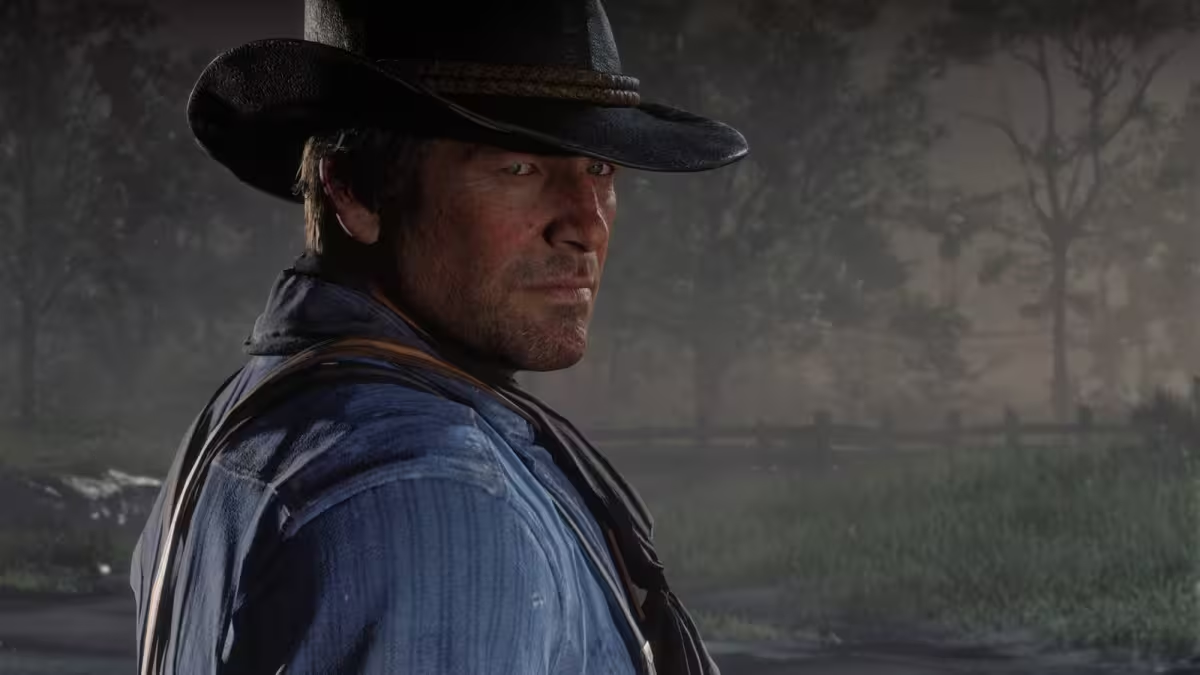
Those are not idle comparisons. Past Rockstar launches rewrote revenue charts — Grand Theft Auto 4 sold about 6 million copies in its first week and generated roughly $500 million in 2008, Grand Theft Auto 5 pulled in an estimated $800 million on launch day in 2013 (about 13 million copies by some industry estimates), and Red Dead Redemption 2 posted $725 million across its first weekend in 2018. Against that history, the question of how much GTA 6 cost to make changes how rivals set their calendars and position marketing dollars.
The game has been under development for eight years and survived two delays. Those delays and the scope of Rockstar’s public claims help explain why other major publishers have shifted releases away from GTA 6’s window: a blockbuster that dominates headlines and player attention can hollow out the launch impact for anything that shares the same weeks. Studios and publishers do not want to fight that battle if they can avoid it.


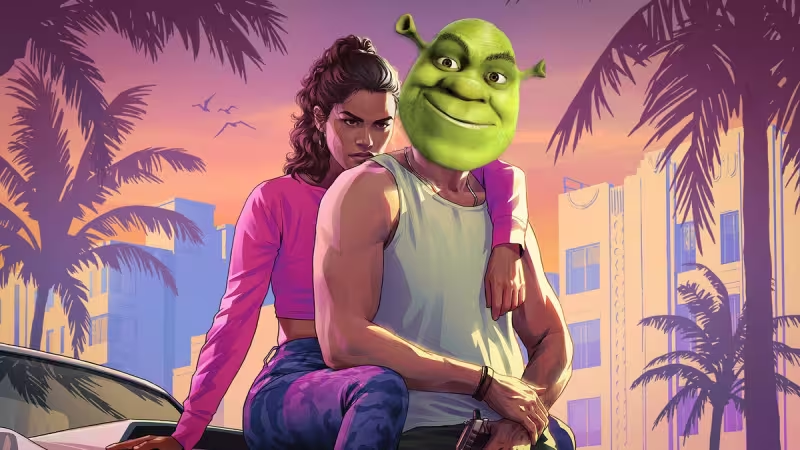
Studio executives are already speaking plainly about the squeeze. Eric Chort said, "All the studios in the world were thinking about it," and added, "When you know that GTA is coming, you know that in terms of marketing, in terms of players, the time to play games, GTA is like the ogre, it's the biggest one." Chort told reporters his team tried to avoid the clash by planning a late‑August release, calling that move, "As a studio, this is the best you can do."
The arithmetic Zelnick would not engage with creates the central friction: Rockstar’s public ambition to stage the largest launch ever sits next to analyst estimates that treat GTA 6 as potentially the most expensive game project in history. If the $1 billion figure proves accurate, the industry’s defensive scheduling and pricing bets look sensible; if the bill is lower, those same moves will appear excessively cautious. Zelnick’s non‑answer preserves that ambiguity.
For investors and rivals the practical question is immediate: how will Take‑Two and Rockstar manage expectations between now and November? With Zelnick declining to confirm the budget, the company still controls the narrative. Take‑Two’s $8 billion revenue forecast signals confidence in the franchise’s capacity to move product, but it does not translate into public confirmation of development costs.
The next hard data point arrives on Nov. 19, when GTA 6 ships on PlayStation 5 and Xbox Series X and the market can begin to measure real sales against the $1 billion benchmark. Because Zelnick declined to answer in May, the most consequential disclosure will be numeric rather than verbal: sales figures and subsequent reporting will be what finally settles whether the game’s budget matched the industry’s loftiest estimates.