

























Markwayne Mullin Revamps Homeland Security Image, Continues Deportation Policies

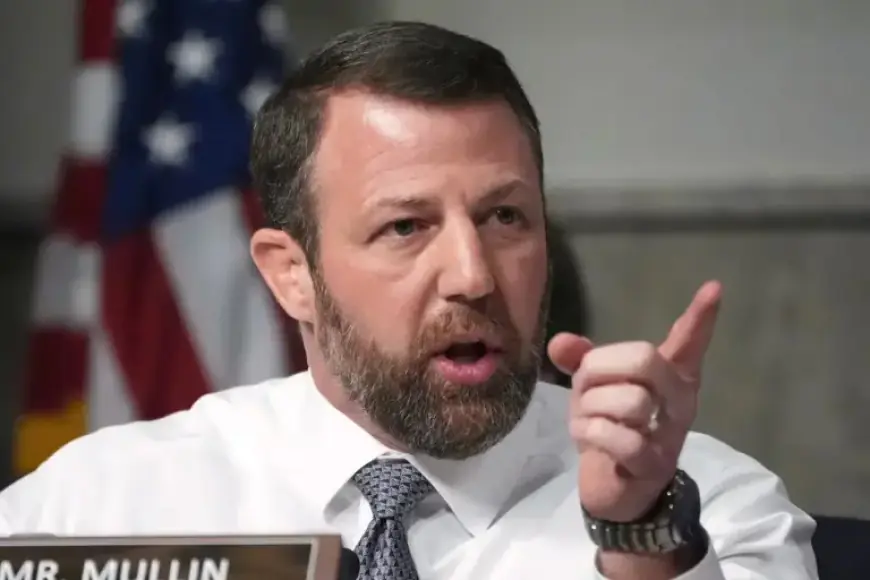
On March 23, Republican Senator Markwayne Mullin of Oklahoma was confirmed as Secretary of the Department of Homeland Security. He took charge amid criticism over the agency’s role in aggressive immigration enforcement under the prior leadership.
Symbolic shifts and early orders
Mullin immediately signaled a change in tone. He abandoned the tactical attire favored by his predecessor and began wearing a suit and tie.
He halted planned purchases of warehouses intended for Immigration and Customs Enforcement detention. He also rescinded a rule requiring the secretary’s sign-off on projects above $100,000.
Under the new rules, only contracts above $25 million will require the secretary’s approval. Mullin also directed agents to obtain court warrants rather than administrative orders before entering homes.
Policy reversals with limits
The warehouse pause came after ICE had spent almost $1 billion on 11 facilities. The purchases were part of an effort to increase bed capacity.
The department operates with a roughly $38.3 billion budget as allocated last year. Local opposition and moral concerns stalled other acquisitions.
Reports from detention centers describe spoiled food, poor sanitation, and limited medical care. On April 11, Alejandro Cabrera Clemente, a 49-year-old Mexican national, died at the Winn Correctional Center in Winnfield, Louisiana.
Continuity at the top
Despite visible changes, senior White House figures remain influential. Stephen Miller and Tom Homan continue to shape immigration policy from the White House.
Miller, serving as deputy chief of staff and national security advisor, leads regular meetings with Homeland Security officials. Critics say he still pushes for mass deportations.
Advocacy groups warn that the administration’s core objectives have not shifted. Observers summarize the situation: Markwayne Mullin Revamps Homeland Security Image, Continues Deportation Policies.
High-profile enforcement incidents
ICE street raids have declined, yet reports of illegal detention and use of force persist. Several recent cases have drawn scrutiny.
- On April 7, 36-year-old Salvadoran Carlos Iván Mendoza Hernández was shot and hospitalized after an encounter with ICE agents in Patterson, California.
- Brian Morales, a U.S. citizen born in Denver, was detained in Texas, deported to Mexico, and later said Border Patrol pressed him to sign a self-deportation form.
- Within ten days, two DACA recipients were returned to the United States after being illegally expelled by ICE agents.
- On April 6, Nelson Ramón Espinoza Sierra was arrested during an asylum hearing in Charlotte with his wife and two young children. The family was deported hours later without counsel or judicial review.
Internal dynamics and oversight
Kristi Noem’s tenure left a legacy of centralized control. Her inner circle, including political advisers, had outsized influence over operations.
Officials say Mullin may grant agency heads greater autonomy. That would contrast with the previous structure, where mid-level operatives reported directly to the secretary.
One such operative, Gregory Bovino, who led mass operations in multiple cities, was removed after protests surrounding deadly enforcement actions in January.
Reactions from rights groups
Naureen Shah of the ACLU warned that changes in style do not equal shifts in policy. She says enforcement tactics and the aim to deport large numbers remain in place.
Adam Isacson of the Washington Office on Latin America predicts a lower-profile approach to enforcement. He expects hardliners to exercise strong influence behind the scenes.
Filmogaz.com will continue covering developments at the Department of Homeland Security and related immigration enforcement actions.