

























U.S. Military Enhances Middle East Security with Counter-Drone Deployments

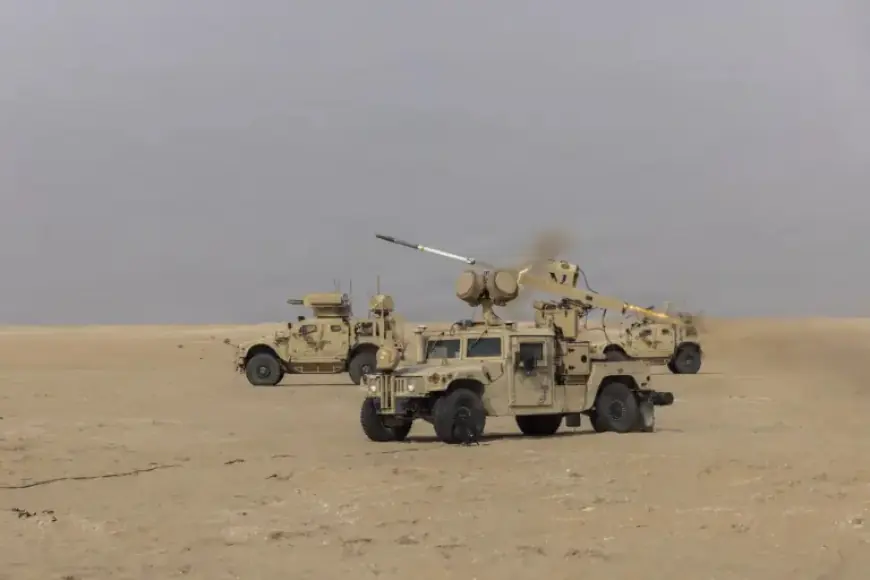
The U.S. military is increasing deployments of counter-drone systems to bolster security in the Middle East. An Army-led task force said the effort will continue in the coming days and weeks. The move follows a large funding push and ongoing uncertainty around the Iran war.
Funding and force flow
Joint Interagency Task Force 401, or JIATF-401, reported more than $600 million committed for unmanned aerial system defenses. More than half of that funding supported U.S. Central Command efforts during the war’s first month. The task force also identified roughly $350 million in commitments made in the last 30 days for Operation Epic Fury.
Task force leadership said some equipment is already in theater. Additional items are due to arrive over the next days and weeks. Lt. Col. Adam Scher noted funding allocations remain under negotiation until contracts are finalized.
Operational context and effects
The conflict has featured tens of thousands of drones launched by Iran and its proxies. Iranian Shahed-class and other low-cost systems have strained defenses. Some drones slipped through and caused notable damage, including a March 1 attack in Kuwait that killed six American service members.
U.S. and allied forces reported high interception rates. Chairman of the Joint Chiefs Gen. Dan Caine said combined U.S. and Gulf partners intercepted about 1,700 ballistic missiles and one-way attack drones. The total did not separate missile from drone tallies.
Systems and likely contributors
Experts point to Coyote interceptors and Merops systems as major contributors to recent shootdowns. Analysts expect JIATF-401 funding to strengthen those systems and a few others. The procurement push drew on fiscal 2026 funds, with a proposed fiscal 2027 budget seeking a further increase.
Domestic protections and other missions
JIATF-401 said part of the investment supports homeland defense. The task force allocated over $20 million for counter-UAS at the southern border. Officials also cited preparations for the 2026 FIFA World Cup across 11 U.S. cities.
Reported fielded assets include a network of 13 advanced early-warning sensors. The package also covered seven mobile and fixed mitigation systems and more than a dozen data-transfer platforms. Local units have used portable tools such as Wingman and Pitbull, plus Smart Shooter optics.
Threat outlook and expert views
Tom Karako of the Center for Strategic and International Studies said the increase in spending was overdue. He noted the drone threat had been foreseeable for years. Alex Plitsas of the Atlantic Council described the current ceasefire as fragile and warned U.S. forces remain vulnerable.
Observers highlighted experience gained in conflicts like Ukraine and the Global War on Terror. They said that knowledge has informed rapid acquisitions and operational changes. Iran’s prior export of drones to other states also amplified the challenge.
What comes next
JIATF-401 will continue to push counter-drone capabilities into the region. Centcom declined to comment on whether the recent investments produced additional shootdowns. Task force officials say deliveries will keep flowing while contracts are finalized.
Filmogaz.com reported this update based on task force statements and expert commentary. Reported by Drew F. Lawrence.