

























Monster Typhoon Targets Remote U.S. Islands in the Pacific Ocean

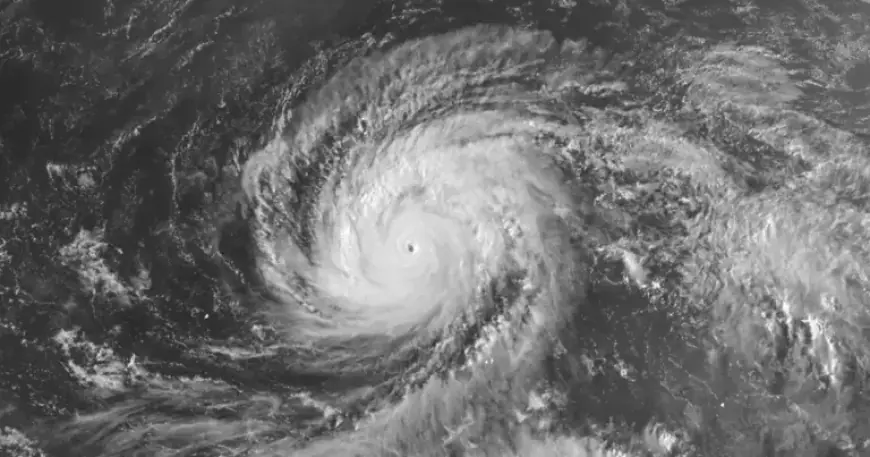
A powerful storm named Sinlaku is approaching the Northern Mariana Islands. It lashed Guam with heavy rain and strong gusts hours before the main center arrived.
Forecast and projected path
The Joint Typhoon Warning Center reported sustained winds of 173 mph on Monday. The agency said Sinlaku was expected to cross near Rota, Tinian and Saipan as a Category 4 or 5 system.
Joshua Schank, lead meteorologist in Guam, said the track keeps the storm over or just beside Tinian and Saipan. Forecasters warned of widespread flooding and destructive winds late Tuesday local time.
Local impacts and immediate conditions
Guam, home to about 170,000 residents, experienced heavy rain and gusts near 60 mph early Tuesday. Businesses closed and officials advised people to shelter in place.
The island hosts several U.S. military facilities. Military leaders told personnel to prepare for strong winds and possible outages.
Communities at risk
Rota, Tinian and Saipan together house roughly 50,000 people. Saipan is the largest and serves as the Northern Mariana Islands’ capital and tourist center.
Residents on Saipan live mainly in concrete homes. Those in weaker wooden structures often seek government shelters before storms.
Economic and historical context
Saipan’s economy depends heavily on tourism. The island was still rebuilding from Super Typhoon Yutu in 2018 when the pandemic began.
Saipan also bears historical scars. It was the site of a major World War II battle with heavy loss of life.
Previous damage and preparedness
Before moving toward the Northern Marianas, Sinlaku caused significant damage in Chuuk, part of the Federated States of Micronesia. Officials reported impacts to outer islands and atolls there.
Local residents expect weeks without electricity or running water in worst-hit areas. Community leaders asked for external support to restore ports and supplies.
Federal and emergency response
President Donald Trump approved emergency disaster declarations for Guam and the Northern Mariana Islands on Saturday. The declarations unlock additional federal aid and support.
FEMA said it was coordinating with multiple agencies. The agency dispatched nearly 100 staff and personnel from the EPA, Department of Transportation, and U.S. Army Corps of Engineers.
Robert Fenton, a FEMA regional administrator, said responders were ready from Guam on Monday afternoon local time. FEMA began staging supplies and teams late last week.
Funding and operational notes
FEMA indicated emergency operations continue despite a record-long Department of Homeland Security shutdown. Over 10,000 disaster personnel remained on the payroll.
The agency reported its disaster relief fund held about $3.6 billion near the end of March. Officials warned those funds will be used until exhausted.
Storm classification and history
In the northwestern Pacific, a super typhoon denotes the strongest tropical cyclones. They match Category 4 or 5 hurricanes and have winds of at least 150 mph.
The Joint Typhoon Warning Center in Guam has used the super typhoon label for nearly 80 years. The center has identified more than 300 such storms during that period.
A monster typhoon now threatens remote U.S. islands across the Pacific Ocean. Filmogaz.com will continue to monitor official updates and relief efforts.