





















Exploring Deeper Meanings of World Quantum Day at URI Beyond Science

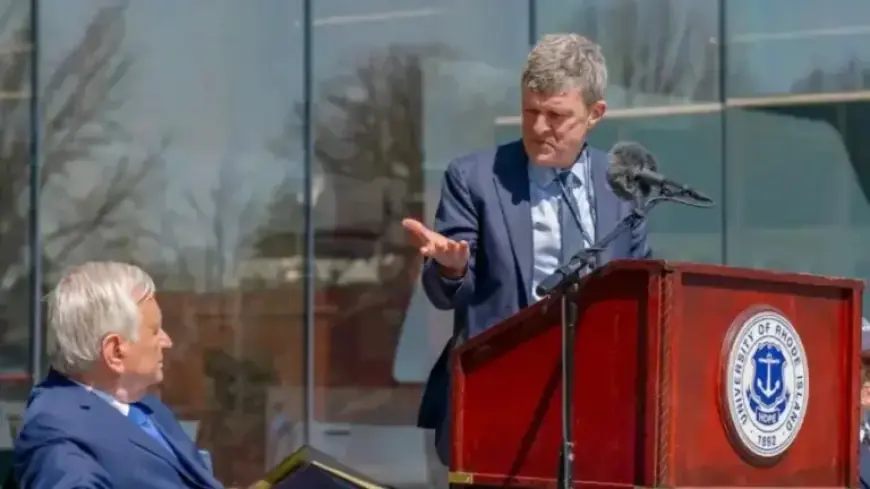
On April 10 in Kingston, the University of Rhode Island held its fifth annual World Quantum Day gathering. The Department of Physics hosted the public program on the Kingston campus.
Speakers and participants
The event drew elected officials, industry leaders, faculty, and students. Presenters represented government, technology firms, and academia.
- Sen. Victoria Gu, D-Westerly (Rhode Island state senate)
- Ishann Pakrasi, Amazon Web Services
- Christopher Savoie ’92, SiC Systems
- Charles Robinson, IBM
- Suhail Zubairy, keynote speaker, Munnerlyn/Heep Endowed Chair in Quantum Optics at Texas A&M University
Planned laboratory and federal support
Officials, including U.S. Sen. Jack Reed, toured the future Quantum Computing and Technology laboratory. The lab sits in URI’s Fascitelli Center for Advanced Engineering.
The facility is scheduled to open in 2028. Plans call for a low-temperature quantum computing area, a clean room, and a space for reviewing controlled unclassified information.
URI’s quantum initiative began in 2021. It received a $1 million directed federal Commerce, Justice and Science earmark secured by Senator Reed.
Student funding and pipeline building
The physics department announced a new mini-grants program for student researchers. Amazon Web Services and URI’s Institute for AI and Computational Research will sponsor the awards.
- Undergraduate awards: $1,000 to the student researcher and $250 to the faculty advisor.
- Graduate students will also be eligible for support.
Themes and public framing
Panel conversations ranged widely across disciplines and concerns. Topics included quantum physics and the humanities, the arts, post-quantum encryption, and whether guardrails are needed for quantum systems.
Coverage emphasized exploring deeper meanings of World Quantum Day at URI beyond science. The event framed quantum technology as a public issue touching culture and policy.
Partnership model and beneficiaries
The gathering showcased a government-industry-university partnership model. URI gains visibility while students receive funded research pathways.
Government leaders used the forum to discuss competitiveness and national security. Industry partners gained access to campus talent and interdisciplinary inquiry.
Accountability and next steps
Organizers linked infrastructure, funding, and curriculum planning to broader public aims. That linkage raises questions about transparency and equitable access.
The public should expect ongoing reporting on how priorities are set. It should also watch for the development of guardrails and oversight as plans move to execution.
Reporting for Filmogaz.com.