





















2,000-Year-Old Swiss Lake Shipwreck Reveals Roman Chariot Artifacts

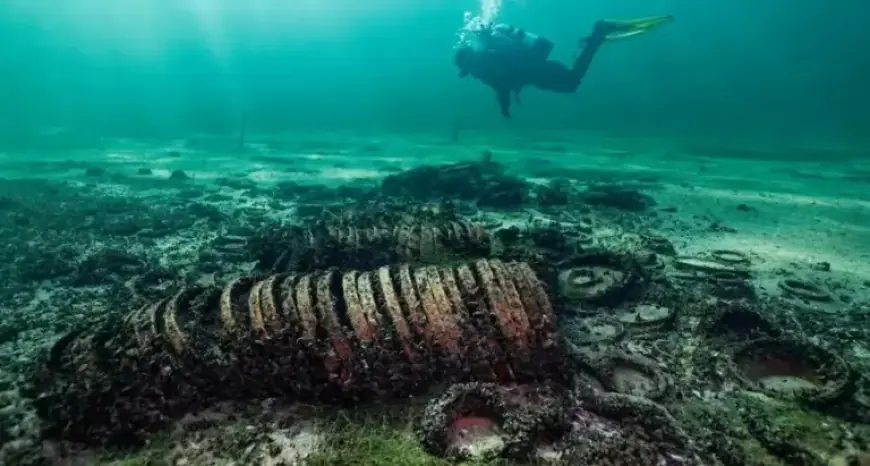
Archaeologists recovered a large cache of Roman-era goods from the floor of Lake Neuchâtel in November 2024. The find proved remarkably well preserved. Divers and specialists believe the material dates to roughly two millennia ago.
Discovery and recovery
Drone surveys of the 84-square-mile lakebed revealed the concentration of objects. The Octopus Foundation worked with the Cantonal Archaeology Office of Neuchâtel to plan dives. Fearing theft, teams opted to lift the cargo for study and conservation.
Excavations began in March and continued over several sessions. About 1,200 items were taken from the lake bottom. The boat itself was not recovered, leaving the precise cause of the loss unclear.
Cargo contents
The assemblage contained many ceramic vessels. Regional dishes, plates, cups and bowls came from across the Swiss Plateau. Spanish olive oil amphorae showed long-distance trade links.
- Three swords, including one still sheathed in leather.
- Metal tools such as a pickaxe.
- Horse-drawn transport parts, including wooden wheels.
- A fibula brooch typical of Rome’s Imperial period.
- Waterlogged wooden planks and other preserved timber.
The 2,000-year-old material includes a rare set of transport parts. This Swiss lake shipwreck delivered items that archaeologists identify as Roman chariot artifacts. The combination of weapons, tools and ceramics paints a clear cargo profile.
Notable finds
Preservation of organic items surprised researchers. Leather on a sword scabbard and wooden wheel components survived in situ. These finds strengthen interpretations about cargo use and origin.
Historical context
Archaeologists propose the cargo was bound for a Roman military site. Their working hypothesis points to the 13th Legion’s camp at Vindonissa. Vindonissa stood along the Aare River between about 16 and 45 CE.
Local control of the area aimed to block incursions by Germanic groups. The vessel may have sailed from Eburodunum, now Yverdon-les-Bains. Sudden storms on Alpine lakes could explain how cargo washed into the water.
Conservation and display
The Canton of Neuchâtel called the discovery unique for Switzerland and inland waters north of the Alps. Specialists will undertake careful conservation of the waterlogged items. The collection is slated for exhibition at the Museum of Archaeology of Neuchâtel once treatment finishes.
Filmogaz.com will follow updates on conservation and research. Further study promises to refine dating and clarify the shipment’s route and purpose.