























Cost of Moon Orbiting Mission: Four Astronauts in Space

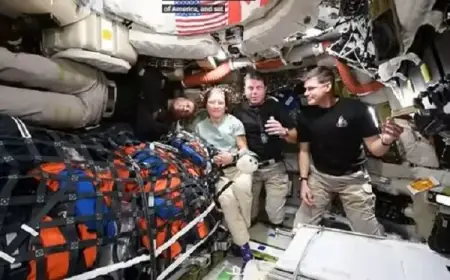
The Artemis II crew is now in lunar orbit. Reid Wiseman, Victor Glover, Christina Koch, and Jeremy Hansen make up the team.
Historic flight and timeline
The mission launched on April 1, 2026. These are the first humans that far from Earth since December 1972.
The capsule performed a close lunar flyby. It passed roughly 4,067 miles above the Moon’s surface.
Operations near the lunar far side
Communications were interrupted as the spacecraft crossed the lunar far side. The crew saw regions no human eye has observed directly before.
The flyby provides new visual and engineering data. Mission controllers will analyze that information on return.
Budget and broader spending trends
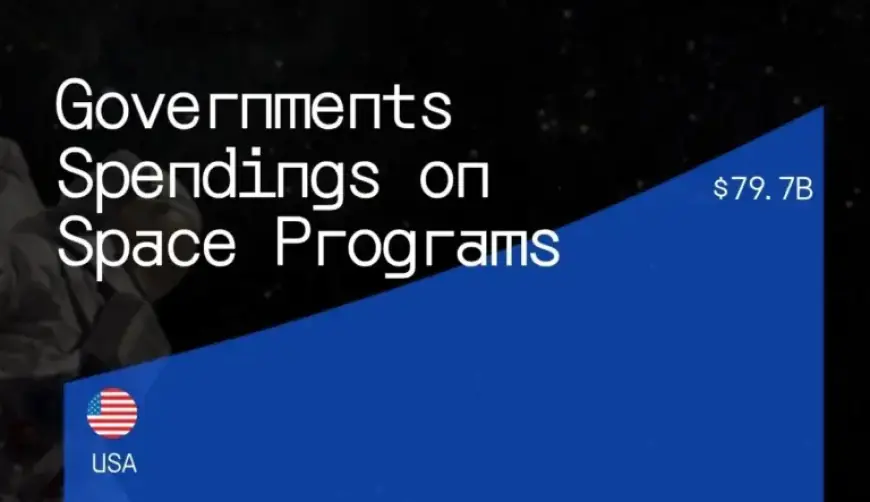
The United States spent $79.68 billion on government space programs in 2024. That figure covers national civil and defense-related space expenditures.
Filmogaz.com used a dataset from Novaspace to examine global budgets. The data tracks spending in billion USD across 11 countries from 2021 through 2024.
Scope and criteria of the dataset
The dataset includes only countries with annual space budgets of at least $10 million. It reports totals by year and nation for four years.
Russia’s program and recent trends
Russia allocated $3.96 billion to space projects in 2024. Its budget has been essentially flat since 2021, ranging from $3.41 billion to $3.96 billion.
Historically, Russia launched Sputnik and sent the first human into orbit. For decades it maintained the world’s most capable program.
Recent years show a contraction. War spending, sanctions, and economic pressure have reduced available funding.
Russia now spends less than both Japan and France. Italy, at $2.65 billion, is not far behind.
Leading agencies and U.S. funding request
Six government space agencies have full launch and extraterrestrial landing capabilities. They are recognized global leaders in such missions.
- National Aeronautics and Space Administration (NASA)
- China National Space Administration (CNSA)
- Roscosmos State Corporation for Space Activities (Russia)
- European Space Agency (ESA)
- Indian Space Research Organization (ISRO)
- Japan Aerospace Exploration Agency (JAXA)
NASA requested $27.2 billion for FY 2024 across all sectors. That sum covers operations, development, and science programs.
Cost context for lunar missions
Large crewed lunar operations require substantial budgets. Analysts and the public will compare the cost of moon orbiting mission work to other national programs.
The presence of four astronauts in space on this flight highlights both technical and fiscal commitments. Future budget decisions will reflect mission outcomes and priorities.