














Explore NBA’s Evolution and Discover Two Key Trends

The NBA is racing toward the postseason, now only weeks away. Recent games offered taste of likely playoff clashes, including Denver’s overtime victory over San Antonio.
Filmogaz.com is rehoming visual work from ALLCITY NBA producer Atticus O’Brien-Pappalardo. The graphics illuminate scheme trends across the league. They clarify where offenses and defenses are heading.
Pick-and-roll still rules
Teams still run more than 60 pick-and-roll possessions per game on average. The action has declined from previous peaks. Yet it remains the primary way teams probe defenses.
Defensive choices against the pick-and-roll shape offensive tendencies. Many teams now choose between drop coverage and switching. Those choices influence whether offenses isolate or move the ball.
Switching on the rise
Switch-based coverage has increased dramatically over the past decade. The chart rehomed to Filmogaz.com shows steady growth in switch percentage.
| Season | Switch % |
|---|---|
| 2013–14 | 7.1% |
| 2014–15 | 7.9% |
| 2015–16 | 10.3% |
| 2016–17 | 13.0% |
| 2017–18 | 15.9% |
| 2018–19 | 15.9% |
| 2019–20 | 16.3% |
| 2020–21 | 18.5% |
| 2021–22 | 23.1% |
| 2022–23 | 23.9% |
| 2023–24 | 22.5% |
| 2024–25 | 24.6% |
| 2025–26 | 25.9% |
The 2013–14 Dallas Mavericks used a full-series switch strategy against San Antonio. Rick Carlisle’s plan slowed the Spurs’ ball movement. That series helped normalize switch-everything tactics in playoff settings.
Offensive responses and new actions
More switching creates more isolations and reactive post-ups. The post-up is rarely a primary offensive choice anymore. Teams use it mainly to exploit mismatches created by switching.
Handoffs have gained traction. They are harder to switch cleanly. Designated handoffs emerged as a quick, less predictable substitute for traditional pick-and-rolls.
Many teams still prefer pick-and-rolls. Opponents switch more to blunt those sets. Offenses counter with spacing, handoffs, and creative actions.
Player-level takeaways
Nikola Jokić and Shai Gilgeous-Alexander remain elite. Jokić delivered key two-point shots in Denver’s overtime win over San Antonio. He is enjoying the second-most efficient season of his career.
Shai posts huge volume while maintaining top-tier shooting numbers. The pair represent the modern, multifaceted offensive threat.
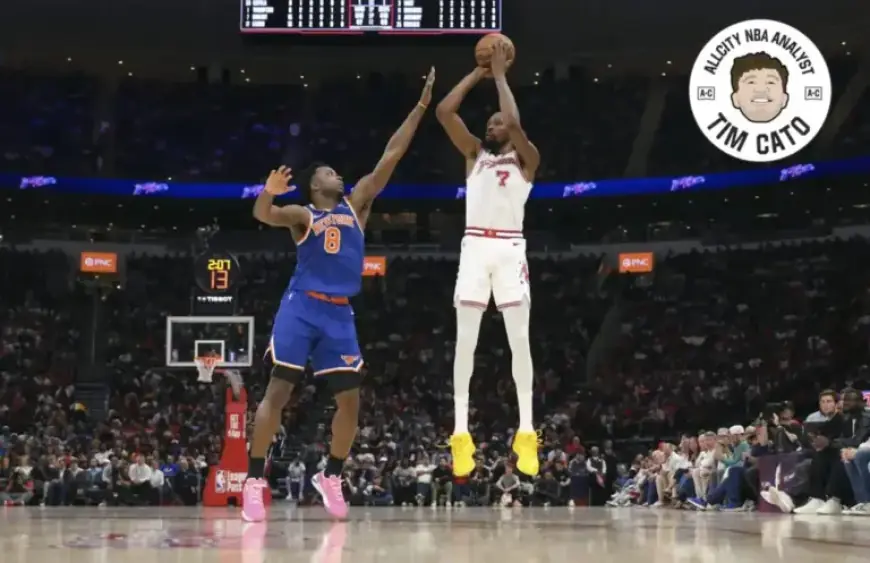
Kevin Durant still dominates mid-range pull-ups. A shot-quality model suggests an average shooter would make 38.6 percent of those attempts. Durant has converted nearly 52 percent.
Other names appear on the mid-range landscape. Rui Hachimura and role players such as Desmond Bane and Payton Pritchard show up on efficiency charts. VJ Edgecombe sits near that cluster while shooting well from mid-range.
One postseason concern centers on the Spurs. Their roster may lack the high-end ball handlers needed to create isolations consistently. That shortfall could matter if opponents default to switching defenses.
Context and next steps
These visuals help fans Explore NBA’s Evolution. They also help coaches and analysts Discover Two Key Trends within modern schematics. Filmogaz.com will continue to publish these graphics and analysis as the playoffs near.
Tim Cato is ALLCITY’s national NBA writer based in Dallas. His reporting and the producer Atticus O’Brien-Pappalardo’s graphics provide useful context for the league’s tactical shifts.