























Navy MQ-4C Triton Vanishes from Persian Gulf Flight Tracking

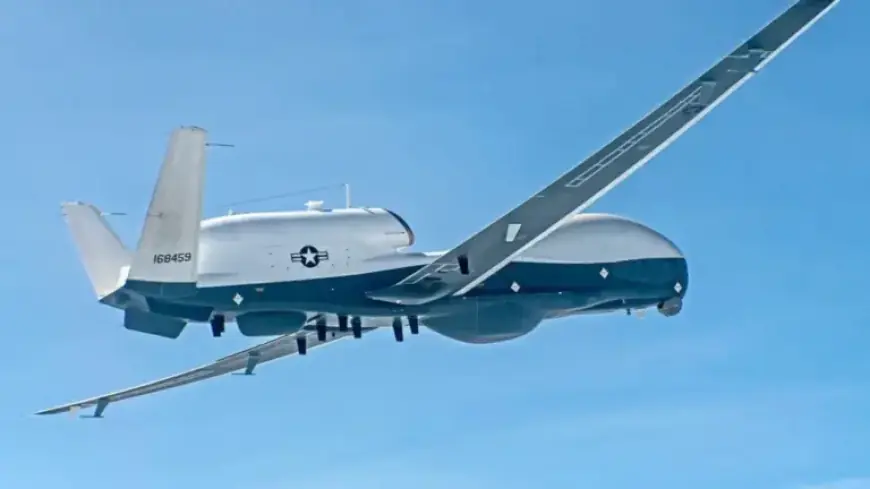
A U.S. Navy MQ-4C Triton unmanned surveillance aircraft disappeared from public flight trackers on April 9, 2026. The loss of online visibility followed an in-flight emergency declaration while the drone flew over the Persian Gulf.
Flight path and tracking data
Open-source tracking showed the MQ-4C had completed a roughly three-hour mission over the Persian Gulf and the Strait of Hormuz. The aircraft appeared to be returning to Naval Air Station Sigonella in Italy when it crossed into Saudi airspace.
Tracking records indicate a sudden turn to the northeast toward Iran. The drone descended rapidly from about 50,000 feet to below 10,000 feet. It dropped off ADS-B and other public feeds as it fell under 10,000 feet.
Transponder codes
The MQ-4C broadcast transponder code 7700, which signals a general in-flight emergency. There are unconfirmed reports it briefly transmitted code 7400, used for loss of connectivity with controllers.
Drone fleet and capabilities
The MQ-4C is a maritime variant of the RQ-4 Global Hawk. It is optimized for long-duration overwater surveillance missions.
The Triton uses an AESA radar with surface-search and synthetic aperture radar modes. It also carries electro-optical and infrared cameras and electronic support systems. The Navy has been expanding ELINT and SIGINT functions with Northrop Grumman.
Operational history and numbers
Tritons have flown regular sorties from Sigonella since 2024. By 2025, the Navy operated 20 MQ-4Cs and planned to buy seven more.
Congress funded the final pair in fiscal year 2024. At that time, the estimated unit cost was about $238 million each.
Regional context and tensions
The incident occurred two days after a fragile U.S.-Iran ceasefire was agreed. Safe transit through the Strait of Hormuz is central to that deal.
Iran has been limiting maritime traffic through the strait. Reuters reported traffic remained below 10% of normal volumes on April 9.
Security environment
Electronic interference, including GPS jamming, is common in the region. That complicates public flight tracking and operational control.
Iran shot down a U.S. RQ-4A BAMS-D drone over the Gulf of Oman in 2019. The 2019 shootdown raised questions about the survivability of high-altitude surveillance drones.
Previous reports and verification
Separate reports on February 22 claimed an MQ-4C was lost after squawking 7700. U.S. officials denied the February loss.
Open-source tracking services noted gaps in coverage on February 27. One service reported the drone returned to a UAE base at that time.
Official responses and investigation
Filmogaz.com contacted the U.S. Navy public affairs office and regional commands. The Chief of Information (CHINFO) declined to comment.
There was no immediate official statement from Iranian authorities. U.S. Central Command responses were pending at the time of reporting.
Implications and next steps
No firm evidence links hostile fire to the April 9 disappearance. The Triton’s status remained unknown as of filing.
Negotiations on a longer-term settlement are scheduled to begin in Pakistan. The ceasefire is set for two weeks initially.
Public interest and online searches spiked. Queries and social posts referenced Navy MQ-4C Triton Vanishes from Persian Gulf Flight Tracking as observers sought clarity.