
























Airbus’ $30B Flop Becomes 2026’s Most Cherished Aircraft

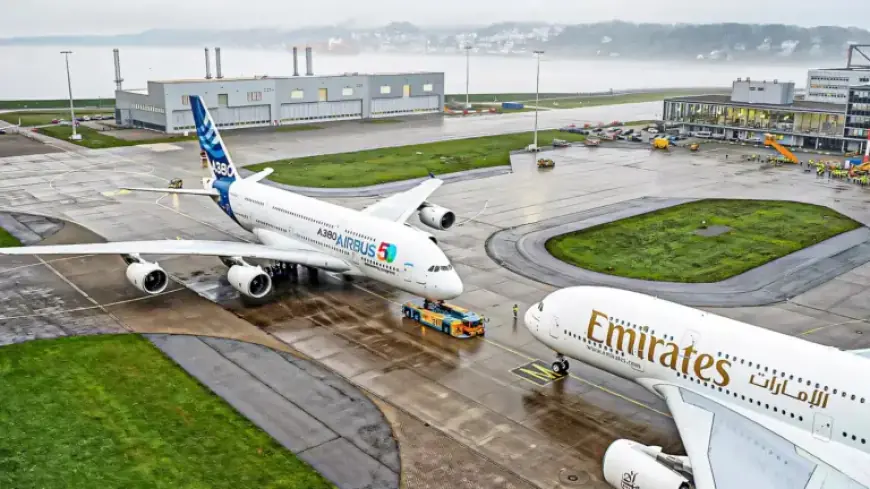
The Airbus A380 arrived on the commercial scene to change long-haul travel. Its first flight was April 27, 2005. It entered service in 2007.
Program goals and market reality
Airbus launched the program in the 1990s. The aim was to build the world’s largest passenger jet. The A380 featured two full passenger decks.
The design targeted hub-and-spoke networks. Market demand shifted toward point-to-point routes instead. Events like 9/11, the financial crash, and volatile fuel prices also hurt demand.
Production, deliveries and operators
Airbus delivered 251 A380s between 2007 and 2021. Fourteen customers received those aircraft. Production ended in 2021.
Emirates became the type’s largest operator. The airline took delivery of 123 A380s. That represents roughly 49 percent of all deliveries.
Singapore Airlines was the launch customer. It ordered and operated 24 airframes. Other operators included British Airways, Qantas, and Singapore Airlines.
Fleet status in 2026
By early 2026, about 190 A380s remained in service. Ten airlines operated those aircraft. Many frames retired during the COVID-19 downturn.
Some carriers retired the A380 entirely. Those include Air France, Thai Airways, Malaysia Airlines, and China Southern. Qatar and Etihad initially indicated their A380s might not return.
Other airlines restored A380 operations. Emirates, Singapore Airlines, Qantas, and British Airways brought aircraft back. Several carriers also retrofitted cabins to meet demand.
Why airlines shunned it, and why passengers still love it
The A380 has four engines. That increased fuel burn compared with twinjets. Airlines have since favored twin-engined, fuel-efficient aircraft.
Passengers however often favor the A380. Its two full decks allow spacious premium cabins. Many onboard innovations became passenger highlights.
Cabin innovations
Emirates introduced onboard showers for first class. It also installed a lounge and bar on the upper deck. Etihad created the Residence, a three-room suite with a bedroom and shower.
Singapore Airlines designed first-class suites with separate beds. Korean Air offered an inflight duty-free area on the lower deck. These features helped the A380 earn passenger admiration.
Technical profile and competitors
The A380 was designed to carry very high volumes. Airbus cited a maximum all-economy capacity of 853 passengers. No airline operated the jet at that extreme density.
| Aircraft | Typical Capacity | Range | Engines | Cruise Speed |
|---|---|---|---|---|
| Airbus A380-800 | 480–520 (three/four class) | 8,000 NM (14,816 km) | Four (RR Trent-900 / GP7000) | Mach 0.85 |
| Boeing 747-8 | 320–360 (three/four class) | 7,370 NM (14,649 km) | Four (GEnx) | Mach 0.86 |
| Boeing 777-300ER | 392 (two-class Boeing spec) | 7,370 NM (13,649 km) | Two (GE90) | Mach 0.84 |
| Boeing 777-9* | 426 (two-class Boeing spec) | 7,284 NM (13,500 km) | Two (GE9X) | Mach 0.85 |
| Airbus A350-1000 | 400 (three-class Airbus spec) | 9,000 NM (16,700 km) | Two (RR XWB-97) | Mach 0.85 |
*The 777-9 had not entered commercial service at the time of reporting.
Economic impact and legacy
Airbus invested heavily in the program. The A380 project ran at a loss overall. The program cost led to significant write-downs.
Critics once labeled the program a costly flop. Yet passengers continued to prize the aircraft. By 2026 the jet had gained a strong fanbase among premium travelers.
Airport constraints and future needs
Slot-restrained hubs still need high-capacity jets. Airports like London Heathrow face tight slot limits. Larger aircraft can help airlines add capacity without new slots.
With the A380 and 747 out of production, airlines look to alternatives. The Boeing 777-9 emerged as the next large twinjet option. Discussions also surfaced about stretching existing widebodies.
What began as Airbus’ $30B-styled risk became, by 2026, one of the most cherished aircraft among many passengers. The A380’s future now balances operational cost with unrivaled cabin space. Filmogaz.com will continue following how airlines adapt to those trade-offs.