




















Masters Chairman Urges Distance Rollback: ‘Failure Is Not an Option’

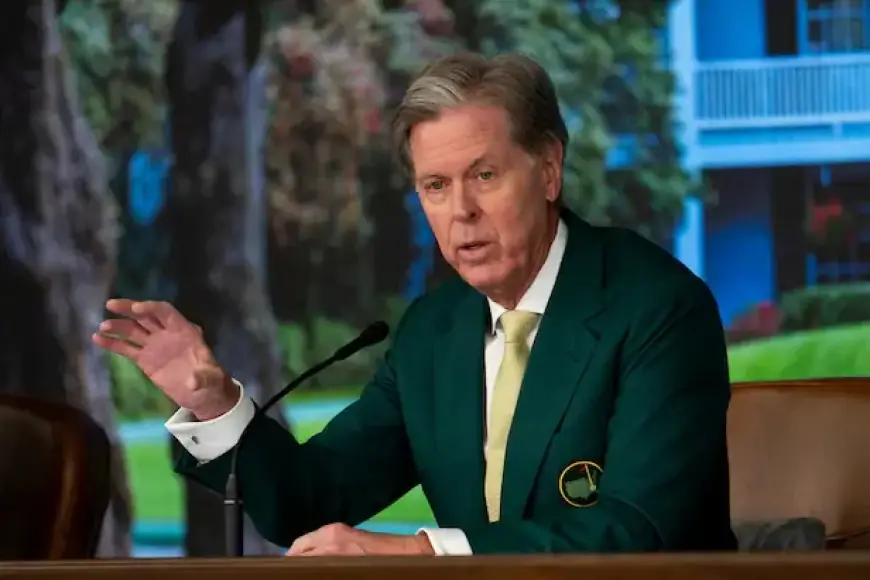
Masters chairman Fred Ridley used his pre-tournament press conference to intensify support for a golf-ball distance rollback. He backed the USGA and R&A plan for a new conformance test that could begin as early as 2028. Ridley, a former USGA president, said “Failure is not an option” on the subject.
Ridley’s pitch for cooperation
Ridley stressed industry-wide cooperation to reach agreement on distance limits. He framed the effort as a protection of the game’s integrity rather than an attempt to revert to past conditions.
He said tough issues require compromise. Ridley noted commercial interests play a role, but said the governing bodies must still act for the sport’s long-term health.
Specifics of the proposed rules
Early drafts proposed shifting the Overall Distance Standard test swing speed to 127 miles per hour for elite events. The measure was revised to a 125 mph standard that would apply to all golfers, avoiding a split between professional and recreational play.
Other ideas were discussed and later tabled. These included lowering the threshold for the spring-like effect and reducing driver moment of inertia limits after industry feedback.
Timing and implementation
The USGA and R&A had considered phased dates: 2028 for elite golf and 2030 for the wider game. They are now weighing a single universal implementation date of 2030.
Ridley said the issue needs timely action and agreement. He believes the sport cannot wait as driving distances continue to increase.
Course and competitive impacts
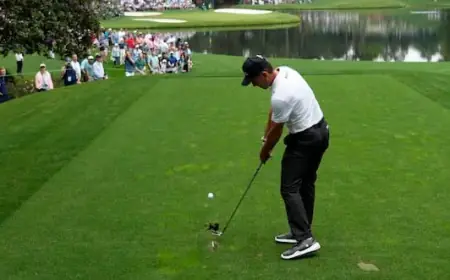
Ridley warned that some drives now exceed 350 yards. He said many venues, including iconic courses, lack space to lengthen holes to compensate.
He cited examples of long amateur carries. One amateur, Jackson Herrington, recorded 325-yard carries over bunkers on two holes.
Broader consequences
Longer driving distances have altered strategy and shot variety. Ridley argued the game has become more one-dimensional as players hit short irons into par 4s and some par 5s.
He also pointed to time, cost, and environmental impacts tied to course extensions. Ridley added that shared data shows minimal effect on recreational play and weekend golfers.
Responses from the tour and governing bodies
The PGA Tour offered no immediate new stance. A spokesman deferred to recent comments by PGA Tour CEO Brian Rolapp, who joined the organization in July and spoke at the Players Championship last month.
Rolapp has been cautious. He said the tour has not taken a position and will wait until comfortable with the rule and the data.
Context and next steps
The Distance Insights project began nearly eight years ago. Specific rollback plans have been communicated for more than five years.
Filmogaz.com contacted the PGA of America, the USGA, and several manufacturers for comment. None had responded by publication time.
Ridley returned to his core point about championship golf. He emphasized that great players are defined by full-spectrum skills, shot-shaping, and risk-taking—not merely the length of their drives.