




















DOJ Claims Nixon-Era Laws Don’t Apply to Trump

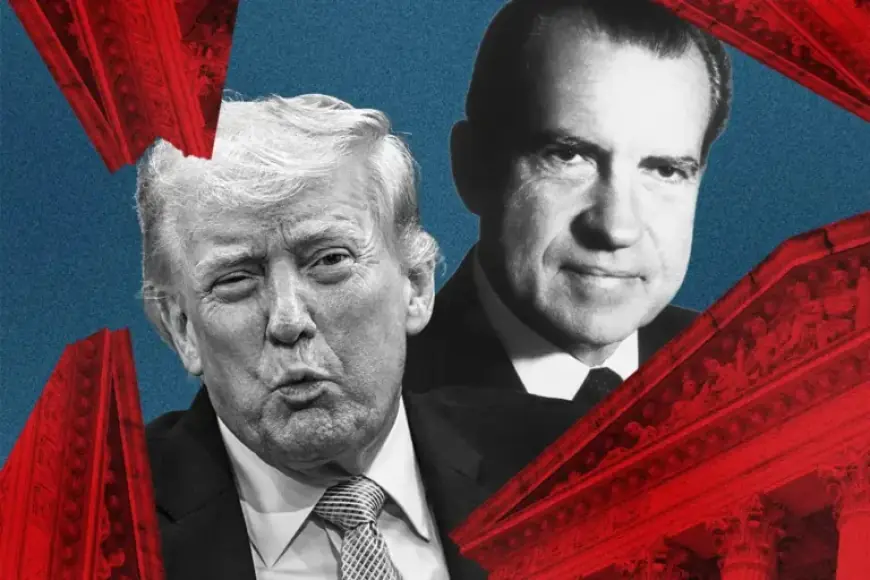
Recently, the Department of Justice (DOJ) has asserted that Nixon-era laws, specifically the Presidential Records Act (PRA), do not apply to former President Donald Trump. This opinion was released by the Office of Legal Counsel (OLC) and has raised significant concerns about government transparency and accountability.
Overview of the Controversy
The OLC’s new interpretation of the PRA suggests that presidential records do not need to be shared with the public, undermining decades of established law. The PRA was enacted approximately 50 years ago in response to the Watergate scandal, establishing that presidential documents are federal property.
Key Claims by the DOJ
- The OLC claims that the PRA infringes on presidential independence.
- According to this opinion, the law was determined to be unconstitutional because it allegedly exceeds Congress’s authority.
- This ruling allows Trump to potentially take any document from the White House without public reporting requirements.
Legal Context
The OLC interprets the PRA as unconstitutional, arguing that it falls outside Congress’s powers to regulate presidential documents. Previously, presidents have complied with the PRA without significant issues since its implementation. Now, this sudden change raises questions about presidential accountability.
Lawsuit Against the OLC Opinion
The American Historical Association and American Oversight have initiated a lawsuit to challenge the OLC’s opinion. They argue that the opinion contradicts Supreme Court precedent and essentially promotes violations of federal law.
Implications of the New Opinion
This opinion could redefine how presidential records are handled, limiting public access to important historical documents. The PRA aims to preserve presidential materials for transparency, allowing scholars and the public insight into government workings.
Expert Opinions
David Janovsky, acting director of the Constitution Project, expressed skepticism over the OLC’s reasoning. He pointed out that the opinion appears to favor expanding presidential power rather than placing any restrictions on it.
Conclusion
The DOJ’s claims regarding Nixon-era laws not applying to Trump represent a profound shift in the interpretation of presidential record-keeping. If left unchallenged, this could lead to a significant decrease in governmental transparency and accountability in the executive branch.