























Hypersonics Expert Reveals Survival Tactics for Artemis II Crew’s 3,000°C Re-entry

The Artemis II crew is preparing for a significant event as they return from their historic journey to the Moon. This mission marks a record-breaking distance of 406,771 kilometers from Earth. The astronauts face an essential challenge: hypersonic re-entry into Earth’s atmosphere.
Re-Entry: A High-Speed Challenge
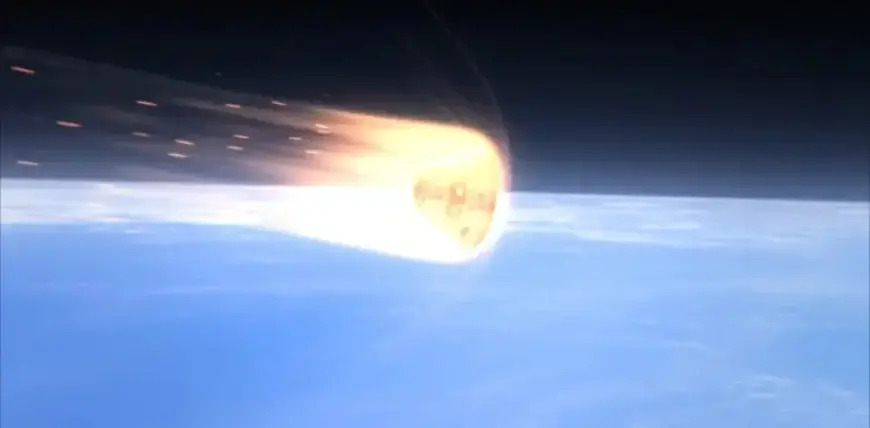
The Orion capsule will enter the atmosphere at over 11 kilometers per second, equivalent to 40,000 kilometers per hour. This speed is 40 times faster than a commercial airliner. As the capsule descends, it will experience almost 2,000 times the kinetic energy of a jetliner.
Deceleration Process
To ensure a safe landing, the Orion must reduce its kinetic energy significantly. The spacecraft will perform a controlled re-entry, utilizing aerodynamic drag as a braking mechanism to slow down. Unlike airplanes designed for efficiency, re-entry vehicles prioritize maximum drag to facilitate deceleration.
The re-entry process generates extreme conditions, with astronauts experiencing significant g-forces. While a Formula One driver may face around 5 g’s, the deceleration experienced during re-entry can be far more intense. Crewed missions like Artemis II utilize lift forces to manage these forces, extending the re-entry duration and enhancing crew safety.
Extreme Temperatures During Re-Entry
Your safety relies on effective thermal protection as the Orion capsule re-enters at speeds exceeding 30 times the speed of sound. This results in shocking temperatures of approximately 10,000°C, twice the surface temperature of the Sun. Such heat creates an electrically charged plasma around the spacecraft, temporarily blocking radio communication.
Heat Shield Technology
The spacecraft’s survival hinges on its innovative thermal protection system. This system employs ablative materials designed to withstand extreme conditions. For Artemis II, engineers have chosen a material called AVCOAT, which successfully protected the Apollo capsule during its lunar returns in the 1960s and 1970s.
- Ablative Protection: AVCOAT absorbs heat and cools the capsule during re-entry.
- Design Adaptations: Following Artemis I’s mission, modifications were made to limit heat shield erosion during descent.
- Trajectory Adjustments: A slightly altered re-entry angle will mitigate excessive pressure buildup in the heat shield.
Conclusion
The Artemis II crew’s mission exemplifies human ingenuity and resilience in space exploration. As they prepare for their return with safety measures in place, the world eagerly anticipates their successful landing in the Pacific Ocean. The contributions of advanced technologies ensure that the crew can navigate the intense challenges of hypersonic re-entry effectively.